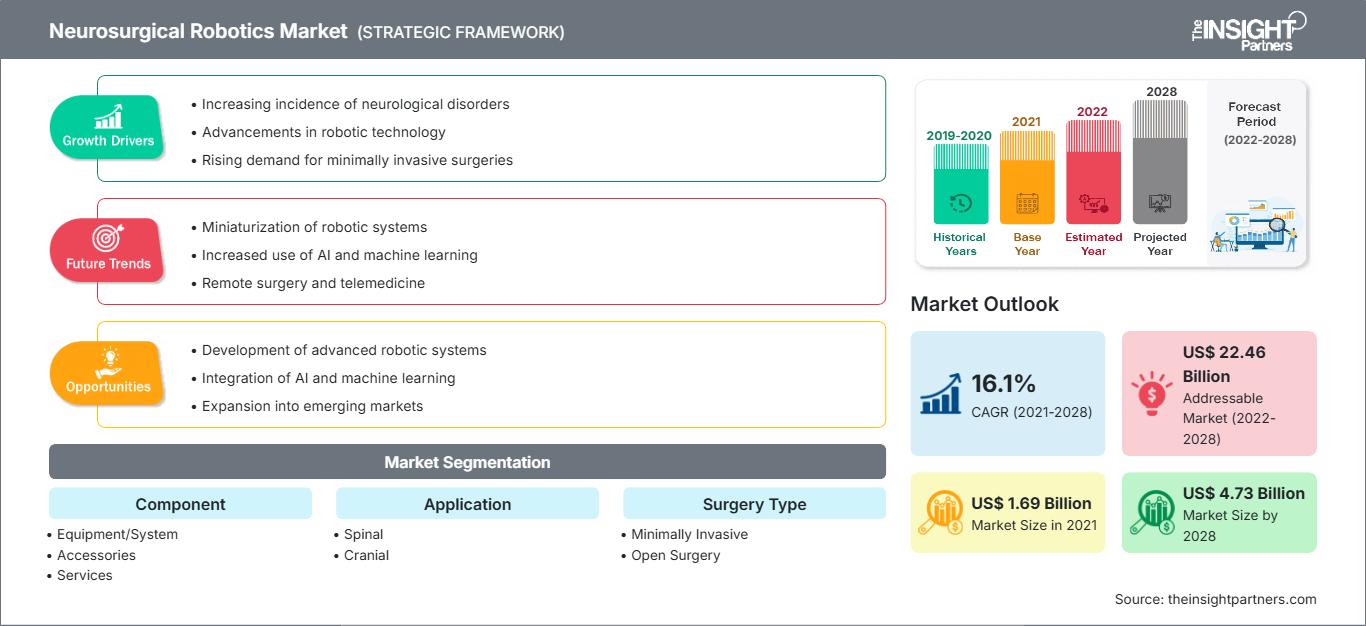
North America holds a leading share of the Neurosurgical Robotics Market, supported by its advanced healthcare infrastructure, widespread adoption of robotic-assisted surgery, and strong presence of leading medical technology companies. Hospitals and specialized neuroscience centers across the region are increasingly investing in robotic systems to enhance surgical precision, improve patient outcomes, and reduce recovery times. The growing prevalence of neurological disorders, including brain tumors, epilepsy, Parkinson’s disease, and spinal conditions, has further increased the demand for innovative neurosurgical robotic solutions. In addition, favorable reimbursement policies, significant healthcare spending, and continuous investments in surgical innovation continue to strengthen the market.
The Neurosurgical Robotics Market growth is being fueled by increasing investments in healthcare infrastructure, expanding applications of robotic-assisted surgery, and rapid technological innovation. The Neurosurgical Robotics Market is expected to grow from US$ 1,691.02 million in 2021 to US$ 4,729.86 million by 2028, registering a compound annual growth rate of 16.1% during 2022–2028. Growing demand for precision-guided surgery, increasing adoption of artificial intelligence-enabled robotic platforms, and expanding utilization of image-guided navigation systems are strengthening market growth across developed and emerging economies. Continuous product development and increasing collaboration between healthcare institutions and medical technology companies are expected to create significant opportunities for industry participants.
Download Sample PDF: https://www.theinsightpartners.com/sample/TIPRE00012148
Why Is the Neurosurgical Robotics Market Growing at a Rapid Pace?
The Neurosurgical Robotics Market has become one of the fastest-growing segments within the medical robotics industry due to the increasing need for greater surgical precision and improved patient safety. Robotic-assisted systems provide surgeons with enhanced visualization, accurate instrument guidance, and real-time navigation during delicate neurological procedures. These technologies reduce surgical variability, improve clinical outcomes, and enable minimally invasive approaches that shorten recovery times and minimize postoperative complications.
The increasing incidence of neurological disorders such as brain tumors, Parkinson’s disease, epilepsy, traumatic brain injuries, and spinal disorders has significantly increased demand for advanced neurosurgical technologies. Hospitals and specialized neurological centers are investing in robotic-assisted surgical systems to improve treatment quality while optimizing operating room efficiency. In addition, continuous advancements in artificial intelligence, three-dimensional imaging, augmented reality, and robotic navigation continue to expand the capabilities of modern neurosurgical platforms.
What Growth Opportunities Are Emerging in the Neurosurgical Robotics Market?
The Neurosurgical Robotics Market presents significant opportunities as healthcare systems worldwide continue to embrace digital transformation and precision medicine. One of the most promising opportunities lies in the increasing adoption of minimally invasive neurosurgical procedures. Robotic-assisted surgery enables greater precision while reducing hospital stays, blood loss, and recovery time, making it an attractive option for both healthcare providers and patients.
Emerging economies also represent substantial growth opportunities due to improving healthcare infrastructure, rising healthcare expenditure, and increasing investments in advanced surgical technologies. Countries across Asia Pacific, Latin America, and the Middle East are expanding access to specialized neurological care, creating favorable conditions for the adoption of robotic-assisted surgery.
The integration of artificial intelligence, machine learning, and predictive analytics into neurosurgical robotic systems is expected to further transform the market. These technologies enhance surgical planning, improve intraoperative decision-making, and support personalized treatment strategies. In addition, expanding surgeon training programs and increased collaboration between medical device manufacturers, research institutions, and hospitals are expected to accelerate market penetration worldwide.
Market Drivers
One of the primary drivers of the Neurosurgical Robotics Market is the growing prevalence of neurological disorders requiring complex surgical interventions. Increasing cases of brain tumors, epilepsy, spinal abnormalities, and neurodegenerative diseases have created strong demand for highly precise surgical technologies.
Technological advancements continue to play a vital role in market expansion. Modern robotic systems integrate advanced imaging, artificial intelligence, navigation software, and robotic guidance to improve surgical precision while reducing human error. These innovations enable surgeons to perform complex procedures with greater confidence and consistency.
Growing awareness regarding the benefits of minimally invasive surgery is another major growth driver. Healthcare providers increasingly recognize the advantages of robotic-assisted procedures, including reduced complications, shorter hospital stays, faster patient recovery, and improved clinical outcomes. Rising investments in healthcare infrastructure and favorable regulatory approvals further support the adoption of advanced robotic technologies.
Key Players
- Brainlab AG
- Medtronic
- Renishaw plc
- Zimmer Biomet
- Globus Medical, Inc.
- Synaptive Medical, Inc.
- NuVasive, Inc.
- Accuray Incorporated
- Brain Navi Biotechnology Co., Ltd.
- B. Braun Melsungen AG
Competitive Landscape
The Neurosurgical Robotics Market is characterized by intense competition, with leading companies focusing on technological innovation, strategic collaborations, product launches, and regulatory approvals to strengthen their market positions. Manufacturers continue to invest heavily in research and development to introduce robotic systems featuring improved navigation, artificial intelligence integration, enhanced visualization, and greater procedural accuracy. Expansion into emerging markets and partnerships with hospitals and research institutions remain key strategies supporting long-term business growth.
Purchase a Copy of this report: https://www.theinsightpartners.com/buy/TIPRE00012148
Future Outlook
The future of the Neurosurgical Robotics Market appears exceptionally promising as robotic-assisted surgery becomes increasingly integrated into neurological care. Growing demand for precision medicine, rapid advancements in artificial intelligence, increasing adoption of minimally invasive surgical procedures, and expanding healthcare investments will continue to drive market growth. Future innovations in robotic automation, machine learning, real-time imaging, and digital surgical planning are expected to further improve procedural efficiency and patient outcomes. Companies emphasizing continuous innovation, surgeon education, and global expansion are likely to maintain a competitive advantage throughout the forecast period.
Also Available in: Korean | German | Japanese | French | Chinese | Italian | Spanish
Related Reports:
Surgical Navigation Systems Market Size and Competitive Analysis by 2030
Surgical Robotics Market Growth, Trends, and Analysis by 2031
About Us
The Insight Partners is a one-stop provider of actionable industry research and intelligence. We help our clients in getting solutions to their research requirements through our syndicated and consulting research services. We specialize in industries such as Semiconductor and Electronics, Aerospace and Defense, Automotive and Transportation, Healthcare IT, Manufacturing and Construction, Medical Devices, Technology, Media and Telecommunications, Food and Beverages, Consumer Goods, and Chemicals and Materials.
Contact US
Contact Person: Ankit Mathur
Phone: +1-646-491-9876
E-mail : sales@theinsightpartners.com
