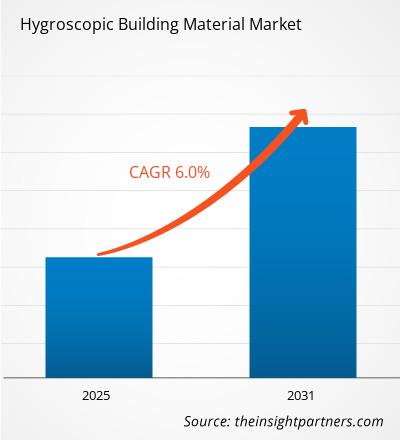
The global Hygroscopic Building Material Market is expanding steadily, driven by the increasing emphasis on indoor air quality (IAQ), passive humidity control, energy-efficient building design, and green building certifications. Hygroscopic building materials—such as clay plasters, bio-based composite boards, cellular concrete, porous gypsum boards, and specialized silica-based admixtures—possess the natural ability to absorb moisture from surrounding ambient air when indoor humidity is high and release it when conditions become dry. The Hygroscopic Building Material Market size is expected to reach US$ 1,415.9 Million by 2034 from US$ 952.37 Million in 2025. The market is estimated to record a CAGR of 5.08% from 2026 to 2034.
By naturally moderating indoor microclimates, hygroscopic surface materials reduce peak indoor humidity spikes, lower operational reliance on energy-intensive mechanical HVAC systems, and minimize the risk of mold growth, structural rot, and surface condensation. As modern building codes transition toward airtight construction envelopes, the integration of moisture-buffering substrates and bio-composites has become a essential design strategy for sustainable residential and commercial architecture globally.
Download Exclusive Sample PDF of the Hygroscopic Building Material Market Study — https://www.theinsightpartners.com/sample/TIPRE00040542
Key Market Report Drivers
Rising Adoption of Passive Moisture Management & Energy-Efficient Architecture: Incorporating hygroscopic materials into wall and ceiling assemblies buffers indoor relative humidity, enabling passive climate regulation. This decreases HVAC moisture-removal loads, directly lowering building energy consumption and operational carbon emissions.
Growing Focus on Indoor Air Quality (IAQ) and Mold Prevention: Uncontrolled humidity creates breeding grounds for mold, mildew, dust mites, and airborne bacterial pathogens. Hygroscopic plasters and boards prevent localized moisture accumulation, protecting occupant health and preventing indoor respiratory issues.
Strict Green Building Standards and Carbon Footprint Mandates: Global building standards such as LEED, BREEAM, and WELL encourage the adoption of natural, low-carbon, bio-based substrates—such as clay, hemp-lime, and porous mineral matrixes—that provide natural moisture regulation throughout a structure’s lifecycle.
Material Science Innovations in Composite and Porous Boards: Advances in functional additives, activated silica, and micro-porous mineral matrixes allow manufacturers to produce lightweight, fire-rated wall panels and insulation boards with significantly enhanced moisture sorption-desorption capacities.
Top Players in the Hygroscopic Building Material Market
The competitive global landscape features specialty chemical producers, sustainable building material formulators, and advanced mineral processing companies focused on moisture-wicking technology, bio-based binders, and low-embodied-carbon building products. Key industry players include:
BASF SE
Saint-Gobain Group
W.R. Grace & Co.
Arkema SA
Clariant AG
Knauf Insulation
Porocel Corporation (Evonik)
Rockwool A/S
CertainTeed LLC
Owens Corning
Buy Complete Report: https://www.theinsightpartners.com/buy/TIPRE00040542
Frequently Asked Questions (FAQs)
What was the global Hygroscopic Building Material Market size in 2025?
The global hygroscopic building material market size was valued at US$ 952.37 Million in 2025.
What is the projected market size and CAGR by 2034?
The market is projected to reach US$ 1,415.9 Million by 2034, growing at an estimated CAGR of 5.08% during the forecast period from 2026 to 2034.
How do hygroscopic building materials regulate indoor humidity?
Hygroscopic materials continuously exchange moisture vapor with indoor air; they absorb excess water vapor during high-humidity periods and release it back into the room when ambient relative humidity drops, maintaining an optimal humidity range (40%–60%).
Which material categories represent key segments in this market?
Primary categories include natural plasters (clay, lime), porous mineral materials (cellular concrete, porous gypsum), bio-composite panels (hemp-lime, wood fiber), and specialized silica-based building additives.
About Us
The Insight Partners is a one-stop industry research provider of actionable intelligence. We help our clients get solutions to their research requirements through our syndicated and consulting research services. We specialize in industries such as Semiconductor and Electronics, Aerospace and Defense, Automotive and Transportation, Energy and Utilities, Healthcare, Chemicals and Materials, and Technology.
Contact Us
If you have any queries about this report or would like further information, please contact us:
Contact Person: Sameer Joshi
E-mail: sales@theinsightpartners.com
Phone: +1-646-491-9876
