The global aerospace sector continues to experience steady expansion driven by rising passenger traffic, fleet modernization, and surging defense budgets worldwide. At the core of commercial, military, and general aviation manufacturing lies a fundamental structural component: rivets. These essential mechanical fasteners ensure structural integrity, aerodynamic efficiency, and high fatigue resistance across primary and secondary aircraft structures.
Get a PDF Sample- https://www.theinsightpartners.com/sample/TIPRE00021508
Market Drivers and Growth Catalyst
The steady growth of the fixed-wing aircraft rivets industry is closely linked to increasing production rates among major aircraft OEMs (Original Equipment Manufacturers). As commercial airlines expand their routes and replace aging fleets with fuel-efficient, next-generation aircraft, the demand for lightweight and ultra-durable fasteners has reached unprecedented levels.
Additionally, advancing military modernization programs globally are accelerating investments in fighter jets, transport aircraft, and strategic bombers. Military fixed-wing platforms require specialized rivets capable of withstanding extreme environmental conditions, thermal stress, and high vibration levels.
Material innovation serves as another pivotal catalyst for market expansion. Aerospace manufacturers are increasingly replacing traditional steel fasteners with high-strength aluminum alloys, titanium, and nickel-based superalloys. Titanium rivets, in particular, offer exceptional strength-to-weight ratios and superior corrosion resistance, making them ideal for integration with carbon-fiber-reinforced polymer (CFRP) composite structures now standard in modern aircraft design.
Market Forecast
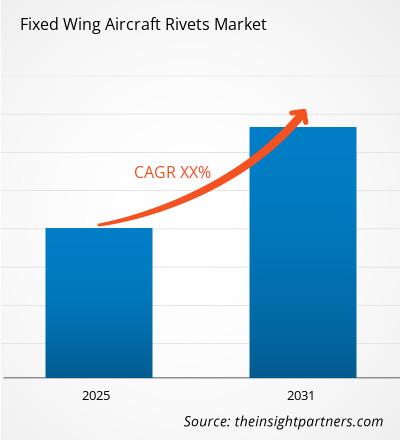
According to a comprehensive market research report published by The Insight Partners, the Fixed Wing Aircraft Rivets Market size is expected to reach US$ 5.59 Billion by 2034 from US$ 3.93 Billion in 2025. The market is estimated to record a CAGR of 4.50% from 2026 to 2034.
Key Market Segmentation Highlights
The fixed-wing aircraft rivets market is broadly categorized by material type, rivet type, application, and end user:
By Platform
- General Aviation Aircraft
- Commercial Aircraft
- Military Aircraft
By Product Type
- Blind Rivet
- Solid Shank Rivet
- Pull-Thru Rivets
- Bulbed Cherrylock Rivet
By End-User
- OEMs
- MRO Service Providers
Get Full Copy of This Report- https://www.theinsightpartners.com/buy/TIPRE00021508
Regional Analysis
North America currently commands a dominant position in the global market, backed by the presence of premier commercial aircraft manufacturers, major defense contractors, and a robust MRO infrastructure in the United States. Europe follows closely, driven by ongoing commercial aircraft production schedules and collaborative European defense projects.
Meanwhile, the Asia-Pacific region is projected to register the fastest growth rate during the forecast period. Factors such as rapid urbanization, growing middle-class populations, increasing air passenger traffic in developing economies like China and India, and rising indigenous aircraft manufacturing initiatives contribute significantly to regional demand.
Key Players in the Market
The fixed-wing aircraft rivets market is characterized by a mix of established global conglomerates and specialized fastener manufacturers. Leading companies are focusing on long-term supply agreements with primary OEMs, strategic acquisitions, and manufacturing process automation to expand their global footprint.
Key players operating in the global fixed-wing aircraft rivets market include:
B and B Specialties, Inc
Ho-Ho-Kus, Inc.
Howmet Aerospace
LISI AEROSPACE
National Aerospace Fasteners Corporation
Palmer Bolt and Supply
Precision Castparts Corp.
Stanley Black and Decker, Inc.
TFI Aerospace
TriMas
Future Outlook
The future of the fixed-wing aircraft rivets market remains bright, closely intertwined with technological advancements in aerospace manufacturing and sustainable flight initiatives. Over the coming decade, the industry will focus heavily on automated installation systems and robotic riveters, which reduce assembly times, lower labor costs, and eliminate human error in high-precision structural jointing. Furthermore, as hybrid-electric and hydrogen-powered fixed-wing concepts transition from experimental stages to commercial feasibility, fastener engineering will evolve toward ultra-lightweight, high-thermal-resistance materials. Supported by robust commercial order backlogs, rising defense expenditures, and steady MRO operations, the market is poised to maintain resilient growth through 2034.
Related Report-
