The growing focus on biomedical research, biomarker discovery, and advanced protein analysis is accelerating demand for high quality antibody products across research laboratories worldwide. Continuous innovation in assay development and laboratory automation is strengthening the adoption of specialized biological reagents.
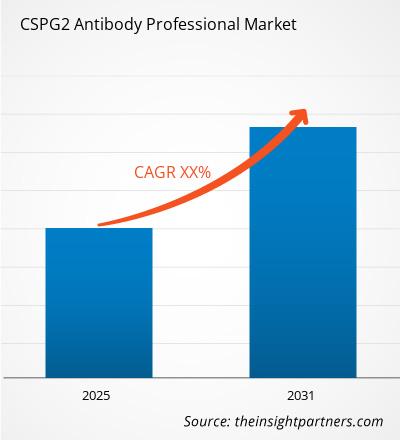
The CSPG2 Antibody Professional Market was valued at US$ 170.91 million in 2025 and is projected to reach US$ 330.43 million by 2034, registering a CAGR of 7.60% during 2026 to 2034. Rising demand for validated antibodies in cell biology, molecular diagnostics, and translational research continues to strengthen market growth. Increasing collaborations between biotechnology firms, academic institutions, and pharmaceutical companies are also driving innovation in antibody production and validation technologies.
Get Sample PDF @ https://www.theinsightpartners.com/sample/TIPRE00026514
Growing Biomedical Research Investments Fuel Industry Expansion
Biomedical research remains one of the primary growth drivers for the CSPG2 Antibody Professional Market. Researchers increasingly rely on highly specific antibodies to study protein expression, signaling pathways, biomarkers, and disease mechanisms. The rapid expansion of proteomics and molecular biology research has significantly increased the need for reliable and reproducible antibody solutions.
Governments and private organizations continue investing heavily in biotechnology infrastructure and laboratory modernization. These investments enable research institutes to adopt advanced analytical technologies that require high performance antibodies. Furthermore, pharmaceutical companies are utilizing specialized antibodies throughout drug discovery and therapeutic validation processes, further supporting industry growth.
Advancements in recombinant antibody technology, purification techniques, and quality validation protocols have improved product consistency and experimental reproducibility. These improvements have enhanced user confidence and accelerated adoption across academic and commercial research facilities.
Technological Advancements Continue to Improve Product Performance
Technological innovation is transforming antibody development and manufacturing processes. Modern production techniques enable manufacturers to improve antibody specificity, purity, and batch consistency while reducing variability between production cycles.
Automation within laboratory workflows has increased the demand for standardized biological reagents that deliver reproducible results across multiple experimental platforms. Improved quality control systems and digital validation methods are allowing manufacturers to provide comprehensive product documentation, helping researchers select antibodies suitable for complex applications.
The development of highly purified antibodies with purity levels exceeding 95% and 99% is particularly supporting advanced molecular studies, biomarker validation, and precision analytical techniques. These technological improvements continue to strengthen product reliability across life science applications.
Application Segments Create Diverse Growth Opportunities
Biopharmaceutical companies represent the largest application segment due to extensive utilization of antibodies in therapeutic research, biomarker discovery, and molecular characterization. Continuous investments in biologics development and personalized medicine programs are expected to sustain demand throughout the forecast period.
Bioscience research institutes also demonstrate strong growth potential as academic organizations expand research activities focused on genetics, proteomics, oncology, and cell biology. Universities and government-funded laboratories increasingly require validated antibodies to ensure reliable experimental outcomes.
Hospitals contribute to market demand through research departments involved in translational medicine, pathology investigations, and clinical research initiatives. Collaboration between healthcare institutions and biotechnology companies continues to broaden antibody applications within biomedical research.
Based on type, the industry is segmented into:
- Above 90%
- Above 95%
- Above 99%
- Others
Based on application, the market includes:
- Biopharmaceutical Companies
- Hospitals
- Bioscience Research Institutes
- Others
Regional Landscape Highlights Strong North American Leadership
North America continues to dominate the global landscape due to its advanced biotechnology ecosystem, established pharmaceutical industry, and extensive academic research network. Strong funding for biomedical research and widespread adoption of advanced laboratory technologies support continued regional growth.
The United States remains the leading contributor because of significant investments in pharmaceutical innovation, molecular diagnostics, and life science research. Canada also contributes through expanding biotechnology programs and increasing collaboration between research institutions and industry participants.
Europe maintains a significant share supported by Germany, the United Kingdom, and France, where well-developed pharmaceutical sectors and research organizations continue investing in antibody technologies.
Asia Pacific is expected to register the fastest growth during the forecast period. China, Japan, South Korea, and India continue strengthening biotechnology capabilities through increasing research expenditure, government initiatives, and expanding pharmaceutical manufacturing. Growing investments in laboratory infrastructure across emerging economies are expected to create attractive opportunities for antibody suppliers.
Competitive Landscape
The CSPG2 Antibody Professional Market remains highly competitive as manufacturers focus on expanding product portfolios, improving antibody validation, and strengthening collaborations with research organizations. Companies are investing in advanced manufacturing technologies, recombinant antibody development, and quality assurance systems to enhance product performance and maintain competitive advantages.
Key players include:
- Medtronic plc
- Axonics, Inc.
- Laborie
- Boston Scientific Corporation
- Abbott Laboratories
- NEVRO CORP
- LivaNova PLC
- Synapse Biomedical Inc.
- NeuroPace, Inc.
- St. Jude Medical, Inc.
Strategic partnerships, product innovation, laboratory automation, and expansion into emerging biotechnology markets remain major competitive strategies. Suppliers are also emphasizing application-specific antibody solutions to address the evolving requirements of pharmaceutical companies, research institutes, and academic laboratories.
Interested in Purchasing this Report? Click here @ https://www.theinsightpartners.com/buy/TIPRE00026514
Future Outlook
The CSPG2 Antibody Professional Market is expected to maintain steady growth through 2034, supported by increasing biomedical research activities, continuous advances in antibody engineering, and rising investments in life sciences infrastructure. Expanding proteomics research, personalized medicine initiatives, and collaborative research programs will continue to create new opportunities across global markets.
Related Report:
1) Microcarriers Market Key Players and Opportunities by 2030
2) Generic Drugs Market Report 2031 by Segments, Geography, Dynamics
3) Empty Capsules Market Demand, Trends & Forecast to 2031
About Us –
The Insight Partners provides comprehensive syndicated and tailored market research services in the healthcare, technology, and industrial domains. Renowned for delivering strategic intelligence and practical insights, the firm empowers businesses to remain competitive in ever-evolving global markets.
Contact Us:
Ankit Mathur | The Insight Partners
E-mail: ankit.mathur@theinsightpartners.com
Phone: +1-646-491-9876
Also Available in : Korean German Japanese French Chinese Italian Spanish
