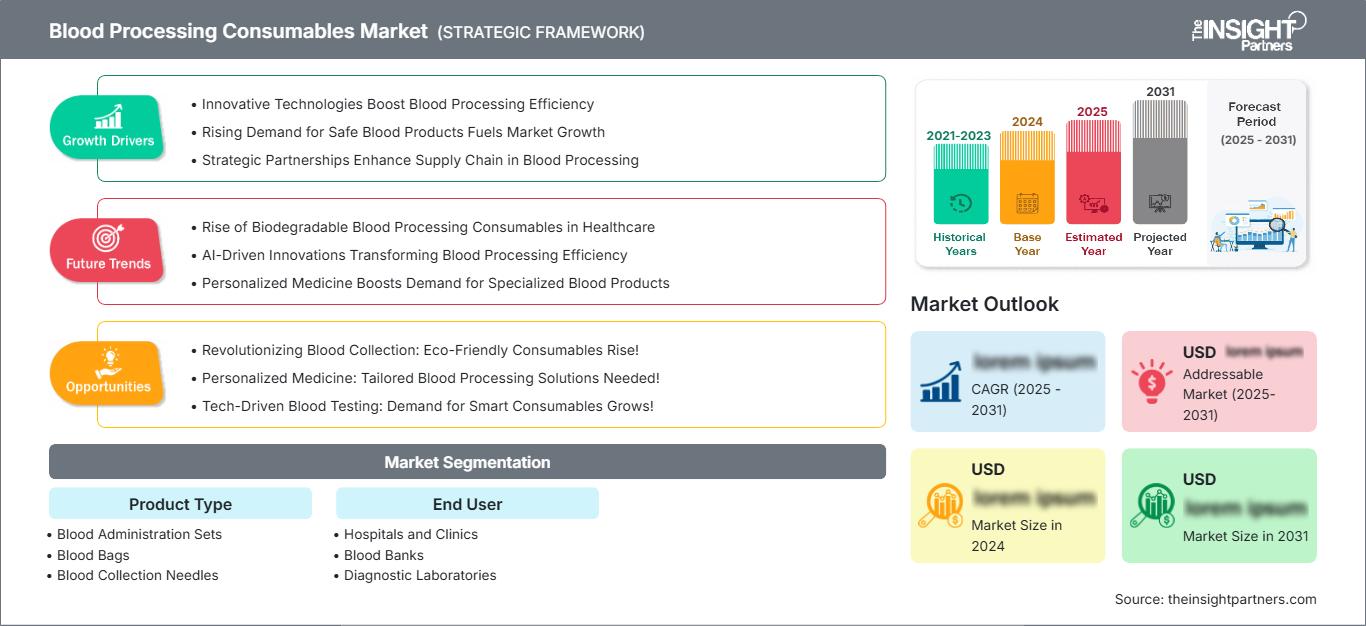
The Blood Processing Consumables Market is projected to reach US$ 37.80 billion by 2034, increasing from US$ 22.57 billion in 2025 and registering a CAGR of 5.90% during the forecast period.
The market is supported by the growing need for reliable blood collection and processing solutions across hospitals, clinics, blood banks, and diagnostic laboratories. The increasing demand for blood and blood components for various surgical procedures is one of the major factors contributing to market expansion. In addition, shortages between the demand and supply of blood units in several emerging economies are encouraging investments in blood collection and storage infrastructure.
Get Sample PDF – https://www.theinsightpartners.com/sample/TIPRE00022292
Growing Demand for Blood and Blood Components
The rising number of surgical procedures and the continued need for blood transfusions are generating sustained demand for consumables used throughout the blood processing workflow. Blood administration sets, blood bags, collection needles, tubes, and filters are essential for maintaining efficient blood collection and transfusion processes. The growing emphasis on safe blood handling also increases the importance of dependable consumables that can support standardized procedures.
Healthcare providers require consumables that facilitate smooth withdrawal, processing, and storage of collected blood. Proper processing and temperature-controlled storage are important for maintaining the quality and stability of blood components before they are administered to patients. As healthcare systems expand their capacity for blood collection and transfusion services, demand for associated consumables is expected to increase.
Expansion of Hospitals and Blood Banks
The establishment of new hospitals and blood banks is another important factor shaping market development. Expanding healthcare infrastructure creates demand for blood collection and processing equipment as well as the consumables required to operate these systems. Blood banks require a continuous supply of products for collecting, separating, testing, processing, and storing blood components.
Emerging economies are particularly important growth areas because gaps between blood demand and supply continue to create pressure on healthcare systems. Investments in healthcare infrastructure and blood banking capabilities can strengthen blood availability while supporting the adoption of standardized consumables. The market is therefore closely connected with improvements in healthcare access, transfusion services, and diagnostic capabilities.
Product Type Analysis
Based on product type, the market is segmented into blood administration sets, blood bags, blood collection needles, blood collection tubes, blood filters, blood lancets, blood grouping reagents, blood coagulation reagents, and others.
Blood bags and collection-related products form an essential part of the blood processing workflow because they are directly involved in the collection and handling of blood. Collection tubes, needles, filters, and administration sets support different stages ranging from sample collection to transfusion. Meanwhile, blood grouping and coagulation reagents are important for testing and evaluating blood samples before transfusion or other clinical applications.
The diversity of products within the segment allows manufacturers to address requirements across blood banks, hospitals, and diagnostic laboratories. Product innovation aimed at improving safety, usability, and processing efficiency is expected to remain relevant as healthcare providers seek dependable consumable solutions.
End-User Landscape
By end user, the market covers hospitals and clinics, blood banks, diagnostic laboratories, and other healthcare facilities. Blood banks represent an important application environment because they require consumables across multiple stages of blood collection and processing. Hospitals and clinics also generate significant demand because of surgical procedures, emergency care, and transfusion-related requirements.
Diagnostic laboratories contribute to demand through their use of collection tubes, blood grouping reagents, coagulation reagents, and other products required for laboratory testing. As diagnostic capabilities expand and healthcare providers place greater emphasis on timely testing, consumables will remain an integral part of routine blood-related workflows.
Regional Market Perspective
The market is analyzed across North America, Europe, Asia Pacific, the Middle East and Africa, and South and Central America. The report evaluates regional trends and opportunities as well as country-level market dynamics.
Regional growth is influenced by healthcare infrastructure, blood donation and transfusion practices, hospital capacity, diagnostic services, and investments in blood banks. Developed healthcare markets benefit from established transfusion networks and advanced diagnostic infrastructure, while emerging markets offer opportunities associated with expanding healthcare facilities and efforts to address blood supply shortages.
Key Companies in the Market
The competitive landscape includes established healthcare, diagnostics, and medical technology companies. Key players include:
- bioMérieux SA
- Abbott Laboratories
- Bio-Rad Laboratories, Inc.
- Becton, Dickinson and Company
- F. Hoffmann-La Roche Ltd
- Danaher Corporation
- Immucor, Inc.
- ThermoGenesis Holdings, Inc.
- Grifols, S.A.
- Terumo Corporation
These companies are involved in organic and inorganic growth strategies, including product launches, approvals, patents, partnerships, collaborations, and acquisitions. Such strategies help companies expand their product portfolios, strengthen their customer base, and improve their competitive positioning.
Market Challenges and Opportunities
Despite favorable growth prospects, blood collection and processing procedures involve challenges, including the possibility of injuries and infections during blood collection. These concerns reinforce the need for safe and reliable consumables and standardized handling procedures. Manufacturers that focus on product quality and improved safety can address these requirements while strengthening their market position.
Get Full Copy of This Report @ https://www.theinsightpartners.com/buy/TIPRE00022292
At the same time, continuing healthcare infrastructure development, rising demand for blood components, and the establishment of new blood banks create opportunities for market participants. Increasing demand across emerging economies is particularly significant because healthcare systems are working to improve the availability and management of blood resources.
Future Outlook
The future outlook for the blood processing consumables market remains positive, supported by increasing demand for blood and blood components, expansion of hospitals and blood banks, and continuing development of diagnostic and transfusion infrastructure. The broad product portfolio covering collection, processing, testing, filtration, storage, and administration provides multiple avenues for growth.
Over the coming years, manufacturers are expected to focus on strengthening product portfolios and pursuing strategic collaborations, acquisitions, and new product developments. The expansion of healthcare services in emerging economies and persistent requirements for safe blood processing are likely to sustain demand for consumables through 2034.
Related Reports @
Blood Pressure Cuffs Professional Market Share, Demand & Growth by 2034
Blood Circulation Machine Market Share, Size & Demand by 2034
About Us –
The Insight Partners provides comprehensive syndicated and tailored market research services in the healthcare, technology, and industrial domains. Renowned for delivering strategic intelligence and practical insights, the firm empowers businesses to remain competitive in ever-evolving global markets.
Contact Us:
Contact Person: Ankit Mathur
E-mail: ankit.mathur@theinsightpartners.com
Phone: +1-646-491-9876
Also Available in : Korean German Japanese French Chinese Italian Spanish
