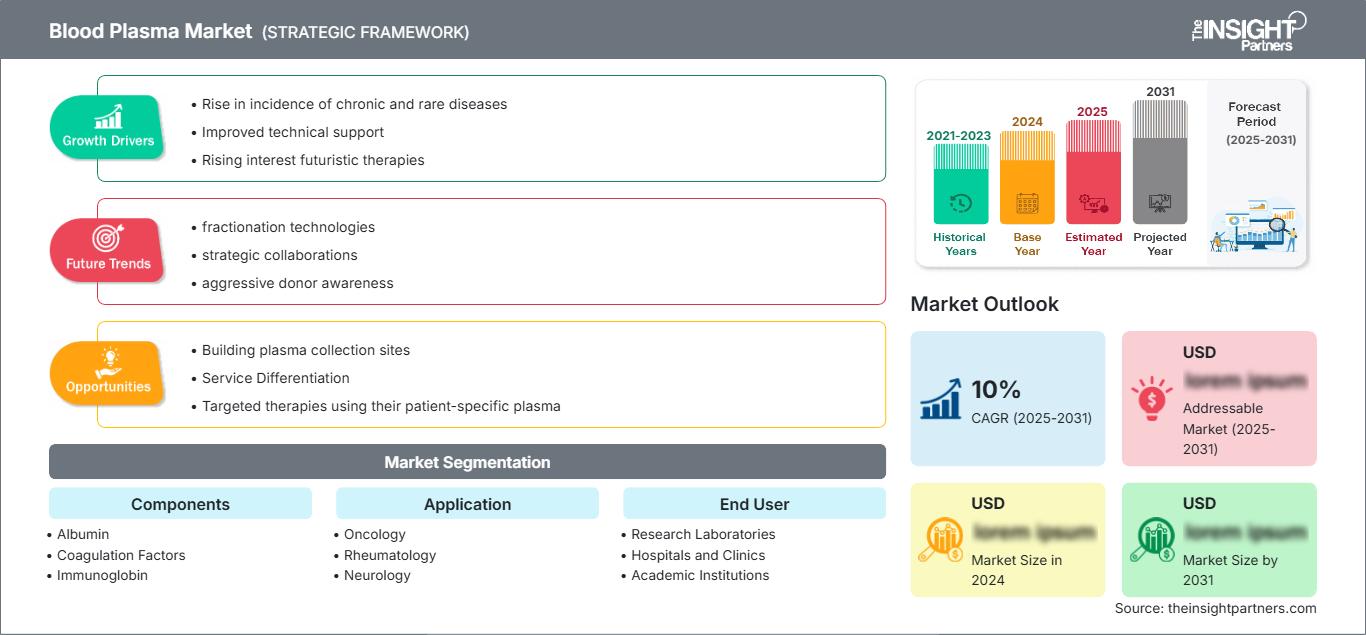
The Blood Plasma Market is projected to grow from US$ 44.83 Billion in 2025 to US$ 83.02 Billion by 2034, with a CAGR of 8.01% from 2026 to 2034.
Growing Demand for Plasma-Derived Products
Blood plasma contains proteins and other components that are essential for developing a wide range of therapeutic products. Plasma-derived therapies are widely used for patients with immune deficiencies, bleeding disorders, and other medical conditions requiring replacement or supplementation of specific plasma proteins.
The increasing prevalence of chronic and rare diseases is creating sustained demand for plasma-derived medicines. Immunoglobulins, albumin, coagulation factors, and other plasma proteins are important components of modern treatment protocols. As diagnosis improves and access to specialized healthcare expands, the number of patients receiving these therapies is also increasing.
Get Sample PDF – https://www.theinsightpartners.com/sample/TIPRE00003721
Immunoglobulins Remain an Important Product Segment
Immunoglobulins represent a major application area within the plasma industry. Intravenous immunoglobulin and subcutaneous immunoglobulin therapies are used for a broad range of primary and secondary immunodeficiency disorders as well as several autoimmune and inflammatory conditions.
Growing recognition of immunodeficiency diseases and improvements in diagnosis are contributing to increased utilization. Healthcare providers are also placing greater emphasis on maintaining uninterrupted supplies of essential plasma-derived therapies because many patients require long-term treatment.
Albumin is another important plasma-derived product. It is used in several clinical applications, including volume replacement and the management of certain medical conditions. Increasing healthcare expenditure and growing demand for advanced treatment options are supporting the consumption of albumin-based products.
Increasing Plasma Collection Supports Market Expansion
The availability of sufficient source plasma is fundamental to the production of plasma-derived therapies. Plasma is primarily obtained through plasmapheresis, a collection process that separates plasma from other blood components and allows the remaining components to be returned to the donor.
Expansion of plasma collection infrastructure is therefore an important factor influencing the market. Plasma collection centers, improved donor management systems, enhanced collection technologies, and initiatives designed to increase donor participation can strengthen the availability of raw material for fractionation.
The industry also continues to focus on donor safety and collection efficiency. Maintaining high standards for donor screening, plasma testing, storage, and transportation is essential for ensuring the quality and safety of plasma-derived products.
Technological Advancements in Plasma Fractionation
Advancements in plasma fractionation and purification technologies are helping manufacturers improve the efficiency and consistency of plasma-derived product manufacturing. Fractionation involves separating plasma proteins so that individual components can be purified and converted into therapeutic products.
Manufacturers are investing in technologies that can improve yields, quality control, production efficiency, and product safety. Improvements across manufacturing processes can help address growing demand while supporting consistent product availability.
The development of sophisticated purification and viral safety technologies is also important for maintaining the safety profile of plasma-derived medicines. As regulatory requirements and quality expectations continue to evolve, manufacturers are expected to prioritize advanced processing and stringent quality-control systems.
Regional Market Development
The blood plasma market is supported by growing demand across developed and emerging healthcare systems. North America and Europe have established plasma collection networks, advanced healthcare infrastructure, and strong demand for plasma-derived therapies. These markets also benefit from the presence of major plasma fractionation and biopharmaceutical companies.
Asia Pacific is becoming increasingly important as healthcare infrastructure develops and awareness of plasma-derived therapies improves. Growing investments in healthcare facilities, increasing diagnosis of chronic and rare diseases, and efforts to strengthen domestic plasma collection and biopharmaceutical manufacturing are creating opportunities in countries across the region.
The expansion of healthcare access in emerging economies can further increase demand for immunoglobulins, albumin, and coagulation products. However, ensuring adequate plasma collection capacity and maintaining reliable supply chains remain important considerations for market participants.
Key Players in the Blood Plasma Market
Leading companies operating in the market include:
- CSL Limited
- Grifols S.A.
- Takeda Pharmaceutical Company Limited
- Octapharma AG
- Kedrion S.p.A.
- LFB S.A.
- Biotest AG
- Sanquin Blood Supply Foundation
- China Biologic Products Holdings, Inc.
- Bio Products Laboratory Ltd.
These companies are involved in plasma collection, fractionation, manufacturing, and commercialization of plasma-derived therapeutic products. Their strategies include expanding collection networks, strengthening production capabilities, improving technologies, and broadening access to plasma-based treatments.
Supply Chain and Plasma Collection Challenges
Despite favorable growth prospects, the industry faces challenges related to plasma availability, collection costs, donor recruitment, regulatory requirements, and supply-chain management. Plasma-derived products require significant volumes of source plasma, making reliable donor participation particularly important.
Get Full Copy of This Report @ https://www.theinsightpartners.com/buy/TIPRE00003721
Disruptions in plasma collection can affect downstream manufacturing and product availability. Companies therefore continue to focus on expanding collection capacity, improving donor retention, optimizing logistics, and maintaining adequate inventories. Regulatory compliance across collection and manufacturing stages is also critical because plasma products require rigorous testing and quality assurance.
Future Outlook
The blood plasma market is expected to maintain strong growth through 2034 as demand for plasma-derived therapies continues to increase. Expansion in immunoglobulin use, growing requirements for albumin and coagulation products, and increasing diagnosis of immune and bleeding disorders are expected to remain important market drivers.
Future industry development is also likely to center on expanding plasma collection networks and improving fractionation efficiency. Greater investment in collection infrastructure, manufacturing technologies, quality-control systems, and supply-chain capabilities can help companies respond to increasing global demand.
Emerging markets are expected to provide additional opportunities as healthcare infrastructure improves and access to plasma-derived therapies expands. At the same time, manufacturers will need to balance increasing demand with reliable plasma sourcing, regulatory compliance, donor safety, and efficient production.
Related Reports @
Blood Plasma Derivatives Market Growth and Forecast by 2028
Immunoglobulin Market Key Players Analysis, and Growth Forecast by 2031
About Us –
The Insight Partners provides comprehensive syndicated and tailored market research services in the healthcare, technology, and industrial domains. Renowned for delivering strategic intelligence and practical insights, the firm empowers businesses to remain competitive in ever-evolving global markets.
Contact Us:
Contact Person: Ankit Mathur
E-mail: ankit.mathur@theinsightpartners.com
Phone: +1-646-491-9876
Also Available in : Korean German Japanese French Chinese Italian Spanish
