The Blood Platelet Market is experiencing significant transformation as healthcare systems strengthen blood transfusion infrastructure, expand oncology and surgical services, and adopt advanced platelet collection and processing technologies. Platelets play a critical role in managing bleeding and supporting patients with thrombocytopenia, hematological disorders, trauma, cancer, and those undergoing complex surgical procedures. Growing demand for platelet concentrates, apheresis platelets, pathogen reduction technologies, and efficient transfusion services is creating favorable conditions for market expansion.
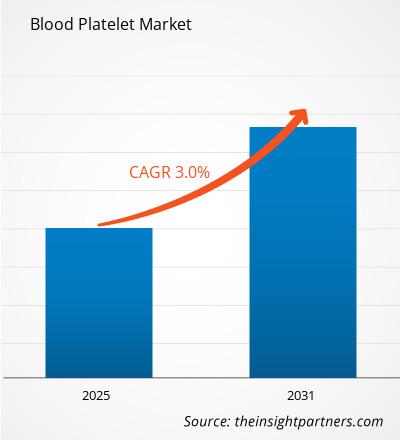
The Blood Platelet Market trends indicate a shift toward automated collection, improved component processing, digital inventory management, pathogen reduction, and stronger blood-supply resilience. The market is anticipated to increase from US$ 7.04 Billion in 2025 to US$ 12.18 Billion by 2034, registering a CAGR of 6.29% from 2026 to 2034. Increasing oncology procedure intensity, stem cell transplantation, trauma care, perioperative procedures, and modernization of blood banking systems are among the major factors influencing market growth.
Download Sample PDF: https://www.theinsightpartners.com/sample/TIPRE00040104
What Are the Key Blood Platelet Market Trends Driving Growth?
One of the most significant Blood Platelet Market Trends is the increasing adoption of automated platelet collection and processing. Blood centers are moving from labor-intensive manual separation toward automated whole-blood processing and closed-system apheresis. These technologies can improve processing consistency, optimize platelet yields, reduce manual intervention, and help address workforce constraints.
The rising intensity of oncology treatments is another major growth factor. Chemotherapy, hematological malignancies, and hematopoietic stem cell transplantation can suppress platelet production, creating recurring requirements for platelet transfusions. Increasing access to cancer treatment and the expansion of tertiary hospitals are therefore contributing to sustained demand.
Trauma care and complex surgical procedures are also important contributors. Platelet availability is essential for hospitals managing emergencies, cardiovascular surgery, transplant procedures, neurosurgery, and other interventions where bleeding management is critical.
How Are Automation and Digitalization Changing the Blood Platelet Market?
Automation is reshaping the entire platelet supply chain, from donor collection and component processing to storage, inventory management, and hospital distribution. Automated systems can help blood centers improve productivity while maintaining standardized component quality.
Digital inventory management is becoming increasingly relevant because platelets have a relatively short storage duration. Blood centers and hospitals must balance supply with fluctuating clinical demand while minimizing expiration and wastage. Predictive inventory tools can combine historical demand, seasonal patterns, hospital orders, and emergency requirements to improve allocation decisions.
Connectivity between collection systems, laboratory information systems, hospital demand platforms, and transfusion records is also becoming an important area of development. Greater visibility across the blood supply chain can support improved inventory planning and transfusion readiness.
Blood Platelet Market Growth Analysis
The Blood Platelet Market is being supported by strong clinical demand across oncology, hematology, trauma, and surgical care. Thrombocytopenia is identified by The Insight Partners as a high-growth application, supported by chemotherapy, bone marrow disorders, immune conditions, infections, and critical illness. Hospitals remain the largest end users because of their extensive oncology, trauma, transplant, intensive-care, and surgical activities.
Supply-side constraints remain a defining characteristic of the market. Donor availability, seasonal collection patterns, staffing limitations, short platelet shelf life, and strict quality requirements can affect supply reliability. These constraints are encouraging blood centers to invest in automation, demand forecasting, pathogen reduction, and improved cold-chain and inventory-management practices.
The growing emphasis on blood-management programs is also influencing purchasing decisions. Healthcare providers increasingly seek technologies that can improve supply reliability while supporting appropriate transfusion practices and reducing avoidable wastage.
Blood Platelet Market Trends in Pathogen Reduction and Transfusion Safety
Transfusion safety is becoming an increasingly important component of market development. Platelets are stored at room temperature, creating particular concerns regarding bacterial contamination. Consequently, blood centers are investing in technologies and processes designed to strengthen safety, traceability, screening, and hemovigilance.
Pathogen reduction is gaining importance as healthcare organizations seek additional approaches to reduce transfusion-related infectious risks. Leukoreduction, bacterial risk reduction, improved screening, and enhanced quality documentation are also contributing to changes in procurement priorities.
The market is therefore moving beyond basic platelet availability toward a broader emphasis on safe, traceable, standardized, and digitally managed platelet supply. Suppliers capable of supporting multiple stages of the blood-management workflow can benefit from this shift.
Blood Platelet Market Opportunities
Modernization of blood centers in emerging economies represents a major opportunity. Healthcare systems across Asia, the Middle East, and Latin America are expanding oncology services, trauma capabilities, tertiary hospitals, and national blood programs. These developments can increase demand for automated platelet collection, component processing, inventory-management systems, and transfusion safety technologies.
Asia Pacific is particularly promising because of its expanding healthcare infrastructure and rising clinical demand. The Insight Partners estimates that the region accounted for approximately 22–25% of the market in 2025 and is expected to record a 7.0–7.8% CAGR during 2026–2034.
Another opportunity lies in integrated hospital blood-management partnerships. Hospitals increasingly require reliable platelet availability while also seeking to reduce unnecessary transfusions and product wastage. Companies and blood services can create value through inventory analytics, supply planning, clinical education, decision-support tools, and transfusion management services.
Blood Platelet Market Competitive Landscape
Competition is concentrated among companies involved in blood collection, component processing, transfusion management, plasma technologies, and related medical technologies. Companies compete through collection efficiency, platelet yield, donor comfort, processing speed, data connectivity, safety technologies, consumables, and service capabilities.
Key players include:
Terumo Blood and Cell Technologies Corporation, Haemonetics Corporation, Fresenius Kabi AG, Grifols S.A., CSL Behring LLC, BioLife Plasma Services L.P., Medtronic plc, Baxter International Inc., Octapharma AG, Blood Systems Inc.
The competitive environment is increasingly shifting toward integrated solutions combining equipment, consumables, software, services, regulatory documentation, and inventory-management capabilities. Established companies with broad installed bases can leverage these relationships to expand recurring revenue opportunities.
Purchase a Copy of this report: https://www.theinsightpartners.com/buy/TIPRE00040104
Future Outlook
The future of the Blood Platelet Market is expected to be influenced by increasing automation, digital inventory orchestration, transfusion safety initiatives, and the modernization of blood collection infrastructure.
Predictive inventory platforms are likely to become more sophisticated, connecting donor collection data with hospital demand, platelet age, emergency requirements, and wastage risk. This can help blood centers improve supply reliability and allocate products more efficiently.
Alternative platelet supply models are also expected to receive increasing attention. Apheresis will remain important, while whole-blood-derived platelets, pooled systems, pathogen-reduced components, extended-storage research, and emerging manufactured platelet technologies may contribute to a more diversified supply ecosystem.
Manufacturers are also likely to focus on improving platelet yield, operator efficiency, donor experience, system connectivity, and compatibility with pathogen-reduction workflows. Companies that combine equipment with software, consumables, services, and transfusion-support capabilities can strengthen their long-term market positions.
Related Reports:
Pharmaceutical Excipients Market Growth, Trends & Demand by 2034
Albumin Market Size, Growth Rate and Regional Share (2025-2031)
About Us
The Insight Partners is a one-stop provider of actionable industry research and intelligence. We help our clients in getting solutions to their research requirements through our syndicated and consulting research services. We specialize in industries such as Semiconductor and Electronics, Aerospace and Defense, Automotive and Transportation, Healthcare IT, Manufacturing and Construction, Medical Devices, Technology, Media and Telecommunications, Food and Beverages, Consumer Goods, and Chemicals and Materials.
Contact Us
Contact Person: Ankit Mathur
Phone: +1-646-491-9876
E-mail : sales@theinsightpartners.com
