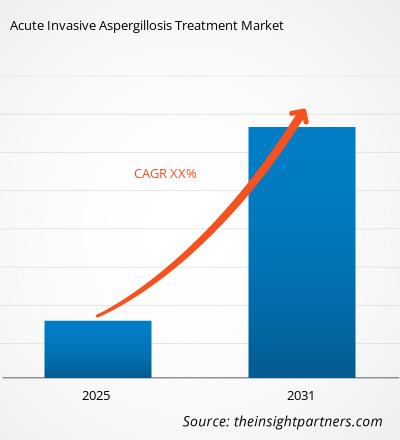
The Acute Invasive Aspergillosis Treatment Market is expanding as healthcare systems strengthen the diagnosis and management of severe fungal infections among vulnerable patient populations. Acute invasive aspergillosis is a serious infection caused by Aspergillus species and can affect individuals with weakened immune systems, including patients undergoing cancer treatment, transplantation, intensive immunosuppressive therapy, or prolonged critical care. Growing awareness of invasive fungal infections, improved diagnostic capabilities, and increasing access to antifungal therapies are supporting demand for effective treatment options.
The Acute Invasive Aspergillosis Treatment Market growth is being supported by increasing numbers of immunocompromised patients, rising incidence of invasive fungal infections, advances in antifungal drug development, and improvements in clinical diagnosis. The market size stood at US$ 846.68 Million in 2025 and is expected to reach US$ 1,522.50 Million by 2034, registering a CAGR of 6.74% from 2026 to 2034. Increasing healthcare expenditure and the development of targeted treatment approaches are also creating opportunities for pharmaceutical companies and healthcare providers.
Download Sample PDF: https://www.theinsightpartners.com/sample/TIPRE00023423
What Factors Are Driving Acute Invasive Aspergillosis Treatment Market Growth?
One of the most important factors supporting Acute Invasive Aspergillosis Treatment Market Growth is the increasing population of immunocompromised patients. Individuals undergoing hematopoietic stem cell transplantation, solid-organ transplantation, chemotherapy, or intensive immunosuppressive treatment are particularly vulnerable to invasive fungal infections. As the number of such procedures increases globally, demand for effective antifungal treatment is also expected to rise.
The growing prevalence of hematological malignancies is another important market driver. Patients with leukemia and other blood cancers can experience prolonged periods of immunosuppression, increasing susceptibility to opportunistic infections. Improved survival among high-risk patient groups is also creating a greater need for infection prevention, early diagnosis, and effective treatment.
Advancements in medical diagnostics are contributing to market development. Improved fungal biomarkers, imaging techniques, molecular diagnostics, and microbiological testing can help healthcare professionals identify invasive aspergillosis more effectively. Earlier diagnosis can facilitate faster treatment initiation and improve the management of severe infections.
How Are Treatment Innovations Creating New Market Opportunities?
Treatment innovation represents a significant opportunity for the Acute Invasive Aspergillosis Treatment Market. Conventional antifungal therapies remain important, but the emergence of resistance, treatment intolerance, drug interactions, and complex patient conditions is encouraging pharmaceutical companies to develop improved therapeutic approaches.
New antifungal agents with differentiated mechanisms of action can address limitations associated with existing therapies. Drug development is increasingly focused on improving efficacy, safety, pharmacokinetic profiles, dosing convenience, and suitability for patients with multiple underlying conditions.
The development of targeted therapies and optimized treatment combinations can also provide opportunities for pharmaceutical companies. Personalized treatment strategies based on infection severity, patient characteristics, pathogen susceptibility, and underlying disease may become increasingly relevant in clinical practice.
Acute Invasive Aspergillosis Treatment Market Growth Drivers
The expanding use of hematopoietic stem cell transplantation and solid-organ transplantation is a major contributor to demand. Transplant recipients often receive immunosuppressive medications, increasing their susceptibility to opportunistic infections. Healthcare providers therefore require effective antifungal therapies for both prophylaxis and treatment.
Cancer care is another significant growth area. Increasing numbers of patients receiving intensive chemotherapy and immunomodulatory therapies can create a larger population at risk of invasive fungal infections. Improvements in cancer survival can further increase the long-term requirement for infection management.
The expansion of intensive care services also supports demand. Critically ill patients may have multiple risk factors for invasive fungal disease, including prolonged hospitalization, respiratory complications, and immunosuppression. Greater awareness among clinicians is encouraging more systematic evaluation of fungal infections in high-risk patients.
Acute Invasive Aspergillosis Treatment Market Opportunities
The market offers substantial opportunities for pharmaceutical companies developing next-generation antifungal therapies. Products that demonstrate improved efficacy against resistant Aspergillus strains could address an important unmet clinical need.
Another opportunity lies in early diagnosis and treatment integration. Companies developing antifungal therapies alongside companion diagnostic technologies may be able to support faster identification of patients requiring treatment. Improved diagnostic-treatment pathways can help clinicians initiate appropriate therapy more rapidly.
Emerging healthcare markets also present opportunities as access to specialized infectious-disease services expands. Investments in hospitals, oncology centers, transplant facilities, and advanced diagnostic laboratories can increase the availability of invasive aspergillosis diagnosis and treatment.
Strategic partnerships represent another growth avenue. Pharmaceutical companies can collaborate with research institutions, biotechnology companies, diagnostic developers, and healthcare organizations to accelerate drug development and improve treatment strategies.
Acute Invasive Aspergillosis Treatment Market Trends
One of the most important trends is the increasing attention to antifungal resistance. Resistance to commonly used antifungal agents can complicate treatment and increase the need for alternative therapies. Pharmaceutical companies are therefore exploring new mechanisms and compounds capable of addressing resistant infections.
Another trend is the movement toward precision treatment. Clinicians increasingly consider patient-specific characteristics, pathogen susceptibility, organ function, previous antifungal exposure, and drug interactions when selecting therapy. This approach can improve treatment optimization in complex patients.
Diagnostic innovation is also transforming the treatment landscape. Molecular testing, biomarker-based diagnosis, and improved imaging technologies can help shorten the time required to identify invasive fungal disease. Faster diagnosis can support earlier treatment and potentially improve clinical outcomes.
Acute Invasive Aspergillosis Treatment Market Competitive Landscape
The competitive landscape includes pharmaceutical companies and biotechnology organizations involved in antifungal drug development and commercialization. Companies compete through drug efficacy, safety profiles, resistance coverage, clinical evidence, product availability, and research and development capabilities.
Key players include:
GlaxoSmithKline, Mylan Pharmaceuticals, Inc., Novartis AG, Abbott Laboratories, Eli Lilly and Company, AstraZeneca Plc, Pfizer Inc., Johnson & Johnson, Takeda Pharmaceutical Company Limited, Astellas Pharma Inc., Basilea Pharmaceutica International Ltd.
Established pharmaceutical companies benefit from extensive commercial networks and established antifungal portfolios, while biotechnology companies are contributing innovation through novel drug candidates and alternative mechanisms of action.
Purchase a Copy of this report: https://www.theinsightpartners.com/buy/TIPRE00023423
Future Outlook
The future of the Acute Invasive Aspergillosis Treatment Market is expected to be shaped by continued antifungal innovation, growing attention to drug resistance, and improvements in early diagnosis.
Next-generation antifungal agents are likely to remain a major area of research. Developers are expected to focus on therapies with improved safety, broader activity, convenient dosing, and effectiveness against difficult-to-treat infections.
The integration of advanced diagnostics with treatment decisions is also expected to become increasingly important. Faster identification of Aspergillus infections and resistance patterns could support more targeted therapeutic strategies and reduce delays in treatment.
The growing emphasis on personalized medicine may further influence clinical management. Treatment decisions could increasingly incorporate patient-specific risk factors, pathogen characteristics, previous treatment exposure, and clinical response.
Also Available in: Korean | German | Japanese | French | Chinese | Italian | Spanish
Related Reports:
Stomach Cancer Therapeutics Market Trends, Demand & Growth by 2034
Urokinase API and Finished Dosage Forms Market Trends, and Opportunities by 2031
About Us
The Insight Partners is a one-stop provider of actionable industry research and intelligence. We help our clients in getting solutions to their research requirements through our syndicated and consulting research services. We specialize in industries such as Semiconductor and Electronics, Aerospace and Defense, Automotive and Transportation, Healthcare IT, Manufacturing and Construction, Medical Devices, Technology, Media and Telecommunications, Food and Beverages, Consumer Goods, and Chemicals and Materials.
Contact Us
Contact Person: Ankit Mathur
Phone: +1-646-491-9876
E-mail : sales@theinsightpartners.com
