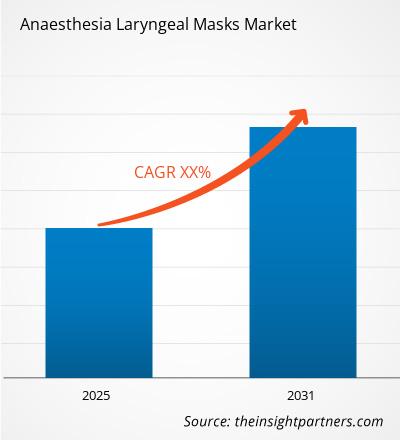
The Anaesthesia Laryngeal Masks Market is expanding as healthcare providers increasingly adopt supraglottic airway devices for airway management during surgical and diagnostic procedures. Anaesthesia laryngeal masks provide an alternative to conventional endotracheal intubation in selected procedures and can support ventilation while reducing the need for invasive airway management. Growing surgical volumes, increasing adoption of minimally invasive procedures, and improvements in airway management technologies are supporting market growth.
The Anaesthesia Laryngeal Masks Market dynamics are shaped by rising surgical procedure volumes, growing preference for supraglottic airway devices, advancements in medical materials, increasing demand for disposable airway products, and improvements in anesthesia practices. The market was valued at US$ 41.52 Million in 2025 and is projected to reach US$ 78.62 Million by 2034, registering a CAGR of 7.35% during 2026–2034. Increasing emphasis on patient safety, efficient airway management, and infection prevention is creating additional opportunities for manufacturers.
Download Sample PDF: https://www.theinsightpartners.com/sample/TIPRE00020209
What Are the Key Anaesthesia Laryngeal Masks Market Dynamics Driving Growth?
One of the major Anaesthesia Laryngeal Masks Market Dynamics is the increasing number of surgical procedures worldwide. Growing demand for general anesthesia across elective and emergency surgeries is creating a consistent need for reliable airway-management devices. As hospitals and ambulatory surgical centers seek efficient methods of maintaining patient airways, laryngeal masks are increasingly used in appropriate clinical applications.
The growing adoption of supraglottic airway devices is another important factor. Laryngeal masks can provide an alternative airway-management approach in selected surgical procedures and may offer advantages such as ease of placement and reduced airway instrumentation. These characteristics can make them valuable tools for anesthesia professionals.
Technological improvements are also influencing the market. Manufacturers are developing laryngeal masks with improved cuff designs, anatomical conformity, softer materials, and enhanced sealing capabilities. These innovations can support better airway management and improve user experience during procedures.
How Are Clinical and Technological Developments Creating Key Opportunities?
The shift toward minimally invasive and ambulatory procedures represents a significant opportunity for the market. Ambulatory surgical centers require efficient airway-management technologies that can support shorter procedures and streamlined workflows. Laryngeal masks can be particularly relevant for procedures where a supraglottic airway is clinically appropriate.
The increasing emphasis on infection prevention is also encouraging demand for single-use airway devices. Disposable products can reduce concerns associated with cleaning, sterilization, and cross-contamination between patients. As healthcare institutions strengthen infection-control protocols, manufacturers have opportunities to expand disposable product portfolios.
Material innovation represents another opportunity. Advanced medical-grade materials can improve flexibility, patient comfort, sealing performance, and device reliability. Companies that invest in product engineering and clinical usability can differentiate their offerings in a competitive environment.
Anaesthesia Laryngeal Masks Market Growth Drivers
The increasing global surgical burden remains one of the strongest drivers of growth. Aging populations, chronic diseases, trauma cases, and expanding access to surgical care are contributing to higher procedure volumes. This directly increases demand for anesthesia and airway-management equipment.
Growth in ambulatory surgery is another important driver. Healthcare systems are increasingly shifting selected procedures from inpatient hospitals to outpatient facilities to reduce costs and improve resource utilization. These settings require efficient anesthesia workflows and dependable airway devices.
The expansion of anesthesia services in emerging healthcare markets is also creating opportunities. New hospitals, specialty surgical centers, and upgraded operating rooms require modern airway-management equipment. Manufacturers with strong distribution networks can benefit from increasing procurement activity.
Anaesthesia Laryngeal Masks Market Opportunities
A major opportunity lies in the development of next-generation laryngeal masks. Manufacturers can focus on anatomical designs that improve airway sealing, reduce leakage, simplify placement, and enhance patient comfort.
Another opportunity is the expansion of disposable and specialized products. Single-use laryngeal masks can address infection-control requirements and simplify operating-room workflows. Manufacturers can develop products tailored to different patient populations, procedure types, and clinical requirements.
Digital healthcare and connected operating rooms may also create opportunities for future product development. While laryngeal masks are primarily mechanical airway devices, manufacturers can explore integration with monitoring systems and anesthesia workflows to provide more comprehensive procedural solutions.
Strategic partnerships with hospitals, anesthesia professionals, distributors, and surgical centers can further support market penetration. Clinical education and training programs can also improve product familiarity and encourage appropriate adoption.
Anaesthesia Laryngeal Masks Market Trends
A prominent trend is the growing preference for single-use airway-management products. Hospitals increasingly consider disposable devices as part of infection-prevention strategies, particularly in high-volume surgical environments.
Another trend is the development of improved cuff technologies. Manufacturers are focusing on cuff pressure distribution, sealing performance, anatomical fit, and patient comfort. These innovations aim to improve airway management while reducing potential complications associated with excessive cuff pressure.
Customization is also becoming increasingly relevant. Pediatric, adult, and specialized patient populations may require different device configurations. Manufacturers are therefore expanding product portfolios to address varying anatomical and procedural requirements.
The market is also benefiting from increased professional training in airway management. As anesthesia education emphasizes evidence-based airway strategies, healthcare professionals are becoming more familiar with the appropriate use of supraglottic airway devices.
Anaesthesia Laryngeal Masks Market Competitive Landscape
The competitive landscape includes global medical device manufacturers and specialized airway-management companies. Competition is influenced by product performance, material quality, clinical usability, regulatory approvals, distribution networks, and product innovation.
Key players include:
GE HealthCare Technologies Inc., Ambu A/S, Medline Industries, LP, Becton, Dickinson and Company, Smiths Group plc, Hsiner Co., Ltd., Intersurgical Ltd., BLS Systems Limited, KindWell Medical, Teleflex Incorporated.
Leading companies are focusing on product development, portfolio expansion, strategic partnerships, distribution agreements, and regulatory approvals. Manufacturers are also investing in disposable products and improved anatomical designs to strengthen their competitive positions.
Purchase a Copy of this report: https://www.theinsightpartners.com/buy/TIPRE00020209
Future Outlook
The future of the Anaesthesia Laryngeal Masks Market is expected to be influenced by continued growth in surgical procedures, wider adoption of ambulatory surgery, infection-prevention requirements, and advancements in airway-device design.
Manufacturers are likely to prioritize softer and more anatomically compatible materials, improved sealing technologies, easier insertion, and greater patient comfort. Product designs that reduce complications and improve procedural efficiency are expected to gain attention among anesthesia professionals.
The shift toward disposable medical devices is also likely to continue. Healthcare facilities are expected to prioritize products that simplify infection-control processes and reduce the operational burden associated with reusable airway devices.
Also Available in: Korean | German | Japanese | French | Chinese | Italian | Spanish
Related Reports:
Noninvasive Ventilation Masks Market Outlook and Strategic Insights by 2031
Breath Analyzer Market Trends and Analysis by 2030
About Us
The Insight Partners is a one-stop provider of actionable industry research and intelligence. We help our clients in getting solutions to their research requirements through our syndicated and consulting research services. We specialize in industries such as Semiconductor and Electronics, Aerospace and Defense, Automotive and Transportation, Healthcare IT, Manufacturing and Construction, Medical Devices, Technology, Media and Telecommunications, Food and Beverages, Consumer Goods, and Chemicals and Materials.
Contact Us
Contact Person: Ankit Mathur
Phone: +1-646-491-9876
E-mail : sales@theinsightpartners.com
