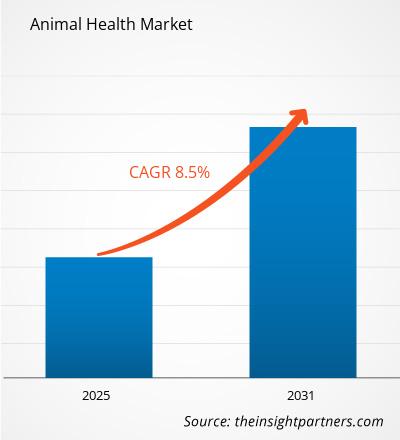
The global Animal Health Market is experiencing strong expansion as livestock producers, companion animal owners, veterinarians, pharmaceutical companies, and governments increasingly prioritize disease prevention, animal welfare, and sustainable food production. Animal health encompasses pharmaceuticals, vaccines, diagnostics, feed additives, and other products and services designed to prevent, diagnose, and treat diseases affecting livestock and companion animals. Rising pet ownership, increasing consumption of animal-derived food products, growing awareness of preventive veterinary care, and advances in animal healthcare technologies are contributing to market development.
The Animal Health Market demands are being shaped by increasing incidences of animal diseases, greater emphasis on preventive healthcare, rising expenditure on companion animals, and the need to protect livestock productivity. The market was valued at US$ 76.02 billion in 2025 and is projected to reach US$ 160.90 billion by 2034, registering a CAGR of 8.69% from 2026 to 2034. Recent market trends include increasing adoption of animal vaccines, advanced diagnostics, digital veterinary technologies, precision animal health solutions, and nutritional products designed to support animal immunity and productivity.
Download Sample PDF: https://www.theinsightpartners.com/sample/TIPRE00003540
What Recent Trends Are Shaping Animal Health Market Demands?
One of the most significant trends is the increasing focus on preventive animal healthcare. Rather than relying primarily on treatment after disease occurs, livestock producers and pet owners are increasingly adopting vaccination, routine diagnostics, parasite control, nutritional management, and regular veterinary examinations. Preventive approaches can help reduce disease-related losses, improve animal welfare, and support productivity across livestock operations.
The increasing prevalence of infectious and zoonotic diseases is also influencing demand. Outbreaks affecting livestock can disrupt food supply chains and create substantial economic losses, while zoonotic diseases can pose risks to human health. Consequently, governments and agricultural organizations are strengthening surveillance, vaccination, biosecurity, and disease-control programs.
Another major trend is the growing importance of companion animal healthcare. Increasing pet ownership and the humanization of pets are encouraging owners to spend more on veterinary consultations, preventive medicines, diagnostics, nutrition, and specialized treatments. This shift is expanding demand for premium animal healthcare products and services.
How Are Technology and Innovation Changing Ongoing Animal Health Demands?
Technology is transforming animal healthcare through advanced diagnostics, digital monitoring, wearable devices, artificial intelligence, and data analytics. Digital veterinary platforms can help veterinarians monitor animal health, manage clinical records, and identify potential health issues earlier. In livestock production, connected sensors and precision monitoring systems can provide information about animal behavior, movement, feeding, and environmental conditions.
Advanced diagnostic technologies are also becoming increasingly important. Rapid diagnostic tests can enable earlier identification of infections, allowing veterinarians and livestock producers to implement treatment or control measures more quickly. Molecular diagnostics and other sophisticated testing methods can improve disease identification and support more targeted health management.
The market is also seeing increasing interest in precision animal health. By combining animal health data with genetics, nutrition, environmental information, and disease history, producers can develop more individualized approaches to managing animal health. Such technologies can potentially improve productivity while reducing unnecessary treatment and supporting responsible use of veterinary medicines.
What Are the Ongoing Demands Across Livestock and Companion Animals?
The ongoing demand for livestock healthcare is closely connected to food security and agricultural productivity. Disease outbreaks can reduce animal productivity, increase mortality, and disrupt supply chains. Consequently, livestock producers are seeking reliable vaccines, therapeutics, diagnostics, feed additives, and disease-monitoring solutions.
Demand is also increasing for products that support responsible livestock production. Producers are increasingly interested in solutions that promote animal immunity, improve feed efficiency, and help maintain productivity while supporting animal welfare. Advances in nutritional supplements, probiotics, feed additives, and functional ingredients are therefore creating new market opportunities.
In companion animals, demand is increasingly centered on preventive healthcare and long-term disease management. Dogs and cats are living longer, creating greater demand for therapies addressing chronic conditions, including metabolic, cardiovascular, orthopedic, and age-related disorders. This trend is encouraging pharmaceutical and biotechnology companies to expand their companion animal portfolios.
Key Players in the Animal Health Market
The competitive landscape includes global pharmaceutical, biotechnology, diagnostics, nutrition, and veterinary healthcare companies. Key players include:
Merck & Co., Inc., Boehringer Ingelheim International GmbH, Ceva Sante Animale, Cargill Incorporated, Zoetis Inc., Bayer AG, Vetoquinol SA, Nutreco N.V., Virbac, Elanco.
These companies are focusing on product innovation, vaccine development, diagnostics, companion animal healthcare, livestock disease management, strategic partnerships, and geographic expansion.
Purchase a Copy of this report: https://www.theinsightpartners.com/buy/TIPRE00003540
Future Outlook
Future developments are likely to emphasize precision animal health, connected monitoring, artificial intelligence-assisted diagnostics, personalized veterinary medicine, advanced vaccines, and innovative nutritional products. Companion animal healthcare is expected to remain a major growth area, while livestock health solutions will continue to be driven by food security, productivity, disease prevention, and sustainability.
The growing emphasis on responsible antibiotic use may also encourage innovation in vaccines, diagnostics, probiotics, immune-support products, and alternative disease-management approaches. As animal healthcare becomes increasingly data-driven and preventive, companies capable of combining scientific innovation with accessible and scalable solutions may capture significant opportunities across global markets.
Also Available in: Korean | German | Japanese | French | Chinese | Italian | Spanish
Fish Vaccine Market Drivers and Forecasts by 2030
Veterinary Vaccines Market Analysis and Forecast by Size, Share, Growth, Trends 2031
About Us
The Insight Partners is a one-stop provider of actionable industry research and intelligence. We help our clients in getting solutions to their research requirements through our syndicated and consulting research services. We specialize in industries such as Semiconductor and Electronics, Aerospace and Defense, Automotive and Transportation, Healthcare IT, Manufacturing and Construction, Medical Devices, Technology, Media and Telecommunications, Food and Beverages, Consumer Goods, and Chemicals and Materials.
Contact US
Contact Person: Ankit Mathur
Phone: +1-646-491-9876
E-mail : sales@theinsightpartners.com
