The Wearable Tremor Therapy Market is attracting increasing attention as healthcare providers and patients seek non-invasive, convenient approaches to managing tremor-related neurological conditions. Wearable therapeutic technologies can support symptom management by delivering targeted stimulation, vibration, or other therapeutic modalities while allowing patients to maintain greater independence in daily activities. Growing awareness of movement disorders, increasing adoption of digital health technologies, and advances in miniaturized medical electronics are creating favorable conditions for the development of wearable therapeutic solutions.
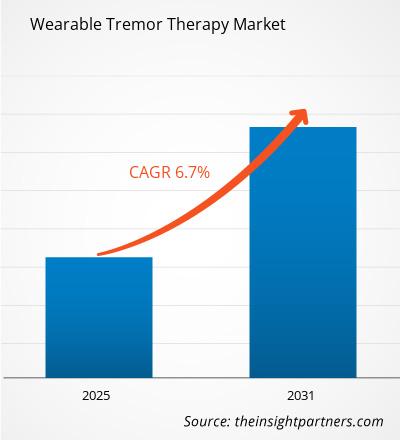
The Wearable Tremor Therapy Market demand is being shaped by the rising prevalence of neurological disorders associated with tremors, increasing preference for non-invasive treatment options, and growing interest in personalized and home-based healthcare. The Wearable Tremor Therapy Market size is expected to reach US$ 8.1 billion by 2034, increasing from US$ 5.65 billion in 2025. The market is estimated to register a CAGR of 4.61% from 2026 to 2034. Advances in sensor technology, wireless connectivity, artificial intelligence, and wearable device design are supporting the development of more compact and user-friendly therapeutic systems.
Download Sample PDF: https://www.theinsightpartners.com/sample/TIPRE00039949
What Are the Recent Trends in the Wearable Tremor Therapy Market?
One of the most significant trends in the Wearable Tremor Therapy Market is the integration of advanced sensors and real-time monitoring capabilities. Modern wearable devices can capture movement patterns and tremor characteristics, allowing therapeutic systems to provide more targeted interventions. This shift toward responsive and personalized treatment is increasing interest among patients and healthcare professionals.
Artificial intelligence and machine learning are also influencing product development. AI-enabled platforms can analyze movement data and potentially distinguish between normal movements and tremor episodes. These capabilities may allow devices to automatically adjust therapeutic settings based on individual symptom patterns, improving convenience and potentially enhancing treatment effectiveness.
Another emerging trend is the development of lightweight and discreet wearable devices. Manufacturers are focusing on improving ergonomics, battery performance, connectivity, and overall comfort so that patients can use therapeutic devices for extended periods without significantly disrupting daily activities.
How Are Ongoing Patient and Healthcare Demands Shaping the Market?
The growing demand for home-based healthcare is creating new opportunities for wearable tremor therapy technologies. Patients increasingly prefer treatment options that reduce dependence on frequent clinical visits and allow them to manage symptoms in familiar environments. Wearable devices can provide an alternative or complementary approach for individuals who may not be suitable candidates for invasive procedures.
The increasing aging population is another factor contributing to demand. Older adults have a greater likelihood of experiencing neurological conditions associated with tremors, creating a larger potential patient population for symptom-management technologies. Healthcare providers are consequently exploring solutions that can improve quality of life while reducing the burden associated with long-term care.
The need for personalized treatment is also encouraging innovation. Tremor severity and patterns can vary significantly between individuals, meaning that standardized treatment approaches may not provide optimal results for every patient. Wearable technologies capable of collecting individual movement data can support more tailored therapeutic strategies.
Market Overview
The Wearable Tremor Therapy Market includes wearable devices designed to manage or reduce tremor symptoms through non-invasive therapeutic mechanisms. Products may be designed as wrist-worn devices, hand-held wearable systems, or other body-worn technologies depending on the therapeutic approach.
These technologies are gaining interest because they can potentially provide therapy while patients perform routine activities. The portability of wearable devices also creates opportunities for continuous or on-demand symptom management outside conventional healthcare settings.
Increasing collaboration between medical device companies, technology developers, neurologists, and academic research institutions is accelerating product innovation. Research and development activities are increasingly focused on improving stimulation accuracy, reducing device size, enhancing battery life, and incorporating data-driven therapeutic algorithms.
What Opportunities Are Emerging from Wearable Tremor Therapy Market Demands?
The expansion of telemedicine and remote patient monitoring represents an important opportunity. Wearable devices can potentially transmit treatment and movement data to healthcare professionals, allowing clinicians to monitor symptom progression and evaluate therapy remotely. Integration with digital health platforms could therefore support more continuous neurological care.
Another opportunity is the integration of wearable tremor therapy with smartphone applications. Mobile applications can provide treatment controls, usage information, symptom tracking, and patient education. Such ecosystems may improve patient engagement while providing clinicians with additional information for treatment management.
Emerging markets also represent attractive growth opportunities. Improvements in healthcare infrastructure, increasing awareness of neurological disorders, and rising adoption of digital medical technologies across Asia Pacific, Latin America, and the Middle East can expand access to wearable therapeutic solutions.
Competitive Landscape
The Wearable Tremor Therapy Market is developing rapidly, with medical technology companies and specialized device manufacturers focusing on product innovation, clinical validation, strategic partnerships, and geographic expansion.
Key Players
- Harmonic Bionics
- Cala Health
- Medtronic
- IntelligentX
- AbbVie Inc.
- Tremor Technologies
- Neurolief
- Boston Scientific
- Verily Life Sciences
- TheraKey
These companies are investing in wearable technology, neuromodulation, digital health platforms, and neurological treatment solutions to address the evolving needs of patients with tremor-related disorders.
Purchase a Copy of this report: https://www.theinsightpartners.com/buy/TIPRE00039949
Future Outlook
The future of the Wearable Tremor Therapy Market is expected to be shaped by continued innovation in sensors, neuromodulation, artificial intelligence, connectivity, and personalized medicine. Manufacturers are likely to focus on developing smaller, more comfortable, and more responsive devices that can be integrated seamlessly into patients’ daily lives.
The growing shift toward home-based care and remote monitoring is expected to create additional opportunities for wearable therapeutic systems. Integration with smartphones, cloud-based healthcare platforms, and electronic health records could further enhance the value of connected devices.
As research generates stronger clinical evidence and regulatory pathways for innovative wearable therapies become clearer, adoption is expected to increase. Companies that prioritize clinical effectiveness, patient comfort, data security, affordability, and seamless digital integration are likely to be well positioned to capitalize on ongoing demand through 2034.
Related Reports:
Knee Implant Market Share, Trends & Outlook 2031
Medical Exoskeleton Market Drivers and Forecasts by 2031
About Us
The Insight Partners is a one-stop provider of actionable industry research and intelligence. We help our clients in getting solutions to their research requirements through our syndicated and consulting research services. We specialize in industries such as Semiconductor and Electronics, Aerospace and Defense, Automotive and Transportation, Healthcare IT, Manufacturing and Construction, Medical Devices, Technology, Media and Telecommunications, Food and Beverages, Consumer Goods, and Chemicals and Materials.
Contact US
Contact Person: Ankit Mathur
Phone: +1-646-491-9876
E-mail : sales@theinsightpartners.com
