Market Overview
The Global Prepaid Electricity Metering Market is evolving alongside the modernization of power distribution systems and the growing adoption of smart-grid technologies. Utilities are increasingly moving away from conventional metering models and embracing digital platforms that improve billing transparency, energy accountability, and operational efficiency.
What changed is the role of the electricity meter itself. Traditional meters primarily measured consumption. Modern prepaid meters function as intelligent network endpoints capable of collecting, processing, transmitting, and analyzing energy data in real time.
This transformation is creating demand for increasingly sophisticated electronics architectures. Meter manufacturers now require integrated communication modules, embedded software platforms, cybersecurity features, and intelligent energy-management capabilities.
For semiconductor companies, prepaid metering represents a scalable infrastructure opportunity. Unlike consumer electronics cycles that depend on discretionary spending, utility modernization programs often involve long-term deployment strategies that support recurring component demand.
The result is a market increasingly connected to broader themes including energy digitalization, IoT expansion, smart-city development, and infrastructure modernization.
Key Trends Driving Growth
Smart-grid deployment remains the most significant growth catalyst. Utilities worldwide are investing in intelligent distribution systems capable of improving reliability, reducing losses, and enabling data-driven operations. Prepaid metering technologies play a critical role by providing accurate consumption visibility and supporting automated billing processes.
IoT integration is accelerating adoption. Connected meters enable two-way communication between utilities and consumers, creating opportunities for remote monitoring, automated updates, and real-time consumption tracking. This trend increases demand for wireless communication modules, embedded processors, and secure connectivity solutions.
Utility digitization is also changing investment priorities. Organizations increasingly seek technologies capable of reducing operational inefficiencies while improving customer engagement. Prepaid systems provide utilities with greater control over revenue management and service delivery.
The rise of smart cities further strengthens market momentum. Urban infrastructure programs increasingly incorporate intelligent energy management platforms that rely on connected metering systems. As cities pursue sustainability objectives, digital electricity management becomes a critical infrastructure component.
Semiconductor innovation is expanding metering capabilities. Advanced microcontrollers, low-power processors, communication chipsets, and integrated sensing technologies enable smarter, more efficient devices. The trend mirrors broader developments across IoT ecosystems where intelligence increasingly moves to the network edge.
Data analytics is becoming another differentiator. Utilities increasingly leverage consumption data to improve forecasting, optimize grid operations, and identify inefficiencies. As analytics capabilities expand, demand for processing power and secure data transmission technologies continues to grow.
Sustainability initiatives are also influencing adoption. Governments and utilities seek technologies that improve energy efficiency and encourage responsible consumption. Digital metering systems support these goals by providing consumers with greater visibility into energy usage patterns.
Request a Free Sample Copy or View Report Summary: https://www.maximizemarketresearch.com/request-sample/190646/
Segment Insights
Dominant Segment: Smart Prepaid Electricity Meters
Smart prepaid electricity meters represent the leading segment due to their ability to combine billing functionality with communication, monitoring, and automation capabilities. Their adoption supports utility modernization and smart-grid deployment objectives.Fastest-Growing Segment: Advanced Metering Infrastructure (AMI)-Enabled Deployments
Integration with advanced metering infrastructure is emerging as a major growth opportunity as utilities seek greater network visibility and operational intelligence.Technology Driver: IoT-Connected Metering Systems
IoT-enabled connectivity is enabling real-time monitoring, remote management, and data-driven utility operations.Emerging Opportunity: Smart City and Digital Utility Projects
Urban infrastructure modernization programs are creating long-term demand for intelligent metering technologies and associated semiconductor components.
Regional Growth Story
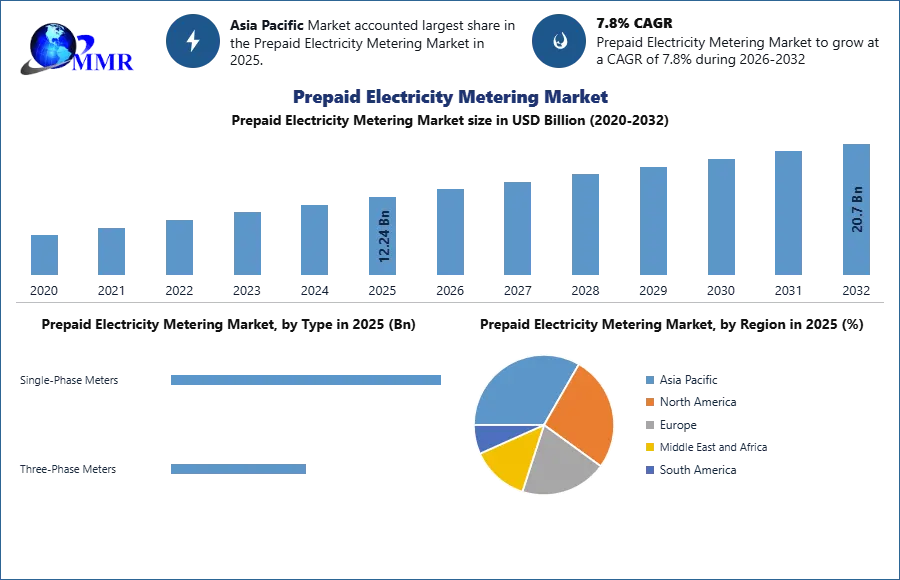
Asia-Pacific remains a significant growth engine for prepaid electricity metering due to rapid urbanization, expanding energy demand, and large-scale utility modernization programs. Countries across the region are investing heavily in digital infrastructure to improve energy management and grid efficiency.
China continues to influence market dynamics through investments in smart-grid technologies, advanced manufacturing capabilities, and large-scale infrastructure deployment. The country’s emphasis on digital energy systems creates substantial opportunities for metering technology providers.
India represents a particularly important market as utilities pursue modernization initiatives and governments support digital transformation across power distribution networks. Rising electricity consumption and infrastructure upgrades continue expanding deployment opportunities.
Japan and South Korea contribute through advanced electronics manufacturing, semiconductor expertise, and smart infrastructure innovation. Their capabilities support the development of sophisticated metering platforms and communication technologies.
North America remains a major innovation center due to utility modernization efforts, smart-grid investments, and increasing adoption of connected energy management systems. The United States continues to play a leading role in energy technology development and digital infrastructure deployment.
Europe also remains an important market driven by energy-efficiency targets, sustainability objectives, and grid modernization programs. Germany, in particular, contributes through advanced industrial capabilities and investments in intelligent energy infrastructure.
Taiwan’s semiconductor leadership further strengthens the ecosystem by supplying critical components used in smart metering devices, communication systems, and energy-management platforms.
Competitive Landscape
Competition in the Global Prepaid Electricity Metering Market increasingly centers on digital intelligence rather than metering accuracy alone. Companies are investing in integrated platforms that combine hardware, software, analytics, communication technologies, and cloud connectivity.
This shift signals a broader transformation across utility technology markets. The value of a prepaid meter increasingly depends on its ability to function as part of a connected energy ecosystem rather than as a standalone device.
Manufacturers that integrate advanced semiconductor technologies gain advantages in power efficiency, cybersecurity, data processing, and remote management capabilities. These capabilities are becoming critical differentiators as utilities demand greater operational intelligence.
The competitive environment also highlights growing convergence between energy infrastructure and electronics manufacturing. Metering systems increasingly resemble industrial IoT devices, creating opportunities for semiconductor suppliers, communications providers, and software companies.
Supply-chain resilience remains a strategic priority. Utilities require long product lifecycles and dependable component availability. Companies capable of maintaining manufacturing continuity while advancing technological capabilities are likely to strengthen market positions.
Recent Developments
Expansion of smart prepaid metering deployments across utility networks.
Increased integration of IoT communication technologies into metering platforms.
Growing adoption of advanced metering infrastructure solutions.
Rising investment in smart-grid modernization initiatives.
Enhanced focus on energy analytics, remote monitoring, and operational automation.
Strategic Implications
For semiconductor manufacturers, prepaid electricity metering represents a stable infrastructure-driven growth opportunity linked to long-term utility investments. Demand extends across microcontrollers, communication chips, memory components, sensors, and power-management technologies.
For electronics OEMs, the market creates opportunities to participate in broader smart-grid ecosystems where recurring software, analytics, and service revenues complement hardware sales.
For investors, prepaid metering provides exposure to multiple structural growth themes including digital infrastructure, smart cities, IoT expansion, energy transition, and utility modernization.
Supply chains are also adapting to support increasing deployment volumes, cybersecurity requirements, and connectivity demands associated with next-generation energy networks.
Future Outlook
The next phase of the Global Prepaid Electricity Metering Market will be defined by the convergence of smart grids, IoT connectivity, edge computing, semiconductor innovation, and real-time energy intelligence. Electricity meters will increasingly function as distributed computing nodes supporting autonomous grid operations and data-driven energy management.
The companies that successfully combine semiconductor expertise, secure connectivity, analytics capabilities, and scalable utility platforms will shape the future of digital energy infrastructure, while those relying on legacy metering technologies risk being excluded from the intelligent-grid economy.
Analyst Perspective
“Prepaid electricity metering is evolving from a billing tool into an intelligent energy-management platform. Organizations that invest in connected infrastructure, advanced electronics, and data-driven utility operations will be best positioned to capture long-term value as digital energy ecosystems continue expanding,” — Rucha Deshpande, Analyst
About Maximize Market Research
Maximize Market Research Pvt. Ltd. (MMR) is a global market research and consulting company that provides reliable, data-focused, and practical business insights. The firm serves a wide range of industries, including healthcare, pharmaceuticals, technology, automotive, electronics, chemicals, personal care, and consumer goods. Through market forecasts, competitive analysis, strategic consulting, and industry impact assessments, MMR helps organizations understand changing market conditions, identify growth opportunities, and make informed business decisions for long-term success.
2nd Floor, Navale IT Park Phase 3
Pune Banglore Highway, Narhe
Pune, Maharashtra 411041, India
+91 9607365656
sales@maximizemarketresearch.com
