Key Highlights
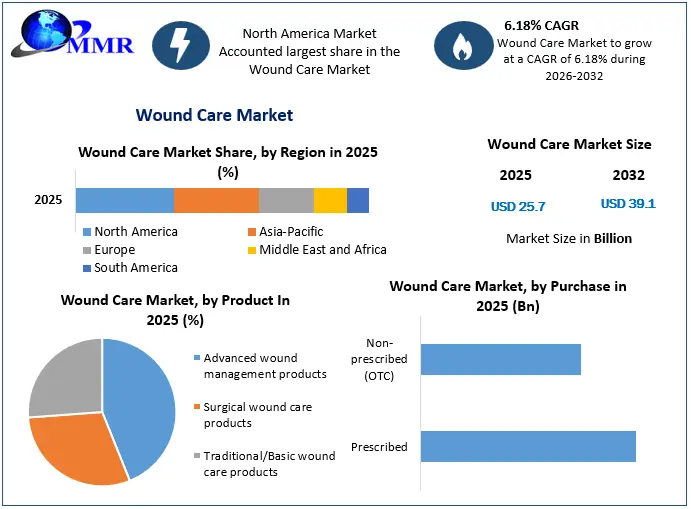
Market Trajectory: Expansion from USD 25.7 Billion in 2025 to USD 39.1 Billion by 2032.
Primary Drivers: Rising prevalence of chronic diseases (diabetes, obesity), an aging global population, and technological breakthroughs in tissue regeneration.
Advanced Modalities: Dominant focus on bioengineered tissues, negative pressure wound therapy (NPWT), and hyperbaric oxygen therapy.
Market Restraints: Significant barriers include a global shortage of specialized wound care professionals and gaps in clinical knowledge.
Why This Matters Now
Healthcare providers and investors are facing an inflection point as the incidence of complex, non-healing wounds escalates, threatening to overwhelm institutional budgets. With chronic ulcers—particularly venous and diabetic foot ulcers—driving massive healthcare expenditure, the transition from traditional to advanced wound management is no longer optional; it is a clinical and financial imperative. Stakeholders who fail to integrate advanced, outcome-driven therapies will lose ground as payers increasingly move toward value-based reimbursement models that reward healing efficiency rather than procedural volume.
Market Overview
The global Wound Care Market encompasses the spectrum of treatments required to manage injuries ranging from acute abrasions to debilitating chronic ulcers. As of 2025, the market is valued at USD 25.7 billion. By 2032, it is expected to reach USD 39.1 billion, maintaining a steady CAGR of 6.18%. This growth is not merely a reflection of patient numbers; it represents a fundamental shift in how complex wounds are treated, moving from passive care to active, technology-enabled regeneration.
Key Trends Driving Growth
The convergence of an aging demographic and the rise of lifestyle-related comorbidities like diabetes and obesity is creating a persistent demand for advanced solutions. Chronic wounds, which resist standard healing protocols, are now the primary focus of R&D investment. Furthermore, the push for better clinical outcomes has moved the market toward therapies that reduce infection rates and accelerate tissue restoration, directly addressing the clinical challenges of venous hypertension and circulatory impairment.
𝐃𝐨𝐰𝐧𝐥𝐨𝐚𝐝 𝐏𝐃𝐅 𝐁𝐫𝐨𝐜𝐡𝐮𝐫𝐞 @https://www.maximizemarketresearch.com/request-sample/15340/
Segment Insights
Dominant Segment: Advanced Wound Care Therapies. This segment leads due to the high efficacy of bioengineered tissues, negative pressure wound therapy (NPWT), and hyperbaric oxygen therapy in managing severe, non-healing conditions.
Fastest-Growing Segment: Chronic Wound Management Solutions. Driven by the surge in diabetic foot ulcers and pressure ulcers, this segment is outpacing acute care as patients require longer-term, more specialized intervention strategies.
Regional Growth Story
Growth is concentrated in regions with robust healthcare infrastructure and aging populations. Developed nations, particularly in North America and Europe, continue to lead due to high adoption rates of advanced dressing technologies and higher per-capita healthcare spending. However, the Asia-Pacific region is emerging as a critical growth theater. In countries like India, China, and Japan, the rapid rise of diabetic populations is fueling a massive, unmet need for cost-effective, specialized wound care facilities, forcing regulatory and reimbursement bodies to reconsider how they incentivize care delivery.
Competitive Landscape
The competitive environment is defined by intense pressure to innovate in bioengineered products and device connectivity. Market leaders are prioritizing the acquisition of smaller, agile firms that hold proprietary intellectual property in tissue regeneration. The race is currently centered on establishing dominance in the “advanced therapy” space, where clinical evidence—not just pricing—dictates hospital purchasing decisions and long-term reimbursement success.
Recent Developments
Innovation in Regeneration: Increased clinical adoption of bioengineered skin substitutes to treat complex venous ulcers.
Therapeutic Integration: Greater utilization of portable negative pressure wound therapy devices, allowing for outpatient transition and reduced hospital stays.
Professional Development: New partnerships between manufacturers and medical boards to bridge the global “knowledge gap” through standardized training programs for wound specialists.
Strategic Implications
For pharma and biotech executives, the path forward is clear: integrate wound care solutions into broader metabolic disease management platforms. Investors should pivot toward companies that provide evidence-based, data-backed advanced therapies, as these are the most likely to secure favorable reimbursement status under value-based care frameworks. Hospital networks must re-evaluate their procurement strategies, shifting from commodity-based purchasing of basic dressings to outcomes-based investment in specialized wound care teams and technologies that reduce long-term patient burden.
Future Outlook
The next decade will distinguish between companies that simply manufacture dressings and those that provide integrated wound-healing ecosystems. Firms that leverage advanced diagnostics and regenerative science to deliver predictable, faster healing rates will capture the lion’s share of this multi-billion dollar opportunity, while those tethered to traditional products will increasingly be marginalized.
Analyst Perspective
“The wound care market is undergoing a seismic shift,” notes Komal Patil, Lead Analyst. “The move from basic wound protection to advanced, regenerative medicine is creating unprecedented value for patients and providers alike. We are seeing a market that no longer accepts ‘management’ as the end goal—the new standard is active, accelerated, and data-driven healing.”
About Maximize Market Research
Maximize Market Research Pvt. Ltd. (MMR) is a global market research and consulting company that provides reliable, data-focused, and practical business insights. The firm serves a wide range of industries, including healthcare, pharmaceuticals, technology, automotive, electronics, chemicals, personal care, and consumer goods. Through market forecasts, competitive analysis, strategic consulting, and industry impact assessments, MMR helps organizations understand changing market conditions, identify growth opportunities, and make informed business decisions for long-term success.
2nd Floor, Navale IT Park Phase 3
Pune Banglore Highway, Narhe
Pune, Maharashtra 411041, India
+91 9607365656
sales@maximizemarketresearch.com
