Energy Efficient Construction Market Expands Rapidly as Green Building Practices and Smart Technologies Reshape Global Infrastructure
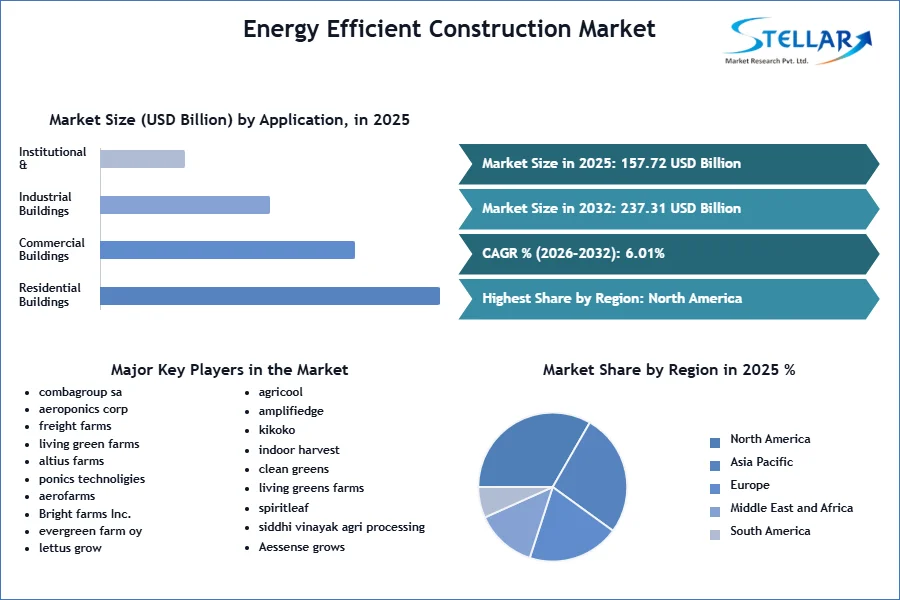
The global Energy Efficient Construction Market is experiencing significant growth as governments, developers, and businesses increasingly prioritize sustainable building practices, lower carbon emissions, and reduced energy consumption. Rising energy costs, stricter environmental regulations, and advancements in smart building technologies are accelerating investments in energy-efficient construction worldwide. According to Stellar Market Research, the global Energy Efficient Construction Market is expected to witness robust growth throughout the forecast period from 2026 to 2032.
Green Building Initiatives Drive Market Growth
Governments across the globe are implementing stringent building energy codes and offering incentives to encourage the construction of energy-efficient residential, commercial, and industrial buildings. Green certifications and sustainability standards are becoming key priorities for developers seeking to reduce operational costs and environmental impact.
Major market growth drivers include:
- Rising demand for sustainable buildings
- Increasing energy prices
- Government incentives for green construction
- Growing adoption of smart building technologies
- Expansion of net-zero energy building projects
- Rising awareness of carbon footprint reduction
These factors are encouraging construction companies to integrate energy-saving materials and advanced technologies into new developments and renovation projects.
𝐃𝐨𝐰𝐧𝐥𝐨𝐚𝐝 𝐅𝐫𝐞𝐞 𝐏𝐃𝐅 𝐁𝐫𝐨𝐜𝐡𝐮𝐫𝐞: https://www.stellarmr.com/report/req_sample/Energy-Efficient-Construction-Market/1437
Smart Building Technologies Transform Construction
Digital technologies are revolutionizing energy-efficient construction by enabling intelligent monitoring and optimization of building performance. Smart systems help reduce energy consumption while improving occupant comfort and operational efficiency.
Key technologies include:
- Building automation systems
- Smart HVAC controls
- Energy management software
- IoT-enabled sensors
- Intelligent lighting systems
- AI-powered energy optimization
These innovations enable real-time monitoring of energy consumption, predictive maintenance, and automated climate control, significantly improving building efficiency.
Advanced Building Materials Improve Energy Performance
Manufacturers are developing innovative materials that enhance thermal insulation and reduce energy loss in buildings.
Popular energy-efficient construction materials include:
- High-performance insulation
- Low-emissivity (Low-E) glass
- Energy-efficient windows
- Reflective roofing materials
- Sustainable concrete solutions
- Recycled and eco-friendly construction materials
These materials help minimize heating and cooling requirements, lowering utility costs while improving indoor comfort.
Commercial Buildings Lead Market Demand
Commercial buildings account for a significant share of the market as businesses seek to reduce operating expenses and comply with increasingly stringent sustainability regulations.
Energy-efficient construction is widely adopted in:
- Office buildings
- Hospitals
- Educational institutions
- Retail centers
- Hotels
- Industrial facilities
At the same time, residential construction is witnessing growing demand as homeowners invest in energy-saving technologies and eco-friendly building designs.
Retrofitting Existing Buildings Creates Major Opportunities
In addition to new construction, retrofitting older buildings has become a major growth area. Property owners are upgrading aging infrastructure with modern energy-efficient systems to improve performance and meet evolving regulatory standards.
Common retrofit solutions include:
- HVAC system upgrades
- LED lighting installations
- Improved insulation
- Smart energy management systems
- Solar energy integration
- High-performance windows
Retrofitting allows building owners to reduce long-term operational costs while extending the life of existing structures.
North America and Europe Lead Global Adoption
North America remains one of the largest markets due to strict building energy regulations, widespread green building certifications, and strong investments in smart infrastructure.
Meanwhile, Europe continues to experience substantial growth through ambitious carbon-neutrality initiatives and energy-efficiency directives.
The Asia-Pacific region is expected to witness the fastest expansion, driven by:
- Rapid urbanization
- Large-scale infrastructure development
- Government support for sustainable construction
- Rising investment in smart cities
- Increasing awareness of energy conservation
Countries including China, India, Japan, and Singapore are investing heavily in green building technologies and sustainable urban development.
𝐃𝐨𝐰𝐧𝐥𝐨𝐚𝐝 𝐅𝐫𝐞𝐞 𝐏𝐃𝐅 𝐁𝐫𝐨𝐜𝐡𝐮𝐫𝐞: https://www.stellarmr.com/report/req_sample/Energy-Efficient-Construction-Market/1437
Competitive Landscape
Leading companies are investing in advanced building technologies, sustainable materials, and integrated energy management solutions to strengthen their market position.
Key players in the global Energy Efficient Construction Market include:
- Schneider Electric
- Siemens AG
- Johnson Controls
- Honeywell International Inc.
- ABB Ltd.
- Saint-Gobain
- Kingspan Group
- Owens Corning
- Carrier Global Corporation
- Trane Technologies
These companies continue to expand their product portfolios through innovation, strategic partnerships, and investments in smart building solutions.
Future Outlook
The future of the Energy Efficient Construction Market remains highly promising as governments, businesses, and consumers increasingly prioritize sustainability and energy conservation. Advancements in smart building technologies, renewable energy integration, AI-driven energy management, and eco-friendly construction materials are expected to transform the construction industry over the coming years.
With rising investments in green infrastructure, stricter environmental regulations, and growing demand for high-performance buildings, the Energy Efficient Construction Market is well positioned for sustained global growth through 2032.
