Key Highlights
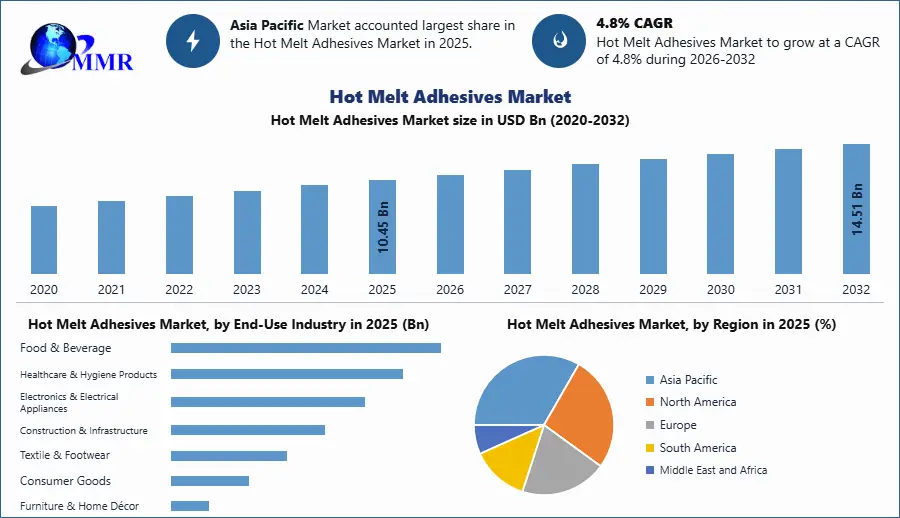
Market Growth Vector: The hot melt adhesives sector reached a baseline valuation of USD 10.45 billion in 2025, moving toward a projected USD 14.51 billion target by 2032.
Segment Concentration: The packaging sector commands a dominant 38% market share, achieving an independent 4.5% CAGR as transit security standards tighten.
Rapid Adoption Substrate: Polyurethane (PUR) formulations represent the fastest-growing material classification due to volatile organic compound reduction mandates.
Regional Consolidation: Asia-Pacific controls 43% of the absolute market revenue share, supported by China’s structural paperboard manufacturing dominance.
Technical Constraints: Poor operational thermal resistance under extreme temperatures remains the primary barrier to broader automotive and structural engineering deployment.
Why This Matters Now
Volatile organic compound (VOC) limits are altering industrial assembly metrics, forcing a rapid exit from solvent-borne bonding agents. Procurement leaders in packaging, hygiene, and electronics face immediate supply vulnerabilities if their assembly lines remain dependent on legacy, highly regulated solvent systems. Hot melt adhesives (HMAs) provide a direct, solvent-free substitution pathway that instantly eliminates solvent-recovery capital costs and regulatory compliance penalties.
The business pressure is compounded by the rapid expansion of automated, high-speed secondary packaging operations. Traditional water-based options require extended evaporation periods, creating structural bottlenecks on high-throughput assembly lines. Hot melt variants solidify rapidly upon cooling, allowing processing plants to operate at maximum mechanical speed and improve asset utilization across fulfillment chains.
Market Overview
The global Hot Melt Adhesives Market is adjusting to a shifting raw material environment where baseline metrics are determined by downstream processing velocity and regional supply integrity. Registering an established market size of USD 10.45 billion in 2025, the sector is maintaining a steady 4.8% CAGR toward USD 14.51 billion by 2032. This growth reflects a structural pivot within global manufacturing hubs away from chemical bonding systems that require thermal curing steps.
Operationally, hot melt adhesives function as thermoplastic polymer systems that melt at elevated temperatures and develop rapid green strength upon solidification. This clean process eliminates the atmospheric emissions associated with solvent-evaporated bonding. The fundamental supply framework integrates base polymers, tackifying resins, and plasticizing waxes. Fluctuations in petroleum-derived feedstocks alter production margins, accelerating investments in alternative polyolefin and bio-derived polymer platforms.
Key Trends Driving Growth
The most influential factor shaping the product mix is the demand for polyurethane-based hot melt adhesives (PUR HMAs). Standard formulations are prone to softening when exposed to high heat, but reactive polyurethane variants undergo secondary moisture cross-linking. This chemical reaction creates a permanent, heat-resistant bond. This technical shift allows manufacturers to utilize PUR HMAs in demanding environments like automotive wire insulation, ceramic ceiling tiles, and outdoor laminate countertops.
Simultaneously, a massive surge in do-it-yourself (DIY) consumer activity is opening new retail revenue streams. The expansion of boutique e-commerce platforms specializing in custom home decor, fabric styling, and wooden cases has altered consumption dynamics. Consumers use localized hot-melt application tools to reduce installation costs, turning a specialized industrial bonding material into a high-volume retail product.
Segment Insights
Packaging Application (Dominant Segment): Holding a dominant 38% market share in 2025, packaging applications are expanding at a 4.5% CAGR. This sustained growth is driven by the global requirement for product containment across automated supply chains, where secondary cases require immediate fiber tear to verify carton security.
Polyurethane Formulations (Fastest-Growing Segment): Reactive polyurethane systems represent the fastest-growing polymer classification. Their expansion is supported by their low volatile organic compound (VOC) profile and fast setting speeds, which are required for high-durability furniture construction and automotive component shielding.
Bookbinding and Nonwovens: This structural classification is expanding steadily due to growing consumer awareness of non-woven hygiene items like diapers, combined with student demand for automated DIY bookbinding solutions.
Regional Growth Story
Asia-Pacific holds a dominant position, controlling 43% of total market revenue in 2025. This geographical leadership is sustained by massive paperboard and cardboard processing centers located throughout the region. For example, China’s processed paper and cardboard output exceeded 130 million metric tons in 2021. Low baseline levels of packaging automation across secondary manufacturing hubs present a clear modernization opportunity for high-volume hot melt adhesive application systems.
In Western Europe, led by established engineering networks in Germany, market growth is focused on environmental compliance and chemical safety. Strict regional limits on chemical exposure favor hot melt variants over solvent-borne resins in interior automotive cabins and food-contact packaging. Meanwhile, North American market development is supported by robust infrastructure spending, driving the use of polyolefin hot melts for wire insulation and electronics protection.
Competitive Landscape
The global market structure is defined by a group of consolidated chemical companies utilizing extensive patent portfolios to manage pricing power. Top-tier operators maintain cost advantages through vertical integration into base polymer synthesis, shielding their operations from feedstock price spikes.
To maintain market share against regional commodity chemical suppliers, leading entities are prioritizing custom product formulation. They are engineering hot melt variants with improved thermal stability to resolve the industry’s historical weakness: poor resistance to high operational temperatures. By developing specialized formulations that prevent thermal degradation in applicator tanks, these market leaders justify premium pricing and establish long-term supply agreements with automated packaging operators.
Recent Developments
Polyolefin Integration: Material engineers expanded the application of polyolefin-based hot melts into automotive electronics, providing moisture-resistant wire insulation coatings that improve vehicle electrical safety.
Supply Optimization: Multi-national adhesive producers increased capital expenditures to expand production footprints near emerging packaging hubs in Latin America, insulating downstream fulfillment operations from transoceanic supply disruptions.
HMA Appliance Upgrades: System manufacturers launched smart, low-maintenance hot melt application tools aimed at the expanding e-commerce gifting market, lowering tool maintenance downtime for small-scale packaging operations.
Strategic Implications
Strategic alignments across the global market demonstrate that premier adhesive providers are shifting from selling bulk polymers to supplying integrated application technologies. This development raises capital entry barriers for smaller chemical blending companies, as industrial consumers increasingly expect complete, optimized adhesive-hardware systems. This integration transfers operational consistency risks directly to the chemical provider.
Furthermore, capital allocation trends show a clear focus on strengthening raw material supply chains. By establishing dedicated procurement channels for low-volatile polyurethane and polyolefin components, major producers protect their production schedules from erratic refinery outputs. For downstream industrial buyers, this supply security translates to stable contract pricing and reliable material deliveries during periods of logistical disruptions.
Future Outlook
The long-term development of the market will depend on formulating bio-based hot melt adhesives that can match the cost and setting speeds of petro-chemical formulations. Overcoming current thermal resistance limitations will allow hot melt chemistry to displace mechanical fasteners in high-stress structural construction applications. Chemical enterprises that align their product research with advanced polyurethane architectures will secure sustainable profit margins as global environmental regulations tighten.
Analyst Perspective
“The hot melt adhesives market has evolved beyond simple packaging seals into a critical material for zero-solvent industrial manufacturing. As production lines automate and environmental compliance limits narrow, solvent-free bonding is becoming a operational baseline. Organizations that strategically integrate advanced polyurethane and polyolefin hot melts into their manufacturing processes will protect their operations from regulatory disruption and raw material volatility.”
Ankita Kagawade, Reserach Analyst, Chemicals & Materials
About Maximize Market Research
Maximize Market Research Pvt. Ltd. (MMR) is a global market research and consulting company that provides reliable, data-focused, and practical business insights. The firm serves a wide range of industries, including healthcare, pharmaceuticals, technology, automotive, electronics, chemicals, personal care, and consumer goods. Through market forecasts, competitive analysis, strategic consulting, and industry impact assessments, MMR helps organizations understand changing market conditions, identify growth opportunities, and make informed business decisions for long-term success.
2nd Floor, Navale IT Park Phase 3
Pune Banglore Highway, Narhe
Pune, Maharashtra 411041, India
+91 9607365656
sales@maximizemarketresearch.com
