Key Highlights
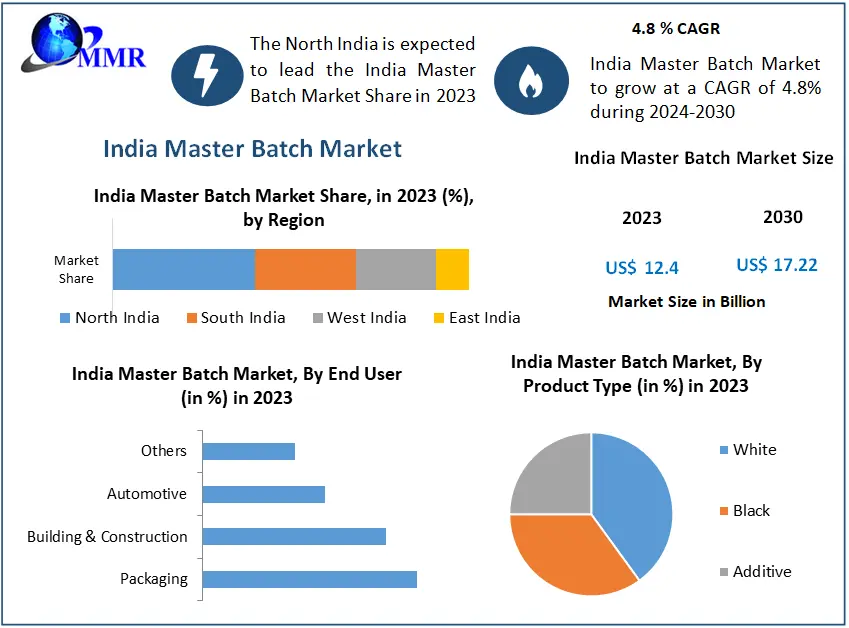
Valuation Expansion: The domestic masterbatch market volume is poised to expand from its USD 12.4 billion baseline in 2023 to nearly USD 17.22 billion by the end of 2030.
Downstream Catalysts: Robust industrial demand across the flexible packaging, automotive, construction, and agricultural sectors acts as the primary driver for high-volume consumption.
Regulatory Pressures: Compliance with the rigid mandates of India’s Plastic Waste Management Rules is forcing a structural shift from commodity formulations to eco-friendly, bio-based alternatives.
Feedstock Volatility: Profit margins face constant compression due to erratic shifts in polymer resin pricing, altering competitive dynamics between regional and international players.
Specialty Transition: Growth is rapidly pivoting toward specialized performance additives, including antimicrobial agents, flame retardants, anti-static properties, and advanced UV stabilizers.
Why This Matters Now
Volatile polymer resin pricing and tightening environmental mandates are threatening the historical cost structures of plastic processors, leaving chemical manufacturers with zero margin for operational error. Industrial buyers and procurement leaders must immediately adjust their sourcing strategies as the market pivots from low-cost commodity additives toward high-performance, regulatory-compliant functional formulations.
What changed is the baseline expectation of the consumer, who now demands complex properties like antimicrobial protection and UV resistance built directly into basic packaging materials. Why now? The rapid execution of large-scale infrastructure projects combined with the strict enforcement of domestic waste management rules has forced the industry to evolve or face regulatory penalties.
Market Overview
The India Master Batch Market represents a vital pillar of the broader chemicals and materials sector, providing the essential concentrated mixtures of pigments and performance modifiers needed to make plastics functional. The market size achieved a valuation of USD 12.4 billion in 2023. Backed by expanding manufacturing activities, the total sector revenue is projected to climb at a CAGR of 4.8 percent from 2024 to 2030, culminating in an estimated market worth of USD 17.22 billion.
This steady trajectory reflects the deep integration of plastic processing across everyday consumer infrastructure, industrial supply chains, and export markets. Masterbatches allow converters to transform raw polymer resins into durable, aesthetically appealing, and specialized end products without requiring complex, on-site compounding facilities.
However, the operating environment is growing more complex. Manufacturers are forced to maintain strict quality controls, managing variations in color consistency and dispersion quality while shielding their bottom lines from the financial shock of fluctuating feedstock costs.
Key Trends Driving Growth
Industrial consumption is undergoing a structural shift driven by advanced application requirements across major corporate end users. In the packaging vertical, the explosion of flexible packaging formats for the food and beverage industry has created an immediate need for smart additives. Brands are deploying specialized solutions like PET UVA and acetaldehyde (AA) scavengers to extend product shelf life and preserve product taste.
Simultaneously, the domestic automotive sector is accelerating its adoption of lightweight engineering plastics to reduce vehicle emissions and improve fuel efficiency. Masterbatches are critical here, allowing Tier-1 components manufacturers to achieve exact aesthetic finishes and high structural integrity in interior and exterior components without the added weight or environmental footprint of traditional paint systems.
Furthermore, mega-scale real estate ventures and aggressive state-backed infrastructure plans, such as the Smart Cities Mission, are driving vast volumes of masterbatch consumption for durable building materials. This includes high-density polyethylene pipes, heavy-duty electrical cables, and protective architectural sheets designed to survive long-term environmental exposure.
Segment Insights
Dominant Segment: Packaging masterbatches hold the clear majority of market volume, driven by the massive consumer transition toward single-serve portions, long-life food storage, and flexible laminates.
Fastest-Growing Segment: Specialty and Bio-based Additive Masterbatches represent the fastest-accelerating product category, fueled by corporate sustainability targets and technical demands for flame retardancy, anti-static safety, and long-term UV stabilization.
Regional Growth Story
India has firmly established itself as a major powerhouse within the global chemical manufacturing landscape, serving both a vast domestic market and expanding international trade channels. Local production capacity is heavily concentrated across major industrial zones that provide direct access to feedstock ports and downstream plastic processing clusters.
This localized layout minimizes supply chain friction, helping domestic producers protect their operations from global transport disruptions or sudden regional logistics bottlenecks. Backed by competitive manufacturing costs and high-quality output standards, Indian masterbatch producers are also capturing substantial market share across global export markets.
This export growth is further supported by dedicated corporate investments in international standardizations. These upgrades ensure that local products easily comply with the strict chemical safety and import regulations enforced across the United States, Europe, and developed Asian economies.
Competitive Landscape
The competitive structure of the India Master Batch Market is characterized by intense rivalry between entrenched domestic giants, agile regional operators, and deep-pocketed multinational corporations. Market leaders like Plastiblends India Limited and Alok Masterbatches maintain strong control over high-volume supply contracts by utilizing massive production footprints and extensive national distribution networks.
This scale creates a formidable barrier to entry for smaller startups, as larger players can optimize capacity utilization and absorb feedstock price shocks much more effectively. To preserve their dominant market positions, these top-tier firms are aggressively expanding their product portfolios into high-margin specialty chemicals.
By offering highly customized formulations tailored to niche industrial uses, established players are effectively neutralizing the price-cutting strategies of low-cost commodity producers, securing long-term customer loyalty across the country.
Recent Developments
Antimicrobial Integration: Alok Masterbatches introduced highly advanced antimicrobial masterbatch formulations explicitly designed to address rising hygiene mandates and safety protocols within the commercial food packaging space.
Agricultural Customization: Plastiblends India Limited expanded its specialized portfolio of agricultural film masterbatches, optimizing properties for modern greenhouse films, heavy-duty mulch coverings, and complex irrigation networks.
Global Innovation Alliances: Major international entities including Ampacet Corporation, Penn Color, Inc., and PolyOne Corporation launched breakthrough performance additives and versatile color solutions engineered for multi-material compatibility.
Infrastructure Scaling: Penn Color, Inc. expanded its regional footprint by commissioning an advanced manufacturing plant in Rayong, Thailand, directly strengthening its broader supply chain capabilities across the South Asian trade corridor.
Sustainable Packaging Enhancements: Ampacet launched its high-efficiency AA Scavenger masterbatch, providing packaging converters with a viable mechanism to incorporate recycled materials into food-grade plastics without altering product taste profiles.
Strategic Implications
Every major investment and capacity expansion in this market signals a clear structural consolidation toward technical specialization and asset optimization. When multinational corporations like Penn Color build advanced facilities within neighboring Asian trade hubs, they are intentionally creating a regional supply buffer to capture emerging demand while insulation operations from localized regulatory risks.
Similarly, collaborative innovations—such as PolyOne’s targeted corporate partnerships focused on eliminating traditional paint processes from vehicle interiors—reveal a major shifts in future market power. By integrating color and performance properties directly into the raw polymer matrix, masterbatch producers are capturing value that traditionally belonged to industrial paint suppliers.
These technical advancements alter traditional supplier-buyer power dynamics. They force procurement leaders to transition away from transactional, spot-market purchasing of commodity additives toward long-term strategic alliances with technologically advanced masterbatch formulators.
Future Outlook
Market success through 2030 will belong exclusively to masterbatch manufacturers that aggressively pivot their production assets toward sustainable chemistries and high-performance functional additives. Commodity producers who rely solely on price cutting face severe financial pressure as polymer feedstock volatility and strict environmental enforcement erode margins.
The primary growth opportunities reside in the rapid commercialization of bio-based formulations and highly specialized additives tailored for the booming healthcare and high-end electronics manufacturing sectors. Industry players that fail to invest heavily in advanced research and development will find themselves locked out of high-margin corporate supply chains, as major industrial brands increasingly require verifiable sustainability credentials alongside technical performance.
Analyst Perspective
“The India Master Batch Market is transitioning away from basic color masterbatches toward highly specialized, multi-functional additive formulations. Favorable domestic initiatives like the ‘Make in India’ campaign are providing a solid foundation for local manufacturing growth, but true long-term profitability will rely on a firm’s technical adaptability. Companies that proactively master advanced polymer science and deliver robust, sustainable circular economy solutions will secure a commanding position, while those anchored in rigid commodity processing face severe margin compression.” — Ankita Kagawade, Lead Analyst, Chemicals & Materials, Maximize Market Research
About Maximize Market Research
Maximize Market Research Pvt. Ltd. (MMR) is a global market research and consulting company that provides reliable, data-focused, and practical business insights. The firm serves a wide range of industries, including healthcare, pharmaceuticals, technology, automotive, electronics, chemicals, personal care, and consumer goods. Through market forecasts, competitive analysis, strategic consulting, and industry impact assessments, MMR helps organizations understand changing market conditions, identify growth opportunities, and make informed business decisions for long-term success.
2nd Floor, Navale IT Park Phase 3
Pune Banglore Highway, Narhe
Pune, Maharashtra 411041, India
+91 9607365656
sales@maximizemarketresearch.com
