Key Highlights
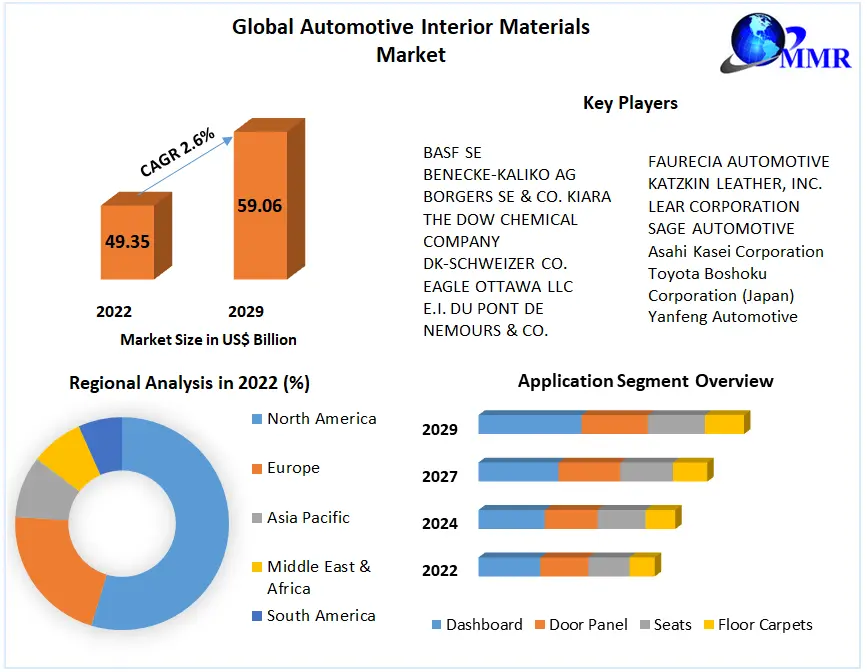
- The Automotive Interior Materials Market was valued at USD 49.35 billion in 2022.
- The market is projected to reach USD 59.06 billion by 2029.
- Revenue is expected to grow at a 2.6% CAGR during 2023–2029.
- Asia Pacific accounted for 54.7% of the global market in 2022.
- Polymer materials remained the dominant material segment.
- Passenger Cars generated the highest demand for interior materials.
- Door Panels represented the leading application segment.
- Sustainability and lightweight vehicle design continue reshaping material innovation.
Why This Matters Now
Vehicle interiors have evolved from functional cabin spaces into critical differentiators influencing purchasing decisions. Consumers increasingly expect premium comfort, improved aesthetics, advanced technology integration, and environmentally responsible materials. At the same time, automakers are reducing vehicle weight to improve fuel efficiency and electric vehicle range. These converging trends are accelerating investment in lightweight polymers, recycled materials, synthetic leather, and sustainable interior solutions.
Market Overview
Automotive interior materials Market include polymers, fabrics, synthetic leather, and genuine leather used in dashboards, door panels, seating systems, floor carpets, and other cabin components. These materials influence vehicle comfort, safety, durability, appearance, and overall customer experience.
Demand is primarily supported by rising global vehicle production, increasing consumer preference for premium interiors, and stricter fuel efficiency regulations encouraging lightweight vehicle design. Automakers are replacing conventional materials with advanced polymers and composite solutions that reduce vehicle weight without compromising durability or aesthetics.
Supply-side innovation continues to focus on sustainable manufacturing processes, recyclable materials, bio-based polymers, and environmentally responsible leather production technologies. Manufacturers are balancing performance, cost efficiency, and regulatory compliance while addressing growing consumer expectations for premium cabin experiences.
The market continues to recover from COVID-19-related supply chain disruptions that affected raw material availability, particularly across petrochemical, chemical, and automotive manufacturing industries.
Key Trends Driving Growth
Lightweight Material Adoption
Automotive manufacturers are increasingly replacing heavier conventional materials with advanced thermoplastic polymers and composites to improve fuel efficiency, reduce emissions, and extend electric vehicle driving range.
Sustainable Interior Manufacturing
Growing environmental awareness is encouraging manufacturers to adopt greener production technologies, particularly in leather processing where eco-friendly tanning methods reduce hazardous chemical waste.
Premium Cabin Experience
Consumers are demanding greater comfort, personalization, improved ergonomics, and luxury finishes across vehicles, encouraging manufacturers to expand premium interior material offerings beyond luxury vehicle segments.
Growth of Synthetic Leather
Synthetic leather continues gaining market acceptance as automakers seek cost-effective, sustainable alternatives to genuine leather while maintaining premium aesthetics and durability.
Advanced Material Engineering
Material suppliers are developing multifunctional interior solutions offering improved wear resistance, lower weight, enhanced acoustic performance, and greater design flexibility for modern vehicle cabins.
Segment Insights
Dominant Segment – Polymer Materials
Polymer-based materials dominated the Automotive Interior Materials Market in 2022 due to their excellent balance of lightweight performance, durability, design flexibility, and cost efficiency. Thermoplastic polymers are extensively used in dashboards, instrument panels, door trims, consoles, and flooring systems because they can be molded into complex shapes while maintaining structural integrity.
For automakers, polymer materials provide a clear business advantage by reducing vehicle weight, lowering fuel consumption, simplifying manufacturing processes, and supporting increasingly stringent emissions regulations.
Fastest-Growing Segment – Passenger Cars
Passenger Cars are expected to remain the fastest-growing vehicle segment throughout the forecast period, driven by rising consumer demand for premium interiors, advanced safety features, and enhanced driving comfort.
Modern passenger vehicles integrate sophisticated infotainment systems, ambient lighting, digital displays, and ergonomic seating, all of which require innovative interior materials capable of balancing aesthetics, functionality, and durability. This trend creates sustained demand for high-value interior material solutions.
Explore detailed analysis, insights, and growth opportunities
Additional Key Sub-Segments
Door Panels represent the leading application segment due to their critical role in occupant safety, cabin aesthetics, storage functionality, and noise reduction. Premium door panel materials also contribute significantly to perceived vehicle quality.
Synthetic Leather is steadily gaining importance as environmental concerns and changing consumer preferences reduce dependence on genuine leather while maintaining premium design standards.
Dashboard Applications continue expanding as digital cockpit technologies require advanced materials capable of supporting integrated displays, touch interfaces, and improved thermal stability.
Regional Growth Story
Asia Pacific
Asia Pacific remained the largest regional market with a 54.7% share in 2022. China, Japan, South Korea, and India continue serving as global automotive manufacturing hubs supported by strong industrial infrastructure, expanding vehicle production, and significant research and development investments.
Growing disposable incomes and rising demand for premium passenger vehicles continue strengthening regional consumption of advanced interior materials.
North America
North America maintains stable growth through increasing consumer demand for premium vehicles, lightweight materials, and technologically advanced interiors. Vehicle manufacturers continue investing in sustainable materials to support fuel economy targets and electric vehicle development.
Europe
Europe remains a leader in sustainable automotive innovation, encouraging wider adoption of recyclable polymers, eco-friendly leather processing, and circular economy initiatives throughout automotive supply chains.
Middle East & Africa and South America
Emerging automotive markets continue generating moderate demand through expanding vehicle ownership, industrial development, and increasing localization of automotive component manufacturing.
Competitive Landscape
Competition is increasingly driven by material innovation, sustainability, lightweight engineering, and close collaboration with automotive OEMs. Suppliers are investing in advanced polymers, eco-friendly leather alternatives, recyclable materials, and integrated interior solutions to strengthen long-term partnerships with vehicle manufacturers.
BASF SE continues leveraging its expertise in high-performance polymers and sustainable material technologies to support lightweight vehicle development.
Faurecia Automotive, Lear Corporation, and Toyota Boshoku Corporation remain major suppliers of integrated automotive interior systems combining advanced materials with ergonomic and aesthetic innovations.
Other leading participants, including The Dow Chemical Company, Asahi Kasei Corporation, Yanfeng Automotive, Benecke-Kaliko AG, Borgers SE & Co. KGaA, Eagle Ottawa LLC, DuPont, Sage Automotive, DK-Schweizer Co., and Katzkin Leather Inc., continue expanding their portfolios through material innovation, sustainability initiatives, and strategic collaborations with global automakers.
The competitive landscape increasingly favors suppliers capable of delivering lightweight, recyclable, and premium-quality interior materials aligned with evolving consumer expectations and environmental regulations.
Recent Developments
- Automotive manufacturers continue increasing the adoption of lightweight thermoplastic polymers and composite materials to improve fuel efficiency and reduce vehicle emissions.
- Suppliers are expanding investments in green leather processing technologies, replacing conventional tanning chemicals with environmentally safer alternatives.
- The industry continues accelerating the transition toward synthetic leather and recyclable interior materials to support sustainability objectives and changing consumer preferences.
- Automotive OEMs are strengthening collaboration with material suppliers to develop premium cabin solutions that combine lightweight construction with enhanced comfort and durability.
Future Outlook
Companies that lead in lightweight, sustainable, and premium interior material innovation will secure the strongest competitive advantage as global vehicle manufacturers accelerate electrification and environmentally responsible automotive design.
Analyst Perspective – Dharti Raut
The Automotive Interior Materials Market is evolving beyond traditional material supply into a strategic innovation ecosystem where sustainability, lightweight engineering, and premium user experience define competitive success. As vehicle electrification and stricter environmental regulations reshape automotive manufacturing, demand is steadily shifting toward advanced polymers, recyclable composites, and eco-friendly upholstery solutions.
About Maximize Market Research
Maximize Market Research Pvt. Ltd. (MMR) is a global market research and consulting company that provides reliable, data-focused, and practical business insights. The firm serves a wide range of industries, including healthcare, pharmaceuticals, technology, automotive, electronics, chemicals, personal care, and consumer goods. Through market forecasts, competitive analysis, strategic consulting, and industry impact assessments, MMR helps organizations understand changing market conditions, identify growth opportunities, and make informed business decisions for long-term success.
Contact Us :
2nd Floor, Navale IT Park Phase 3
Pune Banglore Highway, Narhe
Pune, Maharashtra 411041, India
+91 9607365656
sales@maximizemarketresearch.com
