Parenteral Nutrition Market: Industry Analysis, Growth Trends, Opportunities, and Future Outlook (2025-2032)
Parenteral Nutrition Market Overview
The global Parenteral Nutrition Market is witnessing steady growth as healthcare systems increasingly focus on providing nutritional support to patients who cannot obtain sufficient nutrients through normal digestion. Parenteral nutrition (PN) delivers essential nutrients such as carbohydrates, proteins, fats, vitamins, minerals, and electrolytes directly into the bloodstream through intravenous administration.
Parenteral nutrition plays a critical role in treating patients suffering from severe malnutrition, gastrointestinal disorders, cancer, critical illnesses, premature births, and conditions where oral or enteral feeding is not possible. The rising prevalence of chronic diseases and increasing demand for advanced nutritional therapies are driving market expansion.
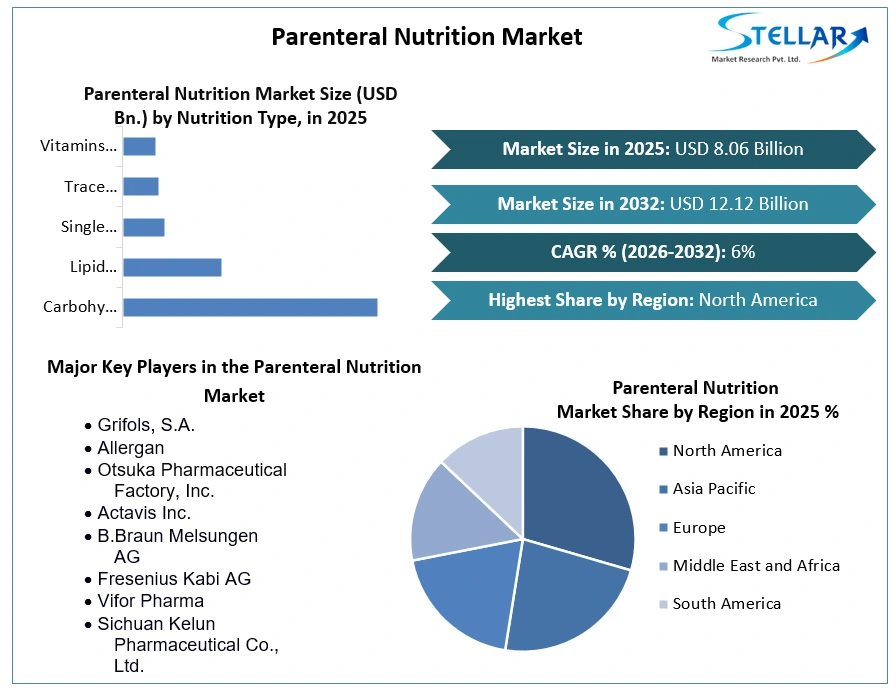
According to Stellar Market Research, the Parenteral Nutrition Market was valued at USD 7.61 billion in 2024 and is expected to reach nearly USD 12.13 billion by 2032, growing at a CAGR of 6.0% during 2025-2032. Increasing hospital admissions, growth in intensive care units, and advancements in intravenous nutrition formulations are key factors supporting market growth.
Increasing Prevalence of Chronic Diseases Driving Market Growth
The growing burden of chronic diseases such as cancer, gastrointestinal disorders, diabetes complications, and kidney-related conditions is increasing the demand for parenteral nutrition solutions. Many patients suffering from these conditions experience difficulty absorbing nutrients through the digestive system and require alternative nutritional support.
The rising geriatric population is also contributing to market growth, as elderly patients are more likely to experience nutritional deficiencies, swallowing difficulties, and chronic health conditions requiring specialized nutritional care.
𝐃𝐨𝐰𝐧𝐥𝐨𝐚𝐝 𝐅𝐫𝐞𝐞 𝐏𝐃𝐅 𝐁𝐫𝐨𝐜𝐡𝐮𝐫𝐞: https://www.stellarmr.com/report/req_sample/Parenteral-Nutrition-Market/350
Growing Demand for Nutritional Support in Critical Care
Hospitals and intensive care units are major users of parenteral nutrition products. Critically ill patients, surgical patients, and individuals recovering from severe infections often require intravenous nutritional support to maintain energy levels and improve recovery outcomes.
The increasing number of complex surgeries and advancements in critical care medicine are encouraging healthcare providers to adopt advanced parenteral nutrition therapies.
Rise in Premature Births and Neonatal Care Applications
Parenteral nutrition is widely used in neonatal care, particularly for premature infants who have underdeveloped digestive systems and cannot consume adequate nutrition through traditional feeding methods.
Increasing investments in neonatal intensive care units (NICUs), improvements in healthcare infrastructure, and growing awareness about infant nutrition are supporting demand for specialized parenteral nutrition products.
Technological Advancements in Parenteral Nutrition Solutions
Manufacturers are focusing on developing advanced formulations and delivery systems to improve patient safety and treatment effectiveness. Innovations include:
- Customized nutrient formulations
- Advanced lipid emulsions
- Automated compounding systems
- Improved infusion pumps
- Home-based parenteral nutrition solutions
These advancements are improving patient outcomes and increasing the adoption of parenteral nutrition across hospitals and home healthcare settings.
Parenteral Nutrition Market Segmentation Analysis
By Nutrition Type
The market is segmented into:
- Carbohydrates
- Parenteral Lipid Emulsion
- Single Dose Amino Acid Solution
- Trace Elements
- Vitamins & Minerals
- Others
Amino acid solutions, lipid emulsions, and carbohydrate-based formulations remain essential components of parenteral nutrition therapies due to their role in providing complete nutritional support.
By Consumer Type
The market includes:
- Adults
- Pediatrics
The adult segment represents a significant market share due to the increasing prevalence of chronic diseases, cancer treatments, and surgical procedures requiring nutritional support.
By End Use
Major end users include:
- Hospitals
- Clinics
- Home Healthcare
- Specialty Care Centers
Hospitals remain the primary users due to the high number of critically ill patients requiring intravenous nutrition therapy.
Regional Market Outlook
North America
North America holds a significant position in the parenteral nutrition market due to advanced healthcare infrastructure, high healthcare spending, and widespread adoption of specialized nutritional therapies. The presence of leading healthcare companies and strong research activities further supports regional growth.
Europe
Europe is witnessing increasing demand for parenteral nutrition due to rising cases of chronic diseases, aging populations, and strong healthcare systems. Regulatory support for patient nutrition management is also contributing to market development.
Asia Pacific
Asia Pacific is expected to experience significant growth due to improving healthcare infrastructure, increasing hospital investments, rising awareness about clinical nutrition, and a growing patient population in countries such as China and India.
Key Growth Drivers of Parenteral Nutrition Market
1. Increasing Cases of Malnutrition
The growing incidence of hospital-acquired malnutrition and nutritional deficiencies is increasing the need for specialized nutrition therapies.
2. Growth in Healthcare Infrastructure
Expansion of hospitals, intensive care units, and specialty healthcare facilities is creating new opportunities for parenteral nutrition providers.
3. Rising Chronic Disease Burden
The increasing prevalence of cancer, gastrointestinal disorders, and metabolic diseases is driving demand for intravenous nutritional support.
4. Growth of Home Healthcare Services
The adoption of home-based parenteral nutrition is increasing as healthcare providers focus on reducing hospital stays and improving patient convenience.
𝐃𝐨𝐰𝐧𝐥𝐨𝐚𝐝 𝐅𝐫𝐞𝐞 𝐏𝐃𝐅 𝐁𝐫𝐨𝐜𝐡𝐮𝐫𝐞: https://www.stellarmr.com/report/req_sample/Parenteral-Nutrition-Market/350
Challenges in the Parenteral Nutrition Market
Despite strong growth opportunities, the market faces challenges including:
- High treatment costs
- Risk of infections associated with intravenous administration
- Complex preparation and storage requirements
- Strict regulatory requirements
Healthcare providers must maintain strict quality control measures to ensure safe and effective nutritional therapy.
Future Opportunities in the Parenteral Nutrition Industry
The future growth of the market is expected to be supported by:
- Personalized nutrition formulations
- Development of safer infusion technologies
- Expansion of home nutrition care
- Increasing healthcare access in emerging economies
- Growth of clinical nutrition research
Companies investing in innovative formulations and patient-friendly delivery systems are expected to gain competitive advantages.
Competitive Landscape
Key players operating in the Parenteral Nutrition Market include:
- Baxter International Inc.
- Fresenius Kabi AG
- B. Braun Melsungen AG
- Nestlé Health Science
- Otsuka Pharmaceutical Factory Inc.
- ICU Medical Inc.
These companies are focusing on product development, strategic collaborations, and advanced nutritional solutions to strengthen their presence in the global market.
Conclusion
The Parenteral Nutrition Market is expected to grow significantly during 2025-2032 due to increasing healthcare needs, rising chronic disease cases, and growing demand for specialized nutritional therapies. The expansion of critical care services, neonatal healthcare, and home-based nutrition solutions is creating new opportunities for market growth.
With continuous advancements in nutrient formulations, infusion technologies, and personalized healthcare approaches, parenteral nutrition will continue to play an important role in improving patient recovery and quality of life worldwide.
