Sugar-Free Confectionery Market: Meeting Consumer Demand for Healthier Sweet Treats
Growing awareness of the health risks associated with excessive sugar consumption is reshaping the global confectionery industry. Consumers are increasingly looking for products that deliver the taste and enjoyment of traditional sweets while supporting healthier lifestyles. As a result, sugar-free confectionery has become one of the fastest-growing segments in the food and beverage industry.
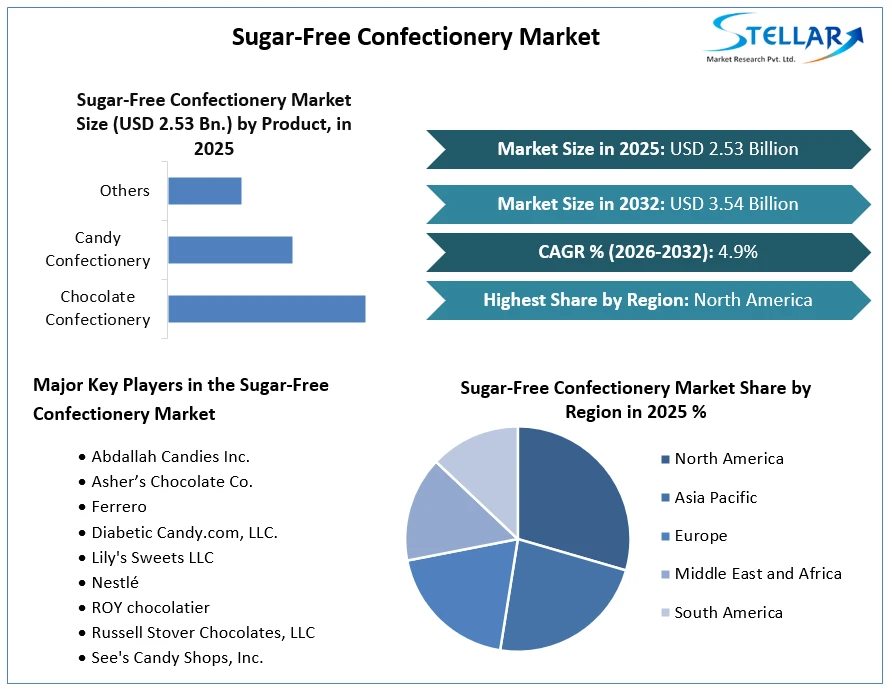
Sugar-free confectionery includes chocolates, candies, chewing gums, mints, jellies, marshmallows, and other sweets formulated with alternative sweeteners instead of conventional sugar. According to Stellar Market Research, the global Sugar-Free Confectionery Market was valued at USD 2.53 billion in 2025 and is projected to reach nearly USD 3.54 billion by 2032, growing at a CAGR of 4.9% during 2026–2032.
What is Sugar-Free Confectionery?
Sugar-free confectionery refers to sweets manufactured without traditional sugar. Instead, manufacturers use alternative sweeteners such as:
- Stevia
- Xylitol
- Sorbitol
- Maltitol
- Aspartame
- Saccharin
These ingredients provide sweetness while helping reduce calorie intake and minimizing the impact on blood glucose levels. Sugar-free confectionery products are particularly popular among people managing diabetes, weight-conscious consumers, and individuals seeking healthier snack alternatives.
𝐃𝐨𝐰𝐧𝐥𝐨𝐚𝐝 𝐅𝐫𝐞𝐞 𝐏𝐃𝐅 𝐁𝐫𝐨𝐜𝐡𝐮𝐫𝐞: https://www.stellarmr.com/report/req_sample/Sugar-Free-Confectionery-Market/1979
Key Factors Driving the Sugar-Free Confectionery Market
1. Rising Health Awareness
Consumers are becoming increasingly conscious of the relationship between excessive sugar consumption and conditions such as obesity, diabetes, and cardiovascular disease. This shift is encouraging people to choose healthier alternatives without giving up their favorite treats.
Growing interest in balanced nutrition and wellness is expected to continue driving demand for sugar-free confectionery products.
2. Increasing Prevalence of Diabetes
The rising global diabetic population has significantly increased demand for products that help individuals manage blood sugar levels.
Sugar-free chocolates, candies, and chewing gums offer diabetic consumers enjoyable snack options while supporting dietary restrictions.
3. Technological Advancements in Sweeteners
Food manufacturers have developed advanced sugar substitutes that closely replicate the taste and texture of conventional sugar.
Modern sweeteners provide improved flavor profiles with fewer calories, making sugar-free confectionery more appealing to a wider range of consumers.
4. Expansion of Retail and E-Commerce
The availability of sugar-free products through supermarkets, specialty health stores, pharmacies, and online retail platforms has increased product accessibility worldwide.
Digital marketing, influencer promotions, and health-focused advertising campaigns are also helping manufacturers reach new customer segments.
Major Product Categories
Sugar-Free Chocolates
Sugar-free chocolates remain one of the most popular product categories due to increasing consumer demand for healthier indulgence.
Manufacturers continue introducing premium dark chocolates, milk chocolates, and functional chocolate products with natural sweeteners.
Sugar-Free Chewing Gum
Chewing gum represents a major application segment because of its association with oral health and fresh breath.
Products containing xylitol have gained popularity due to their dental health benefits.
Sugar-Free Hard Candies and Mints
Hard candies and mints provide convenient low-calorie alternatives for consumers seeking occasional sweet treats without added sugar.
Sugar-Free Gummies and Jellies
The growing popularity of functional foods has encouraged manufacturers to introduce gummies containing vitamins, minerals, and botanical ingredients alongside sugar-free formulations.
Applications Across Consumer Segments
Diabetic-Friendly Products
One of the largest application areas for sugar-free confectionery is the diabetic consumer segment, where controlled sugar intake is essential.
Weight Management
Consumers following calorie-conscious diets increasingly choose sugar-free sweets as alternatives to traditional confectionery.
Dental Health
Products sweetened with ingredients such as xylitol help reduce the risk of tooth decay, making them popular among oral health-conscious consumers.
Fitness and Wellness
Health-conscious individuals and fitness enthusiasts are incorporating sugar-free snacks into balanced dietary routines as they seek lower-calorie alternatives.
𝐃𝐨𝐰𝐧𝐥𝐨𝐚𝐝 𝐅𝐫𝐞𝐞 𝐏𝐃𝐅 𝐁𝐫𝐨𝐜𝐡𝐮𝐫𝐞: https://www.stellarmr.com/report/req_sample/Sugar-Free-Confectionery-Market/1979
Emerging Market Trends
Growing Demand for Natural Sweeteners
Consumers are showing greater preference for naturally derived sweeteners such as stevia and monk fruit instead of artificial alternatives.
Manufacturers are responding by launching clean-label products with recognizable ingredients.
Clean-Label Product Development
Modern consumers increasingly seek products free from artificial colors, preservatives, and unnecessary additives.
This trend is encouraging manufacturers to develop healthier confectionery products with transparent ingredient lists.
Premium and Functional Confectionery
Companies are introducing premium sugar-free chocolates enriched with protein, fiber, probiotics, or vitamins to appeal to health-conscious buyers seeking additional nutritional benefits.
Challenges Facing the Market
Despite steady growth, several challenges remain.
Taste and Texture Expectations
Replicating the taste and mouthfeel of traditional sugar-based confectionery remains a technical challenge for manufacturers.
Continuous innovation is required to improve consumer acceptance.
Higher Production Costs
Alternative sweeteners are often more expensive than conventional sugar, contributing to higher manufacturing costs and premium product pricing.
Consumer Perception
Some consumers remain cautious about artificial sweeteners, encouraging manufacturers to invest in education and natural ingredient development.
Future Opportunities
Several factors are expected to support long-term market growth:
- Rising demand for diabetic-friendly foods
- Expansion of natural and plant-based sweeteners
- Growth of functional confectionery products
- Increasing online retail sales
- Product innovation using clean-label ingredients
- Expansion into emerging markets with growing health awareness
North America and Europe currently represent major markets due to high consumer awareness, while Asia-Pacific is expected to experience significant growth as disposable incomes rise and health-conscious eating habits become more widespread.
Conclusion
The Sugar-Free Confectionery Market is steadily expanding as consumers seek healthier alternatives that deliver the same enjoyment as traditional sweets. Increasing health awareness, the growing prevalence of diabetes, advances in alternative sweeteners, and continuous product innovation are creating new opportunities for manufacturers worldwide.
As demand for low-sugar, clean-label, and functional food products continues to rise, sugar-free confectionery is expected to become an increasingly important segment of the global food and beverage industry.
