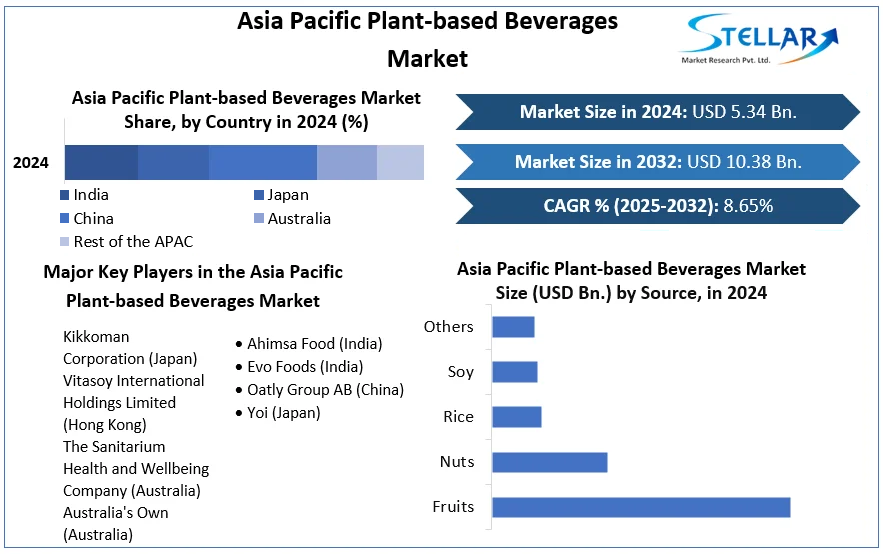
The Asia Pacific Plant-Based Beverages Market is emerging as one of the fastest-growing segments in the global beverage industry. Traditionally dominated by tea and dairy consumption, the region is now witnessing a significant shift toward plant-based alternatives such as soy milk, almond milk, oat milk, coconut milk, and rice-based drinks.
Asia Pacific Plant-based Beverages Market size was valued at US$ 5.34 Bn. in 2024. The Asia Pacific Plant-based Beverages Market is estimated to grow at a CAGR of 8.65% over the forecast period.
Rising health awareness, urbanization, and changing dietary preferences are driving the demand for plant-based beverages across key markets like China, India, Japan, Australia, and Southeast Asia.
A Market Transitioning Toward Health and Sustainability
A defining trend in the Asia Pacific plant-based beverages market is the growing adoption of healthier, dairy-free, and vegan lifestyles. Consumers are increasingly choosing plant-based drinks due to their perceived health benefits, including lower cholesterol, lactose-free properties, and natural ingredient profiles.
The influence of global food trends and social media is accelerating this transition, particularly among younger consumers.
Key Market Insights
- Soy milk remains a dominant traditional segment.
- Oat and almond milk are rapidly gaining popularity.
- Urban consumers are key drivers of demand.
- Functional beverages with added nutrients are trending.
- E-commerce is expanding product accessibility.
- China and India are major growth markets.
- Sustainability and clean-label products are in demand.
Market Drivers Accelerating Growth
1. Rising Health Awareness
Consumers are shifting toward nutritious and plant-based diets.
2. Increasing Lactose Intolerance
Demand for dairy alternatives is growing across the region.
3. Rapid Urbanization and Changing Lifestyles
Busy urban populations are adopting convenient beverage options.
Market Challenges and Restraints
1. Price Sensitivity in Emerging Markets
Higher costs may limit adoption among price-conscious consumers.
2. Strong Cultural Preference for Traditional Beverages
Tea and dairy remain dominant in many regions.
Technology and Innovation Trends
Innovation in the Asia Pacific plant-based beverages market is driven by advancements in food processing, ingredient innovation, and product diversification. Manufacturers are developing beverages with improved taste, texture, and nutritional profiles to compete with traditional dairy products.
Fortification with vitamins, minerals, and plant-based proteins is enhancing product appeal. Companies are introducing new flavors and blends tailored to regional preferences, such as matcha oat milk or coconut-almond mixes.
Sustainable sourcing and eco-friendly packaging are becoming increasingly important as environmental awareness rises. Digital platforms and e-commerce are enabling wider distribution and consumer engagement.
Investment in research and development is helping brands create high-quality, cost-effective plant-based beverages.
Visual Snapshot: Plant-Based Beverages in Asia Pacific
Regional Insights: China and India Lead Growth
China is a dominant market in the Asia Pacific region, with a strong history of soy-based beverages and rapidly growing demand for new plant-based alternatives.
India is witnessing significant growth due to increasing health awareness, urbanization, and rising disposable incomes. Japan and Australia represent mature markets with high adoption of premium and innovative products.
Southeast Asia, including Indonesia, Thailand, and Vietnam, is emerging as a key growth area, supported by changing consumer lifestyles and expanding retail networks.
Recent Industry Developments
- Oatly (2025): Expanded operations in Asia-Pacific markets.
- Danone (2024): Strengthened plant-based portfolio in the region.
- Vitasoy International (2025): Introduced new plant-based drink variants.
- Tata Consumer Products (2024): Expanded plant-based beverage offerings in India.
- Asia-Pacific Food Industry Association (2025): Highlighted regional growth trends.
Competitive Landscape
The Asia Pacific plant-based beverages market is highly competitive, with multinational corporations, regional players, and local brands competing for market share. Companies are focusing on product innovation, localization, and affordability to attract consumers.
Strategic partnerships, new product launches, and expansion into emerging markets are key competitive strategies.
Analyst Perspective
A senior market analyst notes:
“The Asia Pacific plant-based beverages market represents a high-growth opportunity driven by health trends and evolving consumer preferences. Localization and innovation will be critical for success.”
Future Outlook
The Asia Pacific Plant-Based Beverages Market is expected to witness robust growth in the coming years, supported by increasing consumer adoption, expansion of product offerings, and advancements in food technology.
The development of affordable and high-quality alternatives, along with growing distribution channels, will further enhance market potential.
As dietary habits continue to evolve, plant-based beverages will play a central role in shaping the future of the beverage industry in Asia Pacific.
Overall, the market presents significant opportunities for manufacturers, retailers, and investors aiming to capitalize on the region’s rapidly changing consumer landscape.
