Why This Matters Now
Automakers are redesigning the vehicle cabin into a premium experience rather than simply a transportation space. Interior materials have become a competitive advantage as OEMs seek stronger brand differentiation, higher vehicle margins, and improved customer satisfaction.
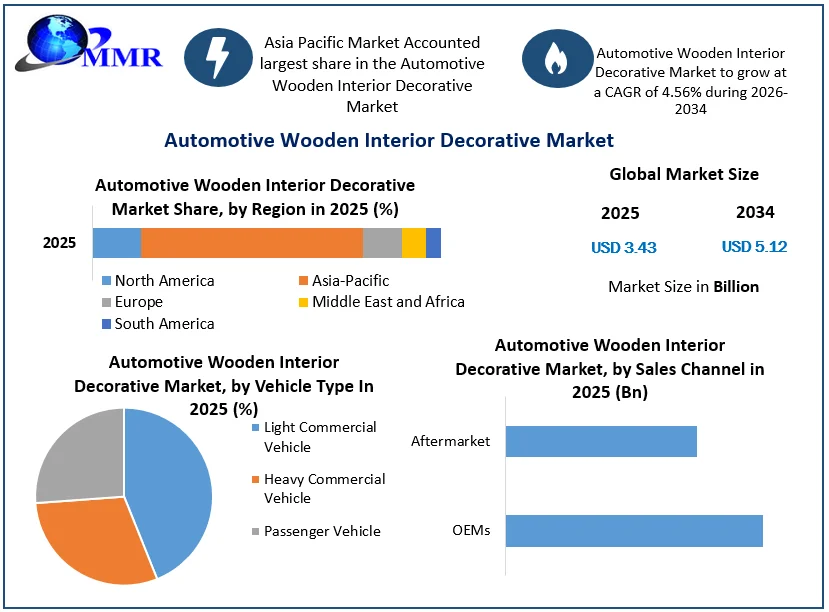
The Global Automotive Wooden Interior Decorative Market is expected to reach USD 5.12 Billion by 2034, growing at a CAGR of 4.56% during the forecast period. That growth signals sustained investment in premium interior components even as manufacturers navigate electrification, digital cockpit integration, and changing consumer expectations. Rather than treating decorative materials as cosmetic additions, vehicle manufacturers increasingly position them as value-enhancing features capable of supporting premium pricing.
Market Overview
The automotive industry is undergoing its largest transformation in decades. Electrification, software-defined vehicles, digital cockpits, and connected mobility dominate investment discussions, yet cabin quality remains one of the most visible differentiators for customers. Wooden decorative components continue to occupy an important position within premium vehicle interiors by delivering craftsmanship, luxury appeal, and brand identity.
Vehicle interiors are evolving into multifunctional environments where comfort, technology, sustainability, and aesthetics converge. As manufacturers compete for premium buyers, decorative materials become an extension of overall product positioning. The result is continued demand for advanced interior decorative solutions capable of complementing digital displays, ambient lighting, and modern cockpit architecture.
For suppliers, this creates opportunities beyond material manufacturing. Integration capabilities, production quality, finish consistency, and design collaboration increasingly determine competitive positioning within OEM supply chains.
Key Trends Driving Growth
Premiumization continues to reshape automotive purchasing decisions across multiple vehicle categories. Consumers increasingly evaluate vehicles based not only on powertrain performance but also on interior craftsmanship and perceived quality.
The transition toward electric vehicles is also changing cabin priorities. With quieter powertrains reducing mechanical noise, occupants become more aware of interior finishes and material quality. Premium decorative elements therefore contribute directly to perceived refinement.
Digital cockpit expansion creates another structural shift. Large displays, integrated dashboards, and redesigned center consoles require decorative materials that blend traditional craftsmanship with modern technology. Wooden interior components increasingly serve as complementary design features within these digitally focused cabins.
Sustainability is becoming equally important. Automotive manufacturers continue evaluating environmentally responsible material sourcing while maintaining premium appearance and durability. Suppliers capable of balancing luxury aesthetics with sustainability objectives strengthen their attractiveness to global OEMs.
The market also benefits from continuous innovation in manufacturing processes that improve consistency, reduce waste, and enable greater design flexibility. These developments support broader customization strategies without compromising production efficiency.
Segment Insights
- Dominant Segment: Information not available in the supplied source.
- Fastest-Growing Segment: Information not available in the supplied source.
- Premium automotive interiors remain a primary application area for wooden decorative components.
- Interior customization continues influencing purchasing decisions among premium vehicle buyers.
- Decorative materials increasingly complement digital cockpit designs and luxury cabin concepts.
Regional Growth Story
Major automotive manufacturing economies continue shaping demand for premium interior materials through vehicle production, luxury segment expansion, and consumer preference for refined cabin experiences.
The United States remains an important market where premium SUVs, pickup trucks, and luxury passenger vehicles continue emphasizing high-quality interior finishes. Manufacturers compete aggressively through comfort, personalization, and advanced cabin design.
Germany continues influencing global automotive interior innovation through luxury vehicle manufacturing. Premium brands consistently invest in craftsmanship, interior quality, and advanced material integration, reinforcing demand for decorative components.
China remains a significant force in automotive production and premium vehicle consumption. As domestic manufacturers strengthen their positioning while international brands expand local production, demand for differentiated cabin experiences continues to increase.
Japan and South Korea contribute through advanced manufacturing capabilities, supplier innovation, and continued investment in premium vehicle technologies. Interior refinement remains an important competitive factor alongside electrification and connectivity.
India continues strengthening its automotive manufacturing ecosystem while premium vehicle demand gradually expands. Growing consumer interest in higher-end vehicle features supports long-term opportunities for interior component suppliers.
Across global markets, regional competitiveness increasingly depends on manufacturing efficiency, design capability, supplier collaboration, and the ability to deliver premium interiors at commercial scale.
Competitive Landscape
Competition extends well beyond decorative materials. OEMs increasingly evaluate suppliers on engineering capability, manufacturing consistency, sustainability credentials, quality assurance, and integration expertise.
Companies capable of collaborating during early vehicle development gain stronger positioning than suppliers limited to component manufacturing. Early design involvement allows decorative materials to become part of the overall cabin architecture rather than aftermarket additions.
Supplier competitiveness increasingly depends on balancing premium craftsmanship with industrial-scale production. Manufacturers seek partners capable of delivering consistent quality across global production networks while supporting platform standardization and regional customization requirements.
The growing importance of premium cabin experiences also changes pricing dynamics. Decorative components contribute to higher-value vehicle configurations, giving suppliers opportunities to compete on innovation and quality rather than cost alone.
As automotive platforms become increasingly global, suppliers with diversified manufacturing footprints, reliable supply chains, and advanced production technologies are likely to strengthen relationships with leading OEMs.
Recent Developments
- Expansion of premium vehicle interior programs continues increasing demand for decorative cabin materials.
- OEMs continue integrating luxury design elements alongside digital cockpit technologies.
- Automotive manufacturers increasingly emphasize sustainable material sourcing across vehicle interiors.
- Supplier collaboration with vehicle manufacturers continues expanding during early design and development phases.
- Premium cabin differentiation remains an important strategy for strengthening vehicle brand positioning.
Strategic Implications
For OEM executives, interior quality has become a measurable competitive advantage. As vehicle performance differences narrow across competing models, premium cabin execution increasingly influences purchasing decisions and brand loyalty.
Tier-1 suppliers should focus on manufacturing precision, design collaboration, and scalable production capabilities. Long-term supplier relationships will depend on reliability as much as innovation.
Investors should monitor companies positioned at the intersection of premium materials, sustainable manufacturing, and automotive design innovation. Businesses capable of supporting both established luxury manufacturers and emerging premium vehicle brands may benefit from evolving industry priorities.
Fleet operators traditionally prioritize total ownership costs, yet executive transportation, luxury mobility services, and premium ride-sharing offerings increasingly recognize interior quality as a customer retention factor.
For regulators and industry stakeholders, sustainable sourcing and responsible manufacturing practices are expected to receive greater attention alongside broader automotive environmental initiatives.
Future Outlook
The Automotive Wooden Interior Decorative Market is expected to reach USD 5.12 Billion by 2034, expanding at a CAGR of 4.56% during the forecast period. This steady trajectory indicates continued investment in premium vehicle interiors despite broader changes in automotive technology and mobility models. For manufacturers, sustained market expansion supports ongoing development of advanced decorative materials that enhance vehicle differentiation and customer experience.
Future competition will increasingly revolve around integrating premium craftsmanship with sustainable production, digital cockpit compatibility, and scalable manufacturing. The companies that successfully combine design excellence, production efficiency, and close OEM collaboration will define the next generation of premium automotive interiors, while competitors focused solely on traditional component supply risk losing strategic relevance.
Analyst Perspective
“The Automotive Wooden Interior Decorative Market continues to demonstrate the strategic importance of premium cabin design within the broader transformation of the global automotive industry. As manufacturers pursue differentiation through customer experience, decorative interior materials remain an important element of long-term vehicle value creation.” — Tejaswini Kakade, Analyst, Maximize Market Research
About Maximize Market Research
Maximize Market Research Pvt. Ltd. (MMR) is a global market research and consulting company that provides reliable, data-focused, and practical business insights. The firm serves a wide range of industries, including healthcare, pharmaceuticals, technology, automotive, electronics, chemicals, personal care, and consumer goods. Through market forecasts, competitive analysis, strategic consulting, and industry impact assessments, MMR helps organizations understand changing market conditions, identify growth opportunities, and make informed business decisions for long-term success.
2nd Floor, Navale IT Park Phase 3
Pune Banglore Highway, Narhe
Pune, Maharashtra 411041, India
+91 9607365656
sales@maximizemarketresearch.com
