The Morocco Traditional Leather Market is a globally recognized industry rooted in centuries-old craftsmanship and cultural heritage. Known for its high-quality handmade leather goods—such as bags, footwear, belts, and upholstery—Morocco has established itself as a leading exporter of artisanal leather products.
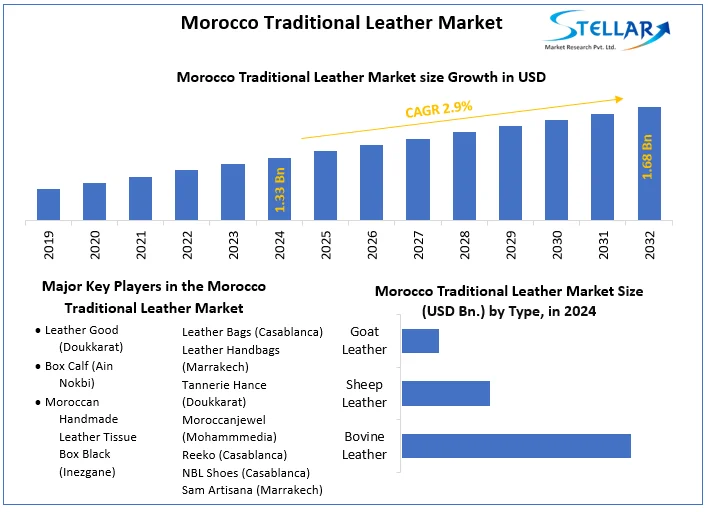
Morocco’s Traditional Leather Market was valued at USD 1.33 billion in 2024. Morocco’s Traditional Leather Market size is estimated to grow at a CAGR of 2.9 % over the forecast period.
Cities like Fez and Marrakech are famous for their historic tanneries and skilled artisans, making traditional leather production both an economic pillar and a cultural symbol.
A Market Defined by Tradition and Artisanal Value
A defining trend in the Morocco traditional leather market is the strong emphasis on handcrafted production and authenticity. Unlike mass-produced leather goods, Moroccan leather products are valued for their unique designs, natural processing methods, and cultural significance.
This artisanal approach is attracting global consumers seeking sustainable, handmade, and culturally rich products.
Key Market Insights
- Morocco is a leading producer of traditional leather goods.
- Artisanal craftsmanship is a key market differentiator.
- Export demand drives market growth.
- Handmade leather products dominate the market.
- Tourism significantly supports local sales.
- Sustainable and natural tanning methods are widely used.
- Cultural heritage plays a central role in branding.
Market Drivers Accelerating Growth
1. Strong Global Demand for Handmade Products
Consumers are increasingly valuing craftsmanship and authenticity.
2. Growth of Tourism Industry
Tourists contribute significantly to local leather product sales.
3. Cultural Heritage and Branding
Morocco’s reputation for traditional leather enhances market appeal.
Market Challenges and Restraints
1. Competition from Mass-Produced Goods
Industrial leather products can be cheaper and more widely available.
2. Environmental and Regulatory Concerns
Traditional tanning processes may face sustainability challenges.
Technology and Sustainability Trends
Innovation in the Morocco traditional leather market is evolving while preserving heritage practices. Efforts are being made to integrate modern processing techniques with traditional craftsmanship.
Eco-friendly tanning methods are gaining attention, with initiatives to reduce water usage and chemical waste. Natural dyes and sustainable materials are being increasingly adopted to meet global environmental standards.
Digital platforms and e-commerce are enabling artisans to reach international markets directly, expanding their customer base. Branding and certification programs are also helping authenticate traditional products and protect cultural heritage.
Visual Snapshot: Moroccan Leather Craftsmanship
Regional Insights: Fez and Marrakech Lead Production
Fez is the heart of Morocco’s traditional leather industry, home to some of the world’s oldest tanneries. Marrakech also plays a significant role, with vibrant الأسواق (markets) offering a wide range of leather products.
These regions attract both domestic buyers and international tourists, contributing to strong market activity. Rural areas support the supply chain through livestock farming and raw material production.
Recent Industry Developments
- Moroccan Ministry of Tourism (2025): Promoted cultural tourism and artisanal industries.
- Maison de l’Artisan (2024): Supported traditional crafts and exports.
- UNESCO (2025): Recognized and preserved heritage crafts.
- World Bank (2024): Funded artisan sector development projects.
- European Union (2025): Supported sustainable craft initiatives.
Competitive Landscape
The Morocco traditional leather market is highly fragmented, with thousands of small-scale artisans and cooperatives operating alongside export-oriented businesses.
Competition is based on quality, craftsmanship, authenticity, and design uniqueness. Cooperatives and artisan groups are playing an important role in improving market access and maintaining product standards.
Analyst Perspective
A senior market analyst notes:
“Morocco’s traditional leather market stands out for its heritage and craftsmanship. Balancing tradition with sustainability will be key to future growth.”
Future Outlook
The Morocco Traditional Leather Market is expected to witness steady growth, driven by global demand for artisanal and sustainable products.
Investment in eco-friendly production methods, branding, and digital marketing will enhance market potential. As consumers increasingly seek authentic and ethically produced goods, Moroccan leather products are well-positioned to gain further international recognition.
Overall, the market presents strong opportunities for artisans, exporters, and investors aiming to preserve cultural heritage while expanding into global markets.
