North America Railroad Tie Market: Building the Foundation for Modern Rail Infrastructure
The railway industry remains a crucial component of transportation infrastructure across North America, supporting freight movement, passenger transportation, and economic development. Railroad ties, also known as railway sleepers, play an essential role in maintaining track stability, ensuring proper rail alignment, and improving the durability of railway networks.
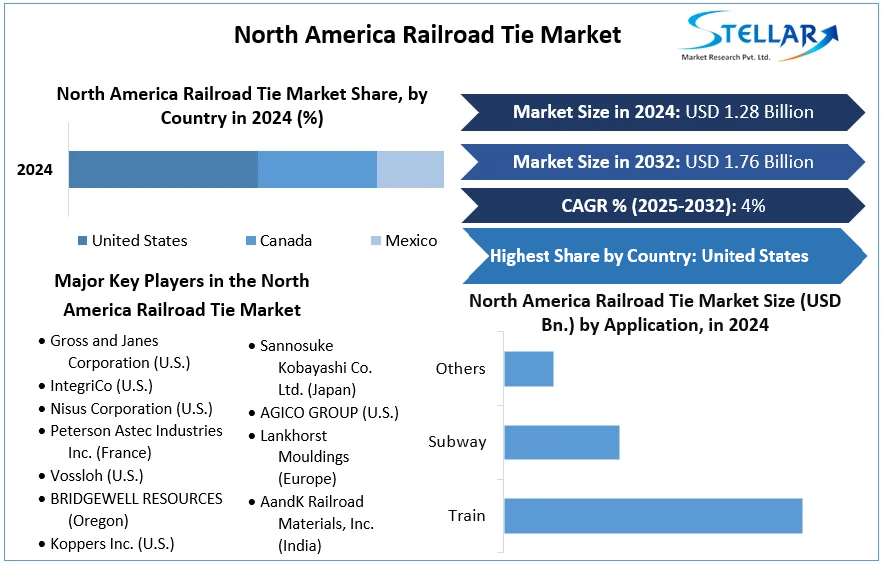
With increasing investments in rail infrastructure modernization, freight transportation expansion, and sustainable railway solutions, the demand for high-quality railroad ties is expected to grow steadily across the region. According to Stellar Market Research, the North America Railroad Tie Market was valued at USD 1.28 billion in 2024 and is projected to reach USD 1.76 billion by 2032, growing at a CAGR of 4% during 2025–2032.
What Are Railroad Ties?
Railroad ties are rectangular structural components placed between railway tracks and the ballast foundation. They provide support to rails, maintain proper track gauge, distribute train loads, and improve railway safety.
Railroad ties are manufactured using different materials, including:
- Wooden Ties
- Concrete Ties
- Steel Ties
- Composite Ties
These components are widely used in:
- Freight railways
- Passenger rail systems
- Subway networks
- Industrial rail tracks
Railroad ties help reduce rail movement, improve track stability, and increase the operational life of railway infrastructure.
𝐃𝐨𝐰𝐧𝐥𝐨𝐚𝐝 𝐅𝐫𝐞𝐞 𝐏𝐃𝐅 𝐁𝐫𝐨𝐜𝐡𝐮𝐫𝐞: https://www.stellarmr.com/report/req_sample/North-America-Railroad-Tie-Market/890
Key Market Drivers
Expansion of Railway Infrastructure
Growing investments in railway infrastructure modernization are one of the major factors driving demand for railroad ties in North America. Governments and transportation companies are focusing on improving rail networks to support efficient freight movement and reduce transportation emissions.
The expansion of passenger rail systems, metro networks, and freight corridors is creating continuous demand for replacement and new railroad ties.
Growth of Freight Transportation
Rail freight continues to play a major role in transporting commodities such as coal, agricultural products, minerals, chemicals, and industrial goods across North America.
The need for reliable and durable rail infrastructure is increasing as freight operators focus on improving network efficiency, safety, and capacity.
Increasing Railway Maintenance Activities
Railroad ties require periodic replacement due to wear, environmental exposure, and heavy loading conditions. Regular maintenance and track renewal projects are generating consistent demand for new railroad ties.
Technology Trends Shaping the Market
Shift Toward Sustainable Tie Materials
Railway operators are increasingly exploring sustainable alternatives such as composite railroad ties made from recycled materials. These solutions offer advantages including longer service life, reduced maintenance requirements, and improved environmental performance.
Advanced Concrete Tie Solutions
Concrete ties are gaining popularity due to their durability, strength, and ability to support high-speed and heavy-load rail operations. Improvements in concrete technology are helping manufacturers develop stronger and longer-lasting railway components.
Smart Railway Infrastructure
The adoption of digital monitoring technologies is transforming railway maintenance. Sensors and predictive maintenance systems help operators identify track issues early, improving safety and reducing downtime.
Market Segmentation
The North America Railroad Tie Market is segmented based on:
By Product Type
Wooden Tie
Wooden railroad ties remain widely used due to their flexibility, availability, and cost-effectiveness. They are commonly used in freight rail networks and traditional railway systems.
Concrete Tie
Concrete ties provide high durability and are increasingly adopted in heavy-load and high-performance railway applications.
Steel Tie
Steel ties offer strength, lightweight characteristics, and resistance to certain environmental conditions.
Others
This segment includes composite and innovative tie materials designed for specialized railway applications.
By Application
Train
Railroad ties are extensively used in freight and passenger train networks to maintain safe and stable railway operations.
Subway
Growing urban transportation systems and metro expansions are increasing demand for specialized railway infrastructure components.
Others
Industrial railways and specialized transportation networks also contribute to market demand.
Regional Outlook
United States
The United States represents the largest market in North America due to its extensive freight rail network, large-scale railway infrastructure, and continuous investments in track maintenance and modernization.
Increasing demand for efficient freight transportation and infrastructure upgrades continues to support railroad tie consumption.
Canada
Canada’s extensive rail network supporting mining, agriculture, and industrial transportation creates strong demand for durable railroad ties. Investments in railway maintenance and expansion projects are expected to support market growth.
Mexico
Mexico is witnessing increasing railway infrastructure development, particularly for freight transportation and industrial connectivity, creating additional opportunities for railroad tie manufacturers.
𝐃𝐨𝐰𝐧𝐥𝐨𝐚𝐝 𝐅𝐫𝐞𝐞 𝐏𝐃𝐅 𝐁𝐫𝐨𝐜𝐡𝐮𝐫𝐞: https://www.stellarmr.com/report/req_sample/North-America-Railroad-Tie-Market/890
Market Challenges
High Maintenance and Replacement Costs
Railroad infrastructure requires significant investment for installation, inspection, and replacement activities. These costs can influence adoption decisions, particularly for smaller railway operators.
Environmental Concerns Related to Wooden Ties
Traditional wooden ties may face challenges related to treatment chemicals, disposal, and environmental regulations. This is encouraging interest in alternative materials such as composites and concrete.
Raw Material Price Fluctuations
Changes in timber, steel, and concrete prices can impact manufacturing costs and overall market pricing.
Competitive Landscape
Companies operating in the North America railroad tie market are focusing on product innovation, sustainable materials, and manufacturing improvements.
Key players include:
- Gross & Janes Corporation
- IntegriCo
- Nisus Corporation
- Vossloh
- Bridgewell Resources
- Koppers Inc.
- Tank Fab
- AGICO Group
Market strategies include:
- Development of durable tie materials
- Expansion of production capacity
- Sustainable product innovation
- Strategic partnerships
- Improved manufacturing technologies
Future Outlook
The North America railroad tie market is expected to maintain steady growth as railway networks continue modernizing. Increasing freight transportation demand, infrastructure renewal projects, and sustainability initiatives will create new opportunities for manufacturers.
The adoption of composite materials, advanced concrete technologies, and smart railway maintenance solutions will further shape the future of the industry.
Conclusion
The North America Railroad Tie Market serves as a fundamental component of the region’s railway infrastructure. Growing rail investments, expanding freight networks, and increasing focus on sustainable transportation are driving demand for reliable track support systems.
As North America continues improving its railway connectivity and transportation efficiency, railroad ties will remain essential for creating safer, stronger, and more sustainable rail networks.
