Asia Pacific Earthen Plasters Market: Growing Adoption of Sustainable and Natural Building Materials
The construction industry across Asia Pacific is witnessing a significant shift toward environmentally friendly and sustainable building solutions. Earthen plasters, made from natural materials such as clay, minerals, and aggregates, are gaining popularity due to their eco-friendly properties, aesthetic appeal, and ability to improve indoor environmental quality.
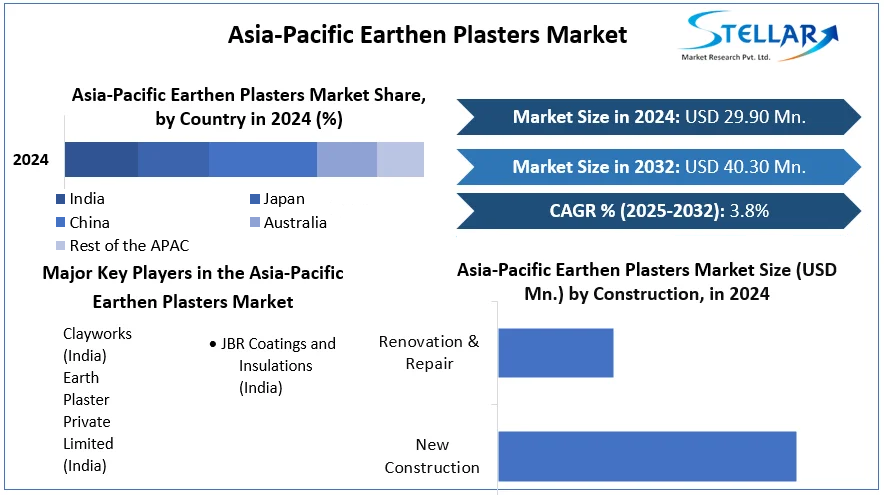
Growing demand for green buildings, increasing awareness of sustainable construction practices, and rising renovation activities are driving the adoption of earthen plaster solutions across residential and non-residential projects. According to Stellar Market Research, the Asia Pacific Earthen Plasters Market was valued at USD 29.90 million in 2024 and is projected to reach USD 40.30 million by 2032, growing at a CAGR of 3.8% during 2025–2032.
What Are Earthen Plasters?
Earthen plasters are natural surface finishing materials produced using clay, sand, minerals, and natural pigments. These plasters are applied to walls, roofs, and masonry surfaces to provide protection, insulation, and decorative finishes.
Unlike synthetic plaster materials, earthen plasters offer natural benefits such as:
- Low environmental impact
- Breathability
- Moisture regulation
- Thermal insulation
- Natural appearance
- Reduced chemical emissions
These characteristics make earthen plasters an attractive option for sustainable construction projects.
𝐃𝐨𝐰𝐧𝐥𝐨𝐚𝐝 𝐅𝐫𝐞𝐞 𝐏𝐃𝐅 𝐁𝐫𝐨𝐜𝐡𝐮𝐫𝐞: https://www.stellarmr.com/report/req_sample/Asia-Pacific-Earthen-Plasters-Market/910
Key Market Drivers
Rising Demand for Green Buildings
The increasing focus on sustainable construction is one of the major factors supporting the growth of the Asia Pacific earthen plasters market.
Green building projects emphasize:
- Energy efficiency
- Environment-friendly materials
- Reduced carbon emissions
- Improved indoor air quality
Earthen plasters align with these objectives because they are made from natural resources and require less energy-intensive processing compared with conventional synthetic materials.
Growing Residential Construction Activities
Rapid urbanization and population growth across countries such as India, China, Indonesia, and other emerging economies are increasing demand for residential construction materials.
Homeowners and architects are increasingly adopting natural finishing materials for:
- Eco-friendly homes
- Luxury residences
- Traditional architecture projects
- Interior decoration
The combination of sustainability and aesthetic value is increasing the use of earthen plaster in modern housing projects.
Increasing Renovation and Restoration Projects
Renovation activities are creating new opportunities for earthen plaster manufacturers. Historic buildings, traditional homes, and modern interiors are increasingly incorporating natural materials to preserve architectural character while improving sustainability.
Earthen plasters are preferred for restoration projects because they maintain traditional construction techniques and provide natural finishing qualities.
Technology Trends Shaping the Market
Development of Improved Clay-Based Formulations
Manufacturers are developing advanced earthen plaster formulations with improved:
- Durability
- Strength
- Moisture resistance
- Surface finish
- Application performance
These innovations are helping natural plasters compete with conventional construction materials.
Integration of Natural Pigments and Decorative Finishes
Modern earthen plasters are increasingly available in different colors, textures, and finishes using natural mineral pigments.
Architects and designers are adopting these materials for creating unique interior environments.
Sustainable Construction Innovation
The growing emphasis on circular construction and low-carbon materials is encouraging research into natural building solutions. Earthen plasters are becoming part of broader sustainable architecture trends.
Market Segmentation
The Asia Pacific Earthen Plasters Market is segmented based on type, application, construction type, and end user.
By Type
Iron-Based Earthen Plasters
Iron-based formulations provide enhanced structural and aesthetic properties and are used in specialized construction applications.
Calcium-Based Earthen Plasters
Calcium-based materials help improve stability and durability while supporting sustainable construction practices.
Magnesium-Based Earthen Plasters
Magnesium-based formulations provide specific performance characteristics for selected applications.
Silicate-Based Earthen Plasters
Silicate-based materials offer improved durability and are used where stronger surface performance is required.
Aluminum-Based Earthen Plasters
The aluminum segment is expected to witness strong growth due to its contribution to clay stability, improved physical properties, and enhanced material performance.
𝐃𝐨𝐰𝐧𝐥𝐨𝐚𝐝 𝐅𝐫𝐞𝐞 𝐏𝐃𝐅 𝐁𝐫𝐨𝐜𝐡𝐮𝐫𝐞: https://www.stellarmr.com/report/req_sample/Asia-Pacific-Earthen-Plasters-Market/910
By Application
Walls
Wall applications represent a major segment of the earthen plaster market. Earthen coatings are widely used for interior and exterior walls because they provide:
- Decorative finishes
- Moisture regulation
- Natural aesthetics
- Surface protection
Roofs
Earthen plasters are used in roofing applications to improve insulation and support sustainable building designs.
Masonry
Masonry applications use earthen plasters for surface protection and finishing in traditional and modern structures.
Agriculture
Natural plaster materials are also used in certain agricultural structures due to their environmentally friendly characteristics.
By Construction Type
New Construction
Growing demand for sustainable buildings is increasing the adoption of earthen plaster in new construction projects.
Architects and developers are incorporating natural materials into modern green building designs.
Renovation & Repair
Renovation and restoration projects represent an important opportunity area due to increasing interest in traditional building techniques and sustainable remodeling.
By End User
Residential
The residential sector is a major consumer of earthen plasters due to increasing demand for natural interiors, eco-friendly homes, and sustainable architecture.
Non-Residential
Commercial buildings, hotels, educational institutions, and wellness facilities are adopting earthen plasters to create healthier indoor environments.
Regional Outlook
India
India represents a significant market due to its traditional use of natural building materials and growing interest in sustainable construction.
Increasing adoption of eco-friendly architecture and green building practices is creating opportunities for earthen plaster manufacturers.
China
China’s large construction industry and increasing focus on sustainable development are supporting market growth.
Growing investments in environmentally responsible infrastructure are encouraging the adoption of natural construction materials.
Japan
Japan’s focus on traditional architecture, quality construction, and sustainable design supports demand for natural finishing materials.
Australia
Australia is witnessing increasing interest in sustainable homes and environmentally friendly construction solutions.
Southeast Asia
Countries including Indonesia, Malaysia, and Vietnam are experiencing growth due to urban development and increasing awareness of green construction practices.
Market Challenges
Limited Awareness Among Consumers
Despite their benefits, earthen plasters have lower awareness compared with conventional plaster materials in many regions.
Availability of Alternative Materials
Traditional cement-based and synthetic plaster solutions continue to compete with earthen plasters due to established supply chains and familiarity among builders.
Skilled Application Requirements
Proper application of earthen plaster requires specialized knowledge and trained professionals, which can affect adoption in some markets.
Competitive Landscape
The Asia Pacific earthen plasters market includes regional and international companies focusing on sustainable construction materials and innovative natural plaster solutions.
Key players include:
- Clayworks
- Earth Plaster Private Limited
- JBR Coatings and Insulations
Companies are focusing on:
- Sustainable product development
- Improved plaster formulations
- Expansion of product portfolios
- Partnerships with architects and construction companies
Future Outlook
The Asia Pacific earthen plasters market is expected to grow steadily as sustainable construction becomes a major priority across the region.
Future growth opportunities will be driven by:
- Expansion of green buildings
- Increasing demand for natural materials
- Growth of eco-friendly residential projects
- Rising renovation activities
- Innovation in natural construction technologies
The combination of traditional building knowledge and modern sustainable design approaches will continue strengthening the role of earthen plasters in future construction.
Conclusion
The Asia Pacific Earthen Plasters Market is emerging as an important segment of the sustainable construction industry. Growing environmental awareness, demand for green buildings, and increasing preference for natural materials are driving market expansion.
With continued innovation in formulation technology and rising adoption among architects, builders, and homeowners, earthen plasters are expected to become a valuable solution for sustainable and aesthetically appealing construction across Asia Pacific.
