The healthcare industry is undergoing a significant transformation as additive manufacturing technologies redefine the way medical devices, implants, and surgical tools are designed and produced. Personalized treatment approaches and rapid manufacturing capabilities are creating new opportunities for healthcare providers worldwide.
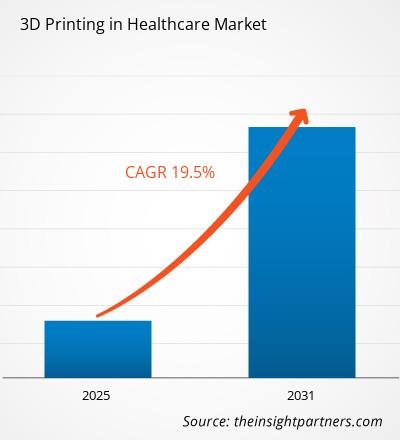
The 3D Printing in Healthcare Market is projected to grow from US$ 6.52 billion in 2024 to US$ 21.14 billion by 2031, registering a CAGR of 18.3% during the forecast period from 2025 to 2031. The 3D Printing in Healthcare Market is witnessing remarkable growth as hospitals, medical device manufacturers, and research institutions increasingly adopt advanced printing technologies to improve patient outcomes. Growing investments in patient-specific implants, anatomical models, tissue engineering, and surgical planning continue to accelerate industry expansion.
Get Sample PDF @ https://www.theinsightpartners.com/sample/TIPTE100000717
Rising Adoption of Personalized Medical Solutions
One of the primary growth drivers is the increasing demand for customized healthcare products. Unlike conventional manufacturing techniques, 3D printing enables the production of patient-specific implants, prosthetics, surgical guides, and anatomical models that match individual anatomical requirements. This personalized approach improves surgical precision, reduces operation time, and enhances clinical outcomes.
Healthcare providers are increasingly integrating CT and MRI imaging data with advanced design software to produce highly accurate three-dimensional models before surgical procedures. This capability is particularly valuable in orthopedics, craniofacial reconstruction, dental procedures, and spinal surgeries where precision is essential.
Another important factor supporting industry growth is the expansion of point-of-care manufacturing facilities within hospitals. These dedicated 3D printing laboratories allow clinicians, biomedical engineers, and surgeons to collaborate throughout the treatment planning process while reducing production timelines for customized devices.
Technological Innovations Driving Industry Expansion
Rapid advancements in printing technologies, materials science, and software platforms continue to strengthen the industry’s growth prospects.
Modern healthcare applications utilize several printing technologies, including:
- Selective Laser Sintering
- Photopolymerization
- Thermal Inkjet Printing
- Fused Deposition Modeling
- Stereolithography
- Electron Beam Melting
Each technology addresses specific clinical requirements based on material compatibility, surface finish, strength, production speed, and regulatory compliance.
Material innovations are equally important. Certified biocompatible polymers, titanium alloys, ceramics, PEEK materials, and emerging bioinks are expanding the scope of medical applications. These advanced materials improve implant durability, tissue compatibility, sterilization performance, and long-term clinical reliability.
Artificial intelligence is also becoming an important component of future workflows by enabling automated image segmentation, surgical planning, design optimization, and clinical collaboration across digital platforms.
Expanding Applications Across Healthcare
The scope of 3D printing in healthcare has expanded far beyond rapid prototyping. Today, the technology supports numerous clinical applications that deliver measurable improvements in efficiency and patient care.
Among application segments, Implants & Prostheses currently account for the largest revenue share due to increasing demand for patient-specific orthopedic, cranial, dental, and facial implants.
Other major application areas include:
- Tissues and Organs
- Orthopedics
- Hearing Aids
- Drug Delivery Devices
- Surgical Planning Models
- Customized Prosthetics
The tissue engineering segment is expected to experience particularly strong growth as ongoing research advances bioprinting technologies capable of producing functional biological structures for regenerative medicine.
Healthcare organizations are also utilizing printed anatomical models for physician education, complex procedure planning, and simulation-based training, reducing surgical risks while improving communication between multidisciplinary clinical teams.
Regional Landscape and Competitive Environment
North America continues to dominate the global landscape, accounting for approximately 38% to 41% of total revenue. The region benefits from strong regulatory frameworks, advanced healthcare infrastructure, widespread adoption of point-of-care manufacturing, and significant investments by medical device companies.
The United States remains the largest contributor within North America, supported by extensive medical innovation, contract manufacturing capabilities, and growing clinical adoption.
Europe maintains a strong position through established orthopedic manufacturing, strict quality standards, and increasing adoption of customized medical devices across Germany, the United Kingdom, France, Italy, and Spain.
Asia Pacific is projected to register the fastest growth during the forecast period. Countries including China, Japan, South Korea, India, and Australia continue investing heavily in localized manufacturing, digital healthcare infrastructure, orthopedic procedures, and advanced hospital technologies.
Key Players
Major companies operating in the industry include:
- 3D Systems Corporation
- Arcam AB
- EnvisionTEC GmbH
- Nikon SLM Solutions AG
- Stratasys Ltd.
- Javelin Technologies Inc.
- Tissue Regeneration Systems, Inc.
- Materialise NV
- Organovo Holdings, Inc.
- Biomedical Modeling Inc.
These organizations are strengthening their competitive positions through investments in advanced materials, software integration, certified manufacturing facilities, clinical partnerships, and research collaborations focused on regenerative medicine and personalized healthcare.
Interested in Purchasing this Report? Click here @ https://www.theinsightpartners.com/buy/TIPTE100000717
Future Outlook
The future of the 3D Printing in Healthcare Market remains highly promising as healthcare systems continue shifting toward personalized medicine and digital manufacturing. Growing adoption of AI-enabled surgical planning, certified biocompatible materials, point-of-care production facilities, and advanced tissue engineering technologies will reshape clinical workflows over the coming years.
Related Report:
1) Microcarriers Market Key Players and Opportunities by 2030
2) Generic Drugs Market Report 2031 by Segments, Geography, Dynamics
3) Empty Capsules Market Demand, Trends & Forecast to 2031
About Us –
The Insight Partners provides comprehensive syndicated and tailored market research services in the healthcare, technology, and industrial domains. Renowned for delivering strategic intelligence and practical insights, the firm empowers businesses to remain competitive in ever-evolving global markets.
Contact Us:
Ankit Mathur | The Insight Partners
E-mail: ankit.mathur@theinsightpartners.com
Phone: +1-646-491-9876
Also Available in : Korean German Japanese French Chinese Italian Spanish
