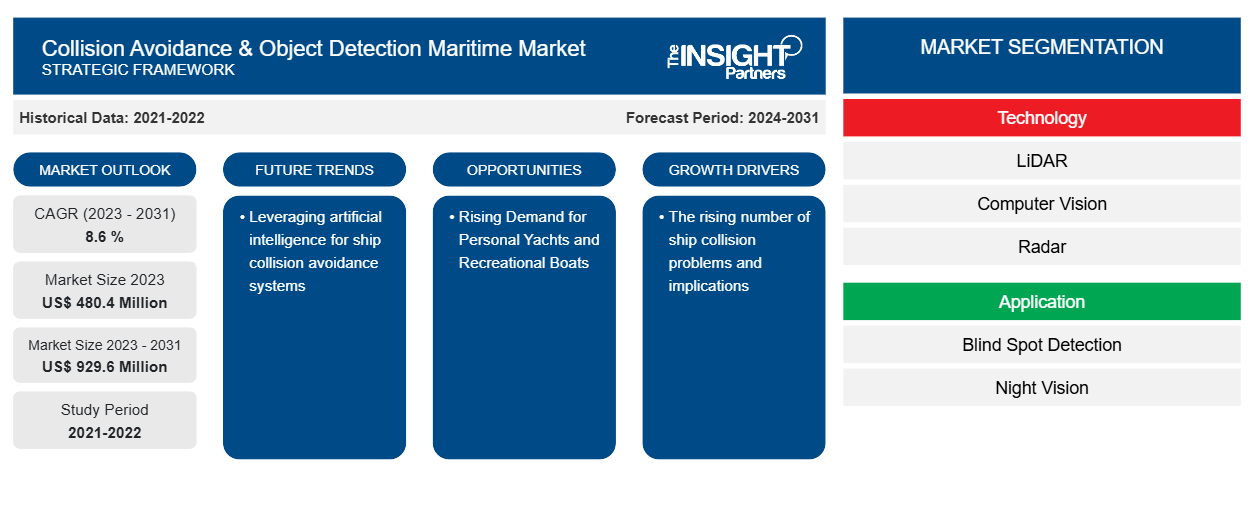
The maritime industry is undergoing a significant transformation as digital navigation technologies, intelligent sensing solutions, and autonomous vessel capabilities continue to redefine operational safety across commercial and defense fleets. Increasing emphasis on reducing navigational risks, improving situational awareness, and enhancing operational efficiency is encouraging shipowners and maritime authorities to adopt next generation collision prevention technologies. As shipping routes become busier and environmental regulations evolve, advanced safety solutions are becoming an essential part of modern maritime operations.
The Collision Avoidance & Object Detection Maritime Market is witnessing sustained momentum as vessel operators increasingly integrate radar, LiDAR, computer vision, artificial intelligence, thermal imaging, and sensor fusion technologies into navigation systems. These innovations are helping vessels detect floating obstacles, nearby ships, marine wildlife, and hazardous objects with greater precision while supporting autonomous and remotely operated maritime platforms. The growing deployment of intelligent navigation systems is expected to strengthen long term industry expansion through 2031.
Get a Sample PDF of the Report: https://www.theinsightpartners.com/sample/TIPRE00029764
Modern collision avoidance solutions are no longer limited to conventional radar systems. Artificial intelligence powered image recognition, predictive analytics, and machine learning algorithms are enabling vessels to interpret surrounding conditions in real time and recommend safer navigation routes. This evolution supports improved decision making while reducing dependence on manual observation during challenging weather conditions or low visibility.
Collision Avoidance & Object Detection Maritime Market Size, Share, Trends, Analysis and Forecast by 2031
- Growing adoption of AI enabled maritime navigation systems
- Increasing deployment of autonomous and remotely operated vessels
- Rising demand for integrated radar, LiDAR, and computer vision solutions
- Strong focus on vessel safety and operational efficiency
- Expansion of smart ports and connected maritime infrastructure
- Continuous advancements in sensor fusion technologies
- Increasing investment in digital maritime transformation
- Positive long term industry outlook through 2031
Updated Industry News
Recent developments continue to highlight the rapid pace of innovation across maritime safety technologies. A research study published in the WMU Journal of Maritime Affairs demonstrated how machine learning models trained with Automatic Identification System (AIS) data can significantly improve collision risk assessment for autonomous vessels operating in congested waterways. The findings reinforce the growing importance of artificial intelligence in enabling safer navigation and more reliable autonomous shipping operations.
In another advancement, researchers introduced an AI powered monocular perception framework for unmanned surface vessels that utilizes next generation deep learning models to improve real time object detection while maintaining high operational efficiency using a single camera system. Such innovations are expected to support broader commercialization of intelligent maritime navigation technologies.
Global Analysis
The global maritime ecosystem continues to embrace digitalization as governments, shipping companies, and naval organizations invest in advanced vessel safety technologies. Increasing maritime trade, expanding offshore energy projects, and rising deployment of autonomous vessels are encouraging adoption of intelligent collision avoidance platforms worldwide.
Growing investments in maritime automation, combined with stronger regulatory focus on navigational safety, continue to create favorable opportunities for technology providers developing next generation detection and navigation systems. Integration with cloud platforms, edge computing, satellite communication, and predictive analytics is expected to remain a major differentiator across the industry.
Regional Analysis
North America continues to witness steady adoption due to investments in autonomous vessel technologies, naval modernization initiatives, and maritime security programs.
Europe remains a leading innovation hub supported by strong research activities, advanced shipbuilding capabilities, and increasing focus on sustainable maritime operations.
Asia Pacific is anticipated to experience significant growth owing to expanding commercial shipping activities, increasing shipbuilding capacity, and rapid modernization of port infrastructure.
Middle East & Africa continue investing in smart maritime surveillance and offshore energy operations, creating opportunities for intelligent navigation technologies.
South America is gradually adopting advanced vessel monitoring and collision detection systems as maritime logistics and port modernization initiatives expand.
Emerging Trends Driving Industry Growth
Several technological trends continue to reshape the Collision Avoidance & Object Detection Maritime Market.
Artificial intelligence powered navigation is enabling vessels to analyze complex marine environments more accurately than traditional systems.
Sensor fusion technology is combining radar, LiDAR, thermal cameras, optical imaging, and sonar into unified navigation platforms capable of improving object recognition.
Cloud connected navigation systems are supporting predictive maintenance, remote monitoring, and continuous software improvements.
Autonomous surface vessels are accelerating demand for reliable perception systems capable of operating with minimal human intervention.
Digital twins and predictive simulation platforms are further improving navigational planning while reducing operational risks across commercial and defense applications.
Key Players
- ABB Ltd.
- BAE Systems plc
- Furuno Electric Co., Ltd.
- Garmin Ltd.
- Honeywell International Inc.
- Kongsberg Gruppen ASA
- Northrop Grumman Corporation
- Raytheon Technologies
- Saab AB
- Wärtsilä Corporation
These companies continue investing in artificial intelligence, sensor integration, autonomous navigation, and intelligent maritime safety platforms to strengthen their competitive positioning.
Get the Premium Research Report @ https://www.theinsightpartners.com/buy/TIPRE00029764
Future Outlook
The future of the Collision Avoidance & Object Detection Maritime Market remains highly promising as digital navigation, artificial intelligence, and autonomous vessel technologies continue to mature. Increasing collaboration between maritime technology providers, research institutions, shipbuilders, and regulatory authorities is expected to accelerate innovation across intelligent navigation systems. As global shipping embraces automation and connected maritime ecosystems, advanced collision avoidance and object detection solutions will play an increasingly important role in improving vessel safety, operational efficiency, and sustainable maritime transportation through 2031.
Related Reports –
Home Energy Management System Market Regional Share, Trend, and Growth Opportunity
Vision Transformers Market Regional Share, Trend, and Growth Opportunity
Differential-Pressure Mass Flow Controller Market Regional Share, Trend, and Growth Opportunity
About The Insight Partners
The Insight Partners is a leading market research and consulting firm delivering actionable insights through in-depth industry analysis and strategic intelligence. The firm supports clients across various industries in making informed business decisions by providing comprehensive market forecasts, competitive assessments, and growth opportunities.
Contact Us:
If you have any queries about this report or if you would like further information, please contact us:
Contact Person: Ankit Mathur
E-mail: sales@theinsightpartners.com
Phone: +1-646-491-9876
Also Available in :
Korean | German | Japanese | French | Chinese | Italian | Spanish
