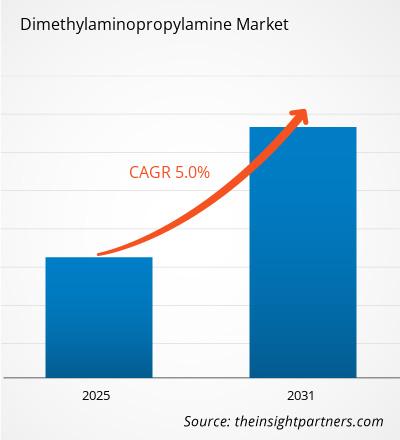
The Dimethylaminopropylamine (DMAPA) Market is expanding as chemical manufacturers, personal care formulators, and industrial end-users rely on DMAPA as a versatile intermediate for mild surfactants, epoxy curing agents, polyurethane catalysts, and water treatment chemicals. Growth is supported by rising demand for sulfate-free personal care formulations, stricter wastewater discharge regulations, and expanding industrial manufacturing across emerging economies.
The Dimethylaminopropylamine market was valued at US$ 379.94 million in 2025 and is expected to reach US$ 644.65 million by 2034; it is estimated to record a CAGR of 6.05% during 2026-2034.
What is driving the market?
Rising consumption of mild, skin-friendly surfactants, expanding water treatment infrastructure, and demand for low-emission polyurethane and epoxy systems are the principal growth drivers. Personal care and home care brands are increasingly reformulating shampoos, body washes, and cleansers away from harsh sulfates toward amphoteric surfactants most notably cocamidopropyl betaine (CAPB), where DMAPA serves as a critical chemical intermediate. Concurrently, construction, automotive, and municipal water sectors are adopting DMAPA-based catalysts, epoxy hardeners, and flocculants to meet performance and environmental standards.
The market is shifting beyond bulk commodity supply toward high-purity, low-impurity grades. Producers are investing in continuous hydrogenation, tighter residual-amine specifications, and bio-circular feedstocks to satisfy stringent cosmetic and pharmaceutical regulations. Volatility in upstream petrochemical feedstocks (such as acrylonitrile and dimethylamine), energy and logistics cost pressures, and strict chemical safety and registration frameworks remain key industry constraints.
Which region leads?
Asia Pacific leads the market, accounting for an estimated 44.8% share in 2025, and is also the fastest-growing region through 2034. Growth is supported by rapid urbanization, rising disposable incomes, expanding personal care manufacturing, and heavy investment in municipal and industrial water treatment. China and India represent major growth engines, combining large-scale domestic amine production capacity with surging downstream demand in cosmetics, agrochemicals, textiles, and coatings.
Europe holds the second-largest position, supported by a mature specialty chemicals sector, high-purity pharmaceutical demand, and strict eco-label and nitrosamine-limit regulations. North America represents another major regional market, driven by established personal care formulators, green construction coatings, and industrial water treatment demand.
Which segment leads?
Personal Care & Cosmetics is the leading application segment, representing an estimated 55.5% of market revenue in 2025. Its dominance is anchored by widespread adoption of DMAPA-derived betaine surfactants in shampoos, facial cleansers, liquid soaps, and baby care products. The segment continues to expand steadily as consumers prioritize mild, biodegradable, and dermatologically tested formulations.
Water Treatment and Polyurethane (PU) Catalysts / Epoxy Curing Agents represent major industrial growth segments. Demand for DMAPA-based flocculants, corrosion inhibitors, and antiscalants is rising alongside stricter wastewater regulations, while low-VOC epoxy hardeners and low-emission PU foam catalysts are gaining traction in construction insulation, protective coatings, and electric vehicle components. By grade, Industrial Grade accounts for the majority of volume, while Pharmaceutical and Cosmetic (low-amine) grades represent the fastest-growing value tier.
Which companies are prominent?
The competitive landscape includes BASF SE, Huntsman Corporation, Evonik Industries AG, Alkyl Amines Chemicals Ltd., Solvay SA (and Syensqo), Kao Corporation, Eastman Chemical Company, Air Products and Chemicals, Inc., Merck KGaA, and Hefei TNJ Chemical Industry Co., Ltd..
These companies compete across integrated upstream amine production, high-purity cosmetic and pharmaceutical grades, and downstream surfactant or epoxy derivative portfolios. Strategic differentiation increasingly depends on backward integration into methylamines and acrylonitrile, trace-impurity control, regional production localization, and the development of bio-based or low-carbon DMAPA offerings. This list reflects key global and regional market participants rather than a revenue-ranked market-share table.
What is changing in 2026?
In 2026, the DMAPA market is shifting toward tighter purity specifications, regional supply diversification, and sustainability-verified chemical sourcing. Regulatory scrutiny under frameworks such as EU cosmetics rules (including strict nitrosamine and residual secondary amine limits) and global chemical registration standards is pushing formulators toward ultra-low-impurity cosmetic and pharmaceutical grades.
At the same time, energy and logistics volatility highlighted by producer price adjustments across Europe and North America in 2026 is prompting downstream surfactant and coatings buyers to qualify multi-region suppliers and secure localized inventory. Producers are also expanding regional capacity in Asia Pacific and introducing bio-circular or Scope 3-advantaged DMAPA grades to help multinational consumer brands meet carbon-reduction targets.
What are the major investment opportunities?
The strongest opportunities lie in high-purity capacity expansion, upstream feedstock integration, bio-based derivative innovation, and localized Asian manufacturing. Investing in advanced purification and continuous catalytic processes enables producers to capture higher margins in regulated cosmetic and active pharmaceutical ingredient (API) supply chains, insulating them from commodity price compression.
Additional opportunities include developing bio-circular DMAPA and mild amphoteric surfactant blends for clean-beauty brands, as well as low-VOC epoxy curing agents and low-emission polyurethane catalysts for green buildings and electric vehicles. Expanding integrated production hubs in India, China, and Southeast Asia offers compelling growth potential as regional consumer hygiene and municipal water treatment infrastructure scale rapidly.
Future Outlook
Looking ahead toward 2034, the Dimethylaminopropylamine market is expected to maintain steady, resilient growth anchored by non-cyclical consumer hygiene demand and tightening environmental regulations. While commodity industrial-grade margins may face periodic pressure from capacity additions in Asia, long-term value creation will center on specialty low-amine grades, bio-attributed feedstocks, and tailored derivative solutions. Producers that pair cost-efficient feedstock integration with strict regulatory compliance and regional supply security will be best positioned to capture market share through the next decade.
About The Insight Partners
The Insight Partners is a leading market research and consulting firm delivering actionable insights through in-depth industry analysis and strategic intelligence. The firm supports clients across various industries in making informed decisions by providing comprehensive market forecasts, competitive assessments, and growth opportunities.
Contact Us:
If you have any queries about this report or if you would like further information, please contact us:
Contact Person: Ankit Mathur
E-mail: sales@theinsightpartners.com
Phone: +1-646-491-9876
