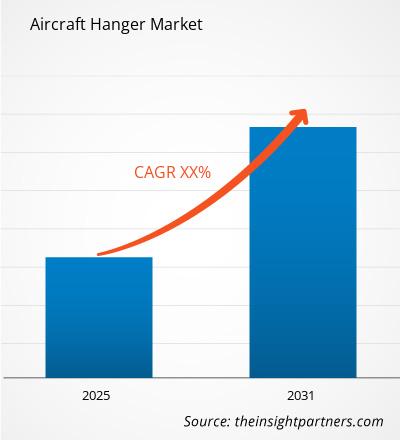
The global Aircraft Hangar Market is projected to reach a valuation of US$ 1.07 billion by 2031, registering a steady Compound Annual Growth Rate (CAGR) of 4.4% throughout the 2025–2031 forecast period. Driven by expanding global commercial and private aviation fleets, heightened defense spending, and rapid modernization of airport infrastructure, demand for specialized, durable, and rapidly deployable aircraft shelter solutions continues to accelerate across established and emerging aviation hubs.
Aircraft hangars have evolved from simple storage enclosures into mission-critical operational hubs that protect high-value aviation assets from harsh environmental conditions while supporting complex Maintenance, Repair, and Overhaul (MRO) workflows. As global air passenger traffic climbs and airlines extend the operational lifespans of existing fleets due to supply chain delivery bottlenecks, airport authorities and MRO providers are prioritizing dedicated, multi-bay, and climate-controlled hangar infrastructure to maximize aircraft turnaround efficiency and regulatory compliance.
Key Market Drivers and Industry Trends
The expansion of the Aircraft Hangar Market is underpinned by several structural shifts within global aerospace and defense infrastructure:
Surging MRO Capacity Requirements: Aging commercial aircraft require more frequent base maintenance and heavy structural checks. Consequently, carriers and third-party MRO operators are heavily investing in permanent, wide-span hangars equipped with integrated overhead cranes, fire suppression systems, and specialized environmental controls.
Adoption of Modular and Tension-Fabric Structures: While pre-engineered steel structures continue to hold a dominant market share due to their durability and clear-span capabilities, tension-fabric, portable, and modular hangars are witnessing rapid adoption. Military forces, regional airports, and general aviation operators increasingly favor relocatable fabric and modular steel solutions for their faster installation timelines, lower capital expenditure, and adaptability to remote or temporary operational theaters.
Get a PDF Sample- https://www.theinsightpartners.com/sample/TIPRE00002895
Airport Modernization and Greenfield Expansion: Significant capital expenditure toward greenfield airport developments and terminal expansions particularly across Asia-Pacific, the Middle East, and North America is creating concurrent demand for dedicated maintenance zones, cargo handling shelters, and business aviation FBO (Fixed-Base Operator) hangars.
Integration of Smart Hangar Technologies: Modern hangar construction increasingly incorporates automated mega-door systems, IoT-enabled climate and energy management, LED daylighting, and predictive maintenance infrastructure to reduce operational overhead and align with aviation sustainability mandates.
Competitive Landscape and Key Players
The global Aircraft Hangar Market features a competitive mix of specialized tension-fabric engineers, pre-engineered steel manufacturers, and turnkey aviation construction firms competing on clear-span engineering, installation speed, wind and snow load resilience, and lifecycle cost efficiency. Prominent companies profiled in the market include:
ClearSpan Fabric Structures, Inc.
Guard-All Building Solutions
Rubb Buildings Ltd.
Röder HTS Höcker GmbH
Allied Steel Buildings
John Reid & Sons (Strucsteel) Ltd
J & M Steel Solutions
Big Top Manufacturing
Anthem Steel Corporation
Centrex Construction
These industry leaders are actively expanding their engineering capabilities to deliver customized wide-span structures capable of housing next-generation narrow-body, wide-body, rotary-wing, and unmanned aerial vehicle (UAV) fleets while meeting stringent international aviation safety and fire-protection standards.
Get Full Copy of This Report- https://www.theinsightpartners.com/buy/TIPRE00002895
Future Outlook
Looking toward 2031 and beyond, the Aircraft Hangar Market is poised for sustained transformation as aviation infrastructure adapts to next-generation aerospace technologies. The emergence of electric vertical takeoff and landing (eVTOL) aircraft, urban air mobility (UAM) hubs, and hybrid-electric regional fleets will require redesigned hangar layouts featuring high-capacity charging infrastructure, advanced battery fire-containment systems, and modular vertiport shelters.
Furthermore, sustainability and resilience against extreme weather events will heavily influence architectural specifications. Manufacturers offering eco-friendly building materials, solar-ready roofing structures, and high-wind-rated clear-span designs will secure a competitive advantage. As emerging economies across Southeast Asia, the Indian subcontinent, Latin America, and the Middle East continue to localize MRO capabilities and expand regional air connectivity, strategic partnerships between hangar manufacturers, airport authorities, and defense agencies will remain central to capturing long-term market growth.
Related Reports-
Aircraft Obstruction Beacon Market Trends, Size & Growth by 2034
Connected Aircraft Market Size, Growth & Demand by 2034
Aircraft Nacelle and Thrust Reverser Market Growth, Trends & Demand by 2034
Aircraft Remote Electronic Unit Market Size, Demand & Growth by 2034
Aircraft Propeller System Market Share, Size & Demand by 2034
Aircraft Lightning Protection Market Trends, Size & Growth by 2034
About The Insight Partners
The Insight Partners is a leading market research and consulting firm delivering actionable insights through in-depth industry analysis and strategic intelligence. The firm supports clients across various industries in making informed decisions by providing comprehensive market forecasts, competitive assessments, and growth opportunities.
Contact Us:
If you have any queries about this report or if you would like further information, please contact us:
Contact Person: Ankit Mathur
E-mail: sales@theinsightpartners.com
Phone: +1-646-491-9876
Also Available in : Korean| German| Japanese| French| Chinese| Italian| Spanish
