Fuel Station Market: Digital Transformation and Clean Energy Solutions Drive Industry Growth
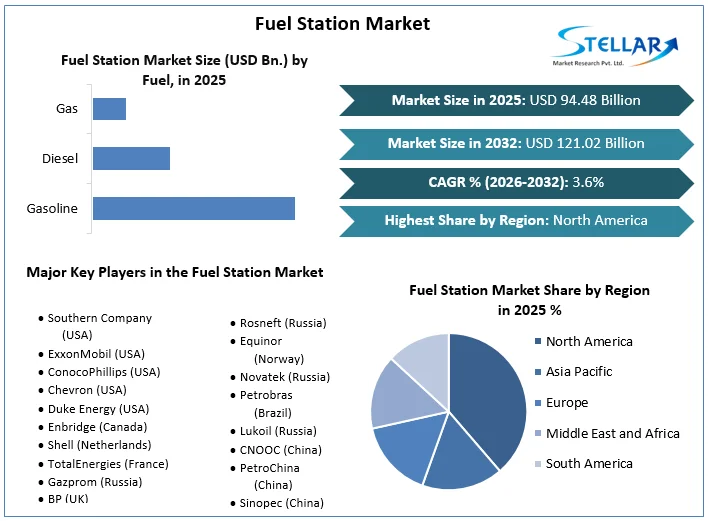
The global Fuel Station Market is evolving beyond traditional fuel retailing as operators diversify their offerings to meet changing consumer expectations and the transition toward cleaner mobility. Modern fuel stations are becoming multi-service hubs that provide convenience retail, electric vehicle (EV) charging, digital payment systems, and alternative fuels alongside conventional gasoline and diesel. According to Stellar Market Research, the global Fuel Station Market was valued at USD 2.87 trillion in 2025 and is projected to reach USD 4.08 trillion by 2032, growing at a CAGR of 5.15% during the forecast period.
What Is a Fuel Station?
A fuel station, commonly known as a petrol station or gas station, is a retail facility that supplies fuel for automobiles, commercial vehicles, and motorcycles. Modern fuel stations have expanded their services to include convenience stores, vehicle maintenance, food and beverage outlets, car wash facilities, and EV charging infrastructure.
Typical services include:
- Gasoline and diesel dispensing
- Alternative fuels (CNG, LNG, hydrogen, biofuels)
- Electric vehicle charging
- Convenience retail
- Car wash services
- Vehicle maintenance
- Digital payment and loyalty programs
As mobility patterns evolve, fuel stations are transforming into comprehensive mobility service centers.
𝐃𝐨𝐰𝐧𝐥𝐨𝐚𝐝 𝐅𝐫𝐞𝐞 𝐏𝐃𝐅 𝐁𝐫𝐨𝐜𝐡𝐮𝐫𝐞: https://www.stellarmr.com/report/req_sample/Fuel-Station-Market/2006
Rising Vehicle Ownership Drives Market Growth
The increasing number of passenger and commercial vehicles worldwide remains the primary driver of the Fuel Station Market. Rapid urbanization, infrastructure development, and economic growth have contributed to higher fuel demand, particularly in emerging economies.
Growing transportation needs continue to support investments in:
- New fuel station networks
- Highway service stations
- Urban fueling infrastructure
- Fleet fueling facilities
- Premium fuel offerings
Expanding logistics and freight transportation also contribute significantly to market growth.
Digital Technologies Enhance Customer Experience
Technology is reshaping the fuel retail industry through automation and digital services that improve operational efficiency and customer convenience.
Key innovations include:
- Contactless payment systems
- Mobile fuel payment apps
- Digital loyalty programs
- AI-based inventory management
- Automated fuel dispensers
- Real-time fuel monitoring
These technologies help reduce waiting times, improve operational efficiency, and strengthen customer engagement through personalized services.
Alternative Fuels Create New Growth Opportunities
The global transition toward cleaner energy is encouraging fuel station operators to diversify their offerings beyond conventional petroleum products.
Growing investments include:
- Electric vehicle charging stations
- Compressed Natural Gas (CNG)
- Liquefied Natural Gas (LNG)
- Hydrogen refueling stations
- Biofuel dispensing infrastructure
Many operators are adopting hybrid business models that support both conventional vehicles and next-generation transportation technologies, helping future-proof their networks as the energy transition accelerates.
Convenience Stores Boost Revenue
Non-fuel retail has become a major source of income for fuel station operators. Convenience stores located within fuel stations offer food, beverages, groceries, and essential travel products, increasing customer spending and improving profitability.
Popular value-added services include:
- Fresh food and beverages
- Coffee shops
- Parcel collection services
- ATM facilities
- Car wash centers
- Vehicle servicing
This diversification helps operators reduce dependence on fuel sales while improving the overall customer experience.
Sustainability Becomes an Industry Priority
Fuel station operators are increasingly adopting environmentally responsible practices to reduce emissions and improve energy efficiency.
Key sustainability initiatives include:
- Solar-powered fuel stations
- Energy-efficient lighting
- Water recycling systems
- Vapor recovery technologies
- Sustainable construction materials
- EV charging infrastructure
These investments support regulatory compliance while aligning with growing consumer demand for environmentally responsible businesses.
Challenges Facing the Market
Despite steady growth, the Fuel Station Market faces several challenges.
The rapid adoption of electric vehicles may gradually reduce long-term demand for traditional fuels in some regions. Additionally, fluctuations in crude oil prices, changing environmental regulations, and rising operational costs continue to affect fuel retailers.
Increasing competition among fuel retailers also encourages companies to differentiate themselves through improved customer service, digital innovation, and expanded non-fuel offerings.
Regional Outlook
Asia-Pacific is expected to remain the largest market due to rapid urbanization, increasing vehicle ownership, expanding transportation infrastructure, and strong economic growth across countries such as China and India.
North America and Europe continue to modernize their fuel retail networks by integrating EV charging, alternative fuels, and digital technologies to meet changing mobility trends and sustainability goals.
𝐃𝐨𝐰𝐧𝐥𝐨𝐚𝐝 𝐅𝐫𝐞𝐞 𝐏𝐃𝐅 𝐁𝐫𝐨𝐜𝐡𝐮𝐫𝐞: https://www.stellarmr.com/report/req_sample/Fuel-Station-Market/2006
Competitive Landscape
Leading companies are investing in digital transformation, alternative energy infrastructure, and customer-focused services to strengthen their market positions.
Key competitive strategies include:
- Expanding EV charging networks
- Developing hydrogen fueling stations
- Enhancing convenience retail
- Implementing AI-powered operations
- Launching digital loyalty programs
- Investing in renewable energy integration
Major fuel retailers are also modernizing station layouts and expanding partnerships with food service providers to create destination-style retail locations that attract a broader customer base.
Future Outlook
The Fuel Station Market is expected to remain an essential part of the global transportation ecosystem while adapting to changing energy trends. Although conventional fuels will continue to dominate in the near term, the integration of electric vehicle charging, alternative fuels, digital technologies, and convenience services will redefine the future of fuel retail.
As operators continue investing in smart infrastructure, sustainable energy solutions, and enhanced customer experiences, fuel stations will evolve into comprehensive mobility hubs capable of serving both traditional and next-generation vehicles, supporting long-term market growth through 2032.
