The Consumer Internet of Things (IoT) has become one of the fastest-growing segments of the global technology industry, transforming how individuals interact with everyday devices. Consumer IoT refers to internet-connected products designed for personal use, including smart home appliances, wearable devices, connected healthcare products, automotive technologies, and consumer electronics. These devices collect, process, and exchange data in real time, delivering enhanced convenience, automation, energy efficiency, and personalized experiences.
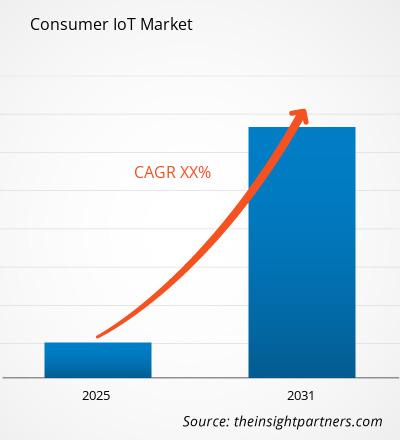
According to The Insight Partners, The Consumer IoT market size is expected to reach US$ 515.96 Billion by 2034 from US$ 185.01 Billion in 2025. The market is anticipated to register a CAGR of 12.07% during the forecast period 2026–2034.
Market Overview
The Consumer IoT has evolved from standalone smart devices into comprehensive digital ecosystems. Smart speakers, connected TVs, fitness bands, smart thermostats, home surveillance cameras, robotic vacuum cleaners, and intelligent kitchen appliances have become common household products.
Modern consumers increasingly expect devices to communicate with one another through cloud platforms and mobile applications. Voice assistants powered by AI have further simplified user interactions, enabling effortless control of multiple connected devices.
Growing awareness regarding energy conservation, home security, health monitoring, and convenience continues to encourage investment in connected technologies across both developed and emerging economies.
Get Sample PDF of the report @ https://www.theinsightpartners.com/sample/TIPRE00003114
Key Market Drivers
- Rising Smart Home Adoption:-Smart homes remain the primary growth engine for the Consumer IoT market. Homeowners are investing in connected lighting systems, intelligent locks, video doorbells, surveillance cameras, thermostats, and smart appliances to improve convenience and security.
- Expansion of Wearable Technology:-Wearable devices such as smartwatches, fitness trackers, and health monitoring devices have experienced remarkable growth. Consumers increasingly use these devices to monitor heart rate, sleep quality, oxygen levels, stress, and physical activity.
- Increasing Internet Connectivity:-The widespread availability of broadband internet, Wi-Fi 6, fiber connectivity, and expanding 5G infrastructure has significantly improved the performance of connected devices. Faster networks enable seamless communication among IoT devices while supporting real-time data transmission and cloud-based analytics.
- Artificial Intelligence Integration:-Artificial intelligence has become a major differentiator in consumer IoT products. AI enables predictive automation, voice recognition, personalized recommendations, energy optimization, and intelligent security monitoring.
- Growth in Smart Consumer Electronics:-Manufacturers continue to integrate IoT functionality into televisions, refrigerators, washing machines, air conditioners, coffee makers, ovens, and entertainment systems. Connected appliances provide remote monitoring, predictive maintenance, software updates, and energy management capabilities.
Emerging Market Trends
- AI-Powered Smart Homes:-Artificial intelligence is transforming smart homes into self-learning environments. Rather than responding only to commands, connected devices now anticipate user preferences, automate daily routines, and improve operational efficiency.
- Voice-Based Ecosystems:-Voice assistants have become the central interface for many consumer IoT ecosystems. Consumers increasingly use voice commands to control lighting, entertainment, appliances, climate systems, and home security.
- Connected Healthcare:-Remote healthcare continues to expand through IoT-enabled health devices. Blood pressure monitors, glucose monitoring systems, wearable ECG devices, and smart health sensors enable continuous patient monitoring outside traditional healthcare facilities.
- Sustainability and Energy Efficiency:-Consumers are becoming more environmentally conscious, driving demand for IoT-enabled energy management systems. Smart thermostats, intelligent lighting controls, and connected power management solutions help reduce electricity consumption while lowering utility costs.
- Edge Computing:-Instead of relying solely on cloud computing, many IoT devices now process data locally using edge computing technologies. This reduces latency, improves responsiveness, enhances privacy, and minimizes bandwidth usage.
Market Challenges
- Data Privacy Concerns:-Consumer IoT devices generate enormous volumes of personal information. Unauthorized access, cyberattacks, and misuse of personal data remain major concerns affecting consumer confidence.
- Cybersecurity Risks:-Connected devices present attractive targets for cybercriminals. Weak passwords, outdated firmware, and insecure communication protocols can expose users to hacking, identity theft, and unauthorized surveillance.
- Interoperability Issues:-Despite improvements in industry standards, compatibility between devices from different manufacturers remains a challenge. Consumers increasingly expect seamless integration regardless of brand, encouraging greater adoption of universal connectivity standards.
- High Initial Costs:-Although prices continue to decline, advanced smart home ecosystems still require significant investment. Installation costs and ongoing software subscriptions may discourage some consumers from adopting connected technologies.
Market Segmentation
According to The Insight Partners, the Consumer IoT market is segmented across several categories.
By Component
- Processor
- Sensor
- Connectivity IC
- Memory Device
- Logic Device
Sensors and processors form the foundation of IoT devices by enabling data collection, intelligent processing, and communication.
By Network Infrastructure
- Server
- Storage
- Ethernet Switch and Routing
- Gateway
Cloud infrastructure and intelligent gateways facilitate secure communication between connected devices and centralized platforms.
By Solution
- Software
- Service
Software platforms enable device management, analytics, security, firmware updates, and application integration, while services include installation, maintenance, and cloud support.
By Application
- Wearable Devices
- Consumer Electronics
- Home Automation
- Automotive
- Healthcare
Home automation and wearable technology currently represent two of the largest application segments due to widespread consumer adoption.
Get the Premium Research Report @ https://www.theinsightpartners.com/buy/TIPRE00003114
Regional Analysis
North America
North America continues to dominate the Consumer IoT market due to high technology adoption, widespread broadband connectivity, advanced digital infrastructure, and significant investments from leading technology companies.
Consumers in the United States and Canada readily adopt smart home technologies, connected healthcare devices, and AI-enabled consumer electronics.
Europe
Europe demonstrates strong growth supported by energy efficiency initiatives, smart city development, and stringent cybersecurity regulations. Countries such as Germany, the UK, and France continue investing in connected home technologies.
Asia Pacific
Asia Pacific is expected to witness the fastest market growth during the forecast period. Rising disposable income, expanding smartphone penetration, increasing internet accessibility, and rapid urbanization support widespread adoption across China, India, Japan, and South Korea.
Local manufacturers are also introducing affordable IoT devices that expand accessibility for middle-income consumers.
Middle East & Africa
Government-led smart city initiatives, digital transformation programs, and expanding telecommunications infrastructure are creating new opportunities for consumer IoT deployment across the Middle East and Africa.
South & Central America
Increasing internet penetration and rising consumer awareness are supporting gradual adoption of connected home appliances and wearable technologies throughout the region.
Competitive Landscape
The Consumer IoT market remains highly competitive, with global technology companies investing heavily in research, product innovation, AI capabilities, cloud services, and ecosystem integration.
- Analog Devices, Inc.
- Cypress Semiconductor Corporation
- General Electric Company
- Intel Corporation
- Microchip Technology Inc.
- NXP Semiconductors N.V.
- Qualcomm Incorporated
- Schneider Electric
- STMicroelectronics
- Texas Instruments Inc.
Strategic partnerships among semiconductor manufacturers, cloud providers, software developers, and consumer electronics companies continue accelerating innovation throughout the market.
Future Outlook
The future of the Consumer IoT market appears exceptionally promising as connected devices become an integral part of everyday life. Emerging technologies such as artificial intelligence, machine learning, edge computing, digital twins, and advanced sensors will continue improving the intelligence and functionality of consumer products.
About The Insight Partners
The Insight Partners is a global leader in market research, delivering comprehensive analysis and actionable insights across diverse industries. The company empowers decision-makers with data-driven intelligence to navigate evolving markets and accelerate growth.
Contact Us:
- Contact Person: Ankit Mathur
- E-mail: ankit.mathur@theinsightpartners.com
- Phone: +1-646-491-9876
